Dalmatia attractions
More things to do in the region
 #16
Riva Promenade (Riva Split Waterfront)
If you are looking for things to do in Dalmatia we have 72 Tours and Activities to Experience Riva Promenade (Riva Split Waterfront). Check out our verified traveler reviews and photos of Riva Promenade (Riva Split Waterfront) tours and other things to do in Dalmatia, and book securely when you find the perfect one. Learn the best ways to see famous Riva Promenade (Riva Split Waterfront) and explore the most popular things to do in Dalmatia.
More #17
Sveti Jakov Beach
Sveti Jakov Beach is a pebble cove on the coast just east of Dubrovnik's Old Town, tucked below a small church at the foot of a long flight of steps. Swimmers come for its clear water and a view along the coast to the Old Town walls and across to Lokrum Island.The beach takes its name from the Church of St. James on the slope above, part of a Benedictine monastery founded in the Middle Ages on this stretch of shore beyond the city gates. For centuries the area was a quiet edge of the city, and it later filled in with homes and gardens as Dubrovnik spread east along the coast road from the Ploče Gate. Below the church, the cliffs fall steeply to the sea, and the cove at their base became a favorite with local swimmers, sheltered from the open sea by rocky points on either side.The beach itself is a crescent of smooth pebbles and fine shingle backed by green slopes, with water that turns from turquoise to deep blue a short way out. Snorkelers find rocks and small fish along the edges of the cove, and swimmers can strike out toward the open Adriatic. The view is the real reward: the Old Town walls and red roofs glow in the late light to the west, pine-covered Lokrum sits just offshore, and boats and kayaks trace the coast in between.Lokrum, the island in that view, has its own long story, from a medieval Benedictine abbey to the gardens and peacocks introduced by a Habsburg archduke. Seen from this quiet cove, it adds to the feeling that Dubrovnik has always been shaped by the sea. A guide on a kayak or boat outing can point out the coves, villas and landmarks along this stretch of coast.
More #18
Bay of Kotor
The Bay of Kotor is a deep, winding inlet of the Adriatic Sea on the coast of Montenegro, ringed by steep limestone mountains and old stone towns. Often called the southernmost fjord in Europe, it draws travelers for its dramatic scenery, its walled town of Kotor and its waterfront villages.Geologically the bay is a drowned river canyon rather than a true fjord, which explains its twisting shape of inner and outer basins joined by narrow straits. People have settled its shores since ancient times. Romans left mosaics at Risan, and in the Middle Ages Kotor grew into a busy trading town. For centuries much of the bay was ruled by Venice, which left its mark in fortifications, palaces and lion emblems carved over gateways. The bay became known for its seafaring families, and its sailors and captains traveled the Mediterranean and beyond. The whole area is now recognized as a World Heritage site.Kotor's old town is a maze of stone lanes, squares and churches, led by the Romanesque Cathedral of Saint Tryphon. Above it, defensive walls zigzag up the mountainside to a fortress with views straight down the bay. Perast, a small town of baroque captains' palaces and bell towers, faces two islets offshore. Our Lady of the Rocks was built up from the sea floor by local sailors who dropped stones and sank old ships on a reef, and its church is filled with votive paintings and silver offerings. Its neighbor, Saint George, holds a monastery among cypress trees.Around the rest of the bay are Tivat with its modern marina, the old fortress town of Herceg Novi near the open sea, and smaller fishing villages strung along the shore road. The mountains drop straight into calm water, so reflections shift with the light all day. A guide can add the stories of sieges, saints and sailors behind each town.
More #19
Diocletian's Palace
Diocletian's Palace is the vast Roman residence that forms the core of Split's old town on the Dalmatian coast of Croatia. Built for a retiring emperor and never abandoned, it draws visitors to lanes where homes, shops and cafés fill the shell of an imperial palace that has been lived in for some seventeen centuries.The emperor Diocletian, born in Dalmatia, had it built around the start of the 4th century as a retirement home, after becoming one of the very few Roman rulers to give up power of his own accord. Half seaside villa and half military camp, it was laid out as a walled rectangle with towers and four gates, its imperial apartments facing the sea.In the 7th century, people fleeing the ruined Roman city of Salona took shelter inside the walls and built homes in its halls and courtyards, and the town of Split grew from there. The emperor's own mausoleum became the cathedral of Saint Domnius, a martyr of his persecutions, and a temple to Jupiter was turned into a baptistery. Over the centuries Romanesque, Gothic and Renaissance houses were built into the Roman walls, so a single lane can show ancient columns, carved medieval windows and drying laundry side by side.At its center lies the Peristyle, a court of granite columns and arches where the emperor once appeared before his subjects, with an ancient Egyptian sphinx still keeping watch. Below the vanished imperial rooms, the vaulted substructures survive almost whole and mirror the floor plan of the halls that once stood above. Look too for the domed vestibule open to the sky, the cathedral's Romanesque bell tower and, outside the Golden Gate, Ivan Meštrović's giant statue of the medieval bishop Gregory of Nin, whose toe people rub for luck. Together with the old town around it, the palace is listed as a UNESCO World Heritage Site.
More #20
Dubrovnik Cable Car
The Dubrovnik Cable Car climbs from just above the Old Town walls to the top of Mount Srđ, the steep limestone hill that rises behind the city. People ride it for the view: the red roofs and fortified walls of Dubrovnik spread out below, with Lokrum island and the open Adriatic beyond.The line first opened more than half a century ago and quickly became one of the city's favorite outings for locals and visitors alike, a short hop to an upper station more than 400 meters above the sea. During the Croatian War of Independence the hill was a front line, and the cable car was wrecked in the fighting. It stayed out of service for nearly two decades before a rebuilt line reopened, its cabins once again gliding along a cable close to 800 meters long.At the top stands Fort Imperial, built by the French in the early 19th century during Napoleon's rule over the region. Its stone walls saw heavy fighting when a small group of defenders held the hill against attack, a chapter of the city's story told inside. Nearby, a large white stone cross looks down over Dubrovnik, a landmark you can pick out from the streets far below. The summit itself is bare and rocky, covered in low Mediterranean scrub.Terraces at the upper station come with telescopes for picking out details: the line of the city walls, the old harbor, ships gliding in from the sea and the Elafiti islands scattered along the coast to the northwest. Many visitors simply stay a while, watching boats trace white lines across the water. On clear days the view reaches far down the coast and back over the hills inland. A guide on the summit can trace the old city's layout from above and name the forts, churches and islands in view.
More #21
Fort Bokar
If you are looking for things to do in Dalmatia we have 12 Tours and Activities to Experience Fort Bokar. Check out our verified traveler reviews and photos of Fort Bokar tours and other things to do in Dalmatia, and book securely when you find the perfect one. Learn the best ways to see famous Fort Bokar and explore the most popular things to do in Dalmatia.
More #22
Kotor Old Town
Kotor Old Town is the walled medieval heart of Kotor, a port at the inner end of the Bay of Kotor on Montenegro's Adriatic coast. Its marble-paved lanes, churches and palaces sit at the foot of a steep mountain, and visitors come for the architecture, the long Venetian history and the views from the fortress walls high above.People have lived on this sheltered shore since ancient times, and the town passed through the hands of Romans, Byzantines and medieval Serbian rulers before Venice took control in the 15th century. Under Venetian rule, which lasted for centuries, Kotor became a fortified trading port and grew the stone houses and defenses that shape it now. Later it came under Austrian rule, and after a damaging earthquake in the 20th century much of the town was carefully restored. UNESCO lists the old town and its bay as a World Heritage Site.The town is a tangle of narrow streets that open into small squares, each with its own church or palace. The Cathedral of Saint Tryphon, a Romanesque church with twin bell towers, is the town's spiritual center and holds relics and frescoes. Nearby, the little Church of Saint Luke once served both Catholic and Orthodox worshippers, while the Orthodox Church of Saint Nicholas stands on its own square. Grand family palaces, a clock tower and a maritime museum recall the wealth of local sea captains. Above it all, the defensive walls zigzag up the mountainside to the fortress of San Giovanni, passing the small Church of Our Lady of Remedy along the way. Kotor is also known for its many cats, which roam the lanes and have become a local symbol.A guide can bring out the stories of the sailors, merchants and saints who built this compact town.
More #23
Krka National Park
Krka National Park protects a stretch of the Krka River in central Dalmatia, a short way inland from Šibenik on Croatia's Adriatic coast. It is famous for its chain of waterfalls, where the river spills over terraces of pale stone into green pools, and visitors come for the walkways, the river views and the island monastery.The waterfalls exist because of a slow natural process. The river water is rich in dissolved limestone, and as it tumbles over rocks, mosses and algae help it deposit a soft stone called tufa, or travertine. Over thousands of years these deposits have built up into barriers and terraces that keep shaping the falls. People have lived along the river since ancient times, and the park holds the ruins of a Roman military camp, medieval fortresses and old monasteries. In the late 19th century, a hydroelectric plant near the falls became one of the first in the world to supply alternating current to a town. The area became a national park in the 20th century.Skradinski buk, the largest and best-known waterfall, is a broad series of cascades and pools crossed by wooden walkways. Restored stone watermills nearby show how villagers once ground grain and washed wool with the river's power. Upstream, the river widens into a lake around the tiny island of Visovac, where Franciscan monks have kept a monastery for centuries. Farther up lies Roški slap, a staircase of small cascades, and the Orthodox Krka Monastery sits in a quiet side valley.The park is also a haven for wildlife, especially birds, fish and bats, which thrive among the reeds, pools and wooded slopes. A guide explains how the falls formed and what lives along the river.
More #24
Malo Grablje
If you are looking for things to do in Dalmatia we have 10 Tours and Activities to Experience Malo Grablje. Check out our verified traveler reviews and photos of Malo Grablje tours and other things to do in Dalmatia, and book securely when you find the perfect one. Learn the best ways to see famous Malo Grablje and explore the most popular things to do in Dalmatia.
More #25
Republic Square (Prokurative)
If you are looking for things to do in Dalmatia we have 22 Tours and Activities to Experience Republic Square (Prokurative). Check out our verified traveler reviews and photos of Republic Square (Prokurative) tours and other things to do in Dalmatia, and book securely when you find the perfect one. Learn the best ways to see famous Republic Square (Prokurative) and explore the most popular things to do in Dalmatia.
More #26
Solta Island
Šolta is a quiet, green island in the Adriatic just off Split, in central Dalmatia, dotted with stone villages, olive groves and sheltered bays. Travelers come for a slower pace than the mainland, for swimming in clear coves and for the island's olive oil, wine and fish.The island lies south of Split across a narrow channel, with the larger island of Brač to the east and the small Drvenik islands to the west. It is low and gentle, rising only a couple of hundred meters at its highest point, Vela Straža, and a long strip of farmland stretches through its western interior. In Latin it was called Solentium. About 2,000 people live here, spread among eight settlements.Inland, Grohote is the largest village and the island's administrative center, with Gornje Selo, Srednje Selo and Donje Selo strung across the interior. On the coast, Rogač is the main port, Nečujam on its deep bay is the center of island tourism, Stomorska is a small harbor village, and Maslinica, once known as Porto Olivetto, is the chief fishing center, sheltered from most winds. The Renaissance poet Marko Marulić, the father of Croatian literature, lived on Šolta, and his family were among the first to grow the island's native red grape in earnest.That grape, Dobričić, is the island's pride: DNA studies link it to the Zinfandel grape famous in California, and new vineyards have been planted to bring it back. In the 19th century a Maslinica winemaker won prizes at fairs in Vienna and Trieste, before cheap imports and vine diseases sent the trade into decline. Olive oil comes from the same sunny slopes, and fishing still shapes life in the harbors. A guide can lead you to the family farms and tasting rooms that keep these traditions alive.
More #27
Split Old Town
Split Old Town is the historic heart of Split, on Croatia's Dalmatian coast, built in and around the palace that the Roman emperor Diocletian raised for his retirement. Homes, shops, cafes and churches fill the old imperial walls, and people come to walk streets where everyday life still runs through a Roman monument.Diocletian, who was born in Dalmatia, had the palace built around the turn of the 4th century, part luxury villa and part fortified camp, and lived here after giving up the throne, a rare step for a Roman emperor. Several centuries later, people fleeing the destruction of nearby Salona took refuge inside its walls, and over time they turned the emperor's halls and corridors into a medieval town, building houses against the Roman stone and churches in its temples.At the center lies the Peristyle, a colonnaded courtyard that once led to the emperor's quarters and serves as an open-air meeting place. Diocletian's mausoleum, an octagonal building beside it, became the Cathedral of Saint Domnius, named after a bishop martyred under the very emperor who was buried there, and a Romanesque bell tower rises above it. The small Temple of Jupiter was turned into a baptistery, and the vaulted halls beneath the palace preserve the outline of the rooms that once stood above them.Beyond the Roman core, Venetian-era palaces, squares such as the People's Square and narrow alleys spread west of the old walls, and outside the Golden Gate stands Ivan Meštrović's giant statue of the medieval bishop Gregory of Nin, whose toe has been rubbed shiny for luck. The palm-lined Riva promenade runs along the southern front facing the harbor. The whole ensemble is listed by UNESCO, and a guide shows how one emperor's retreat became a living town.
More #28
Stradun (Placa)
If you are looking for things to do in Dalmatia we have 78 Tours and Activities to Experience Stradun (Placa). Check out our verified traveler reviews and photos of Stradun (Placa) tours and other things to do in Dalmatia, and book securely when you find the perfect one. Learn the best ways to see famous Stradun (Placa) and explore the most popular things to do in Dalmatia.
More #29
Temple of Jupiter
If you are looking for things to do in Dalmatia we have 45 Tours and Activities to Experience Temple of Jupiter. Check out our verified traveler reviews and photos of Temple of Jupiter tours and other things to do in Dalmatia, and book securely when you find the perfect one. Learn the best ways to see famous Temple of Jupiter and explore the most popular things to do in Dalmatia.
More #30
Bacvice Beach
Bačvice Beach is the best-known town beach in Split, a curving bay of fine sand and shallow water on the city's southern shore, a short walk from the old center. Locals and visitors come to swim, sunbathe and play picigin, the splashing ball game that was born here.Sandy beaches are rare on this rocky stretch of the Dalmatian coast, which helps explain why Bačvice has long been the city's favorite place to cool off. The water stays shallow a long way out, so people can stand in it well away from the sand, and that quirk of the seabed gave rise to the game that made the beach famous.Picigin was first played here early in the 20th century by students home from Prague, who found the water too shallow for water polo. Players stand in a loose circle in ankle-deep water and keep a small ball in the air with flat-handed slaps, never catching it, often throwing themselves full length into the sea to save a shot. The ball is traditionally an old tennis ball with its felt stripped off, so it is light and lively. There is no score and no winner, only style, and Croatia lists the game as part of its intangible cultural heritage.Bačvice is treated as the spiritual home of the game, and the hardiest players turn out even in midwinter, when the sea is cold enough to keep most swimmers away. A playful world championship is held on the beach each year, judged on the artistry of the whole group rather than on points. Watching a good game, with players diving and slapping the ball just above the surface, is as much a part of a visit as the swim itself. A local guide can link the beach to the wider story of Split and its seafront.
More #31
Budikovac Island (Veliki Budikovac)
Budikovac Island (Veliki Budikovac) is a small, uninhabited island in the Adriatic Sea off the southeast coast of Vis, in Croatia's central Dalmatia. Its sheltered lagoon of clear, turquoise water has made it a favorite swimming and snorkeling stop on boat trips from Split and the nearby islands of Vis and Hvar.Veliki means big, and the island has a smaller neighbor, Mali Budikovac, across a narrow, shallow channel. The calm water between them lies over pale sand and rock, which gives it the vivid blues and greens that draw boats here. The island itself is low and rocky, covered in Mediterranean scrub, with small coves along its shore and a single seasonal restaurant as the only sign of settlement.The setting adds to the appeal. Vis, the larger island just to the northwest, served as a military base for much of the second half of the 20th century and was closed to foreign visitors, which helped keep its coast and the islets around it remarkably unspoiled. Vis itself was settled by Greeks in antiquity, who named it Issa. Nearby lie some of the best-known sea caves in Croatia: the Blue Cave on Biševo, where sunlight turns the water a glowing blue, and the Green Cave on Ravnik, a short hop from Budikovac.Most visitors come simply to swim. The shallows of the lagoon suit easy paddling, while the rocky edges offer snorkelers fish, sea urchins and swaying seagrass meadows. Between swims there is little to do but lie in the sun, watch boats slip in and out, and take in the view of Vis and its smaller neighbors. That simplicity is the point: a stop here feels like a break from the busy harbors of the mainland, with nothing but sea and stone around you.
More #32
Dominican Monastery
If you are looking for things to do in Dalmatia we have 13 Tours and Activities to Experience Dominican Monastery. Check out our verified traveler reviews and photos of Dominican Monastery tours and other things to do in Dalmatia, and book securely when you find the perfect one. Learn the best ways to see famous Dominican Monastery and explore the most popular things to do in Dalmatia.
More #33
Ethnographic Museum (Rupe Museum)
If you are looking for things to do in Dalmatia we have 8 Tours and Activities to Experience Ethnographic Museum (Rupe Museum). Check out our verified traveler reviews and photos of Ethnographic Museum (Rupe Museum) tours and other things to do in Dalmatia, and book securely when you find the perfect one. Learn the best ways to see famous Ethnographic Museum (Rupe Museum) and explore the most popular things to do in Dalmatia.
More #34
Gates of Diocletian's Palace
The Gates of Diocletian's Palace are the four Roman entrances to the vast retirement palace that the emperor Diocletian built on the shore at Split, on Croatia's Dalmatian coast. Still in daily use after more than 17 centuries, the Golden, Silver, Iron and Bronze Gates lead into the lanes of the old town, and visitors come to walk through them and see how a palace became a city.Diocletian, who rose from humble Dalmatian roots to rule the Roman Empire, built the palace around the turn of the 4th century as a home for his retirement, after taking the rare step of giving up the throne. Laid out like a fortified army camp, it had a gate in the middle of each side, linked by two main streets that crossed at its heart. Centuries later, people fleeing the destruction of nearby Salona took shelter inside the walls, and their homes turned the palace into the town of Split.Each gate has its own character. The Golden Gate, the grandest of the four, faced the road to Salona and has the small Church of St. Martin tucked above its passage, while outside stands Ivan Meštrović's bronze statue of Gregory of Nin, whose big toe is rubbed shiny by visitors hoping for luck. The Silver Gate opens toward the market, and the Iron Gate, leading into the medieval People's Square, carries a Renaissance clock and the Romanesque bell tower of the Church of Our Lady of the Bell Tower.The Bronze Gate, the smallest, was the emperor's water entrance in the days when the sea washed against the southern wall. Behind it lie the vaulted halls that once supported the imperial apartments, and their layout still mirrors the rooms that stood above. Crossing the old town from gate to gate takes you past the Peristyle, the colonnaded court at the palace's heart, and shows how Roman stone and everyday life have grown into one.
More #35
Marjan
If you are looking for things to do in Dalmatia we have 18 Tours and Activities to Experience Marjan. Check out our verified traveler reviews and photos of Marjan tours and other things to do in Dalmatia, and book securely when you find the perfect one. Learn the best ways to see famous Marjan and explore the most popular things to do in Dalmatia.
More #36
Neretva River (Rijeka Neretva)
If you are looking for things to do in Dalmatia we have 13 Tours and Activities to Experience Neretva River (Rijeka Neretva). Check out our verified traveler reviews and photos of Neretva River (Rijeka Neretva) tours and other things to do in Dalmatia, and book securely when you find the perfect one. Learn the best ways to see famous Neretva River (Rijeka Neretva) and explore the most popular things to do in Dalmatia.
More #37
Old Bridge (Stari Most)
The Old Bridge, or Stari Most, is the single stone arch that leaps across the Neretva River in the heart of Mostar's old town in Bosnia and Herzegovina. It is the city's symbol, and most visitors come to cross its steep, worn back, watch divers plunge into the green river and take in the view from the banks.The Ottomans built the bridge in the 16th century on the orders of Sultan Suleiman the Magnificent, replacing an older wooden crossing with a graceful stone arch designed by the architect Mimar Hayruddin. Its span was so bold for its day that, according to local legend, the builder prepared his own funeral in case it collapsed when the scaffolding came down. The town took its name from the bridge keepers, the mostari, who guarded it, and a market quarter of workshops and mosques grew up on both banks.For more than four centuries the arch survived floods, earthquakes and wars, until artillery fire brought it crashing into the river during the war that followed the breakup of Yugoslavia. Its loss became a symbol of the destruction of shared heritage. After the war, engineers and craftsmen rebuilt it with the methods of the original builders, raising fragments from the riverbed and cutting new blocks of the same local limestone, and the restored bridge and old town were added to the UNESCO World Heritage list.Up close, the bridge is steeper and narrower than photos suggest, with ridges set into the stone to keep feet from slipping and a fortified tower at each end. Divers from the local club still leap from the parapet in a tradition that goes back centuries, waiting until onlookers have gathered. On the east bank, Kujundžiluk, the old coppersmiths' street, climbs toward it between stalls of hammered copper and carpets. A guide adds the human stories of the war and the rebuilding, which give the crossing its weight.
More #38
Our Lady of the Rocks (Gospa od Skrpjela)
Our Lady of the Rocks is a small man-made island in the Bay of Kotor, just off the old seafaring town of Perast in Montenegro, topped by a domed Catholic church. People cross to see the church, its museum of Baroque paintings and sailors' offerings, and to hear how the island itself was made.Legend says that in the 15th century local seamen found an icon of the Madonna and Child resting on a rock in the bay. Bound by an oath, they began dropping a stone onto the spot after every safe voyage. Over the centuries the pile grew into an island, helped along by old and captured ships that were loaded with rock and sunk on purpose. The church that stands on it dates from the 17th century and was renovated in the 18th.The tradition has never really stopped. Once a year, on a summer evening, people from Perast set out in a flotilla of small boats and toss stones into the water around the island, a custom called the Fašinada that slowly widens its shores. Inside the church, dozens of paintings by Tripo Kokolja, a 17th-century Baroque artist from Perast, cover the walls and ceiling, and his vast canvas of the Death of the Virgin is the centerpiece. The revered icon that began the story, painted by an artist from Kotor, hangs here too.The small museum beside the church gathers gifts from the seafaring families of the bay, including a large collection of silver votive tablets and works by Italian painters. Its most moving piece is an embroidery by a local woman, Jacinta Kunić-Mijović, who is said to have stitched it for about a quarter of a century while waiting for her sailor husband to come home. She used gold and silver thread and worked in strands of her own hair, and her eyesight failed over those long years. A guide gives these objects their human stories.
More #39
Rector's Palace (Knezev Dvor)
If you are looking for things to do in Dalmatia we have 71 Tours and Activities to Experience Rector's Palace (Knezev Dvor). Check out our verified traveler reviews and photos of Rector's Palace (Knezev Dvor) tours and other things to do in Dalmatia, and book securely when you find the perfect one. Learn the best ways to see famous Rector's Palace (Knezev Dvor) and explore the most popular things to do in Dalmatia.
More #40
Sea Organ (Morske Orgulje)
The Sea Organ is a musical instrument built into the waterfront of Zadar's Old Town in Croatia, where Adriatic waves play music through pipes hidden beneath a broad flight of white marble steps. People come to sit on the steps, look out over the sea and listen to chords that no composer wrote and no one can predict.The organ grew out of a plan to revive a neglected stretch of shore. Zadar was heavily damaged in the Second World War, and hasty rebuilding afterward left much of its newer waterfront as a dull concrete wall. Architect Nikola Bašić was asked to redesign it, and instead of hiding the sea behind a barrier, he carved wide steps down to the water and made the waves themselves the performer. The organ opened early in the 21st century and soon shared a European prize for urban public space.The mechanism is simple and clever. Beneath the steps run polyethylene tubes of different lengths, linked to a resonating cavity hidden inside the structure. As each wave rises and falls, it pushes air through the tubes and out through narrow slots in the stone, producing deep, breathy tones that sound somewhere between a church organ, a whale call and a distant ship's horn. Because the sea never moves the same way twice, the music never repeats itself exactly.Bašić also created the Greeting to the Sun beside it, a wide circle of glass panels set into the pavement that gathers solar energy by day and glows in shifting colors after dark. Together the two works have turned the tip of the peninsula into a favorite gathering place for locals and visitors, only a short stroll from Roman ruins and medieval churches. A guide can add the story of how a city scarred by war chose to reinvent its seafront with sound and light.
More #41
St. John’s Fortress (Fort St. Ivana)
If you are looking for things to do in Dalmatia we have 9 Tours and Activities to Experience St. John’s Fortress (Fort St. Ivana). Check out our verified traveler reviews and photos of St. John’s Fortress (Fort St. Ivana) tours and other things to do in Dalmatia, and book securely when you find the perfect one. Learn the best ways to see famous St. John’s Fortress (Fort St. Ivana) and explore the most popular things to do in Dalmatia.
More #42
Stiniva Cove
If you are looking for things to do in Dalmatia we have 65 Tours and Activities to Experience Stiniva Cove. Check out our verified traveler reviews and photos of Stiniva Cove tours and other things to do in Dalmatia, and book securely when you find the perfect one. Learn the best ways to see famous Stiniva Cove and explore the most popular things to do in Dalmatia.
More #43
Apparition Hill
If you are looking for things to do in Dalmatia we have 2 Tours and Activities to Experience Apparition Hill. Check out our verified traveler reviews and photos of Apparition Hill tours and other things to do in Dalmatia, and book securely when you find the perfect one. Learn the best ways to see famous Apparition Hill and explore the most popular things to do in Dalmatia.
More #44
Ban Jelacic Square (Trg Bana Jelacica)
Ban Jelačić Square is the busy central square of Zagreb, the Croatian capital, watched over by a bronze equestrian statue of the 19th-century governor Josip Jelačić. It is where the city gathers for celebrations, protests and open-air concerts, and nearly every visit to Zagreb passes through it at some point.The square began in the 17th century as a marketplace called Harmica, a name tied to a customs duty once collected here, and it became the commercial hub as Zagreb spread south from its hilltop settlements. It honors Josip Jelačić, the ban, or governor, who abolished serfdom in Croatia during the revolutions that swept Europe in the 19th century. His statue by the Austrian sculptor Anton Dominik Fernkorn was unveiled later that century, but the communist authorities took it down after the Second World War and renamed the square. As Croatia moved toward independence near the end of the 20th century, both the statue and the name came back.Water sits at the heart of a favorite local legend. The Manduševac fountain recalls the story of a thirsty ban who asked a girl named Manda to scoop water from a spring on this spot, a request said to have given Zagreb its name, and visitors still toss coins into the basin. Around the edges, handsome facades house banks, shops and cafe terraces, the twin spires of the cathedral rise above the rooftops, and the trams that clang through set the square's steady rhythm.Part of its charm is that the square belongs to residents first. Office workers cross it at a brisk pace, friends linger over coffee on the terraces, and when Croatia's national teams triumph, it fills with flags and singing fans. A guide can reveal the stories hidden in plain sight, from the statue's exile to the meaning of the old market name.
More #45
Bascarsija Bazaar
Baščaršija is the old Ottoman market quarter of Sarajevo, a web of low-roofed shops, workshops, mosques and cafes on the north bank of the Miljacka River. It is the historic heart of the city, and people come to wander its lanes, watch coppersmiths at work, drink Bosnian coffee and eat ćevapi where traders once did business.The bazaar grew up in the 15th century, when the Ottoman governor Isa-Beg Isaković founded Sarajevo as a new town and laid out a trading center here. Its name joins Turkish words for head and market. Each street was given to a single craft, and some lanes still carry the names of the trades that filled them, such as the coppersmiths' street, Kazandžiluk. In the 16th century the great patron Gazi Husrev-beg endowed the quarter with a mosque, a covered market, a school and baths, and caravans brought goods from across the empire to its inns.Fires and wars have swept through the quarter more than once, including a devastating burning by a Habsburg army at the end of the 17th century, yet the old pattern survives. In the main square stands the Sebilj, a wooden fountain kiosk rebuilt under Austro-Hungarian rule, and pigeons gather on the paving around it. Nearby, Morića Han is a restored caravan inn with a courtyard, the clock tower beside the mosque keeps time the old Ottoman way, counted from sunset, and the Bezistan's long stone vault is still lined with stalls.Just beyond the bazaar, the quarter shades into the Austro-Hungarian city with its grander facades, and the line where East meets West is marked on the pavement. A guide can explain how Muslim, Orthodox, Catholic and Jewish merchants traded side by side here for centuries, and what the craftsmen's lanes have seen since.
MoreDiscover Dalmatia

Luxury & Special Occasions
Prices from $3
Tours & Sightseeing
Prices from $3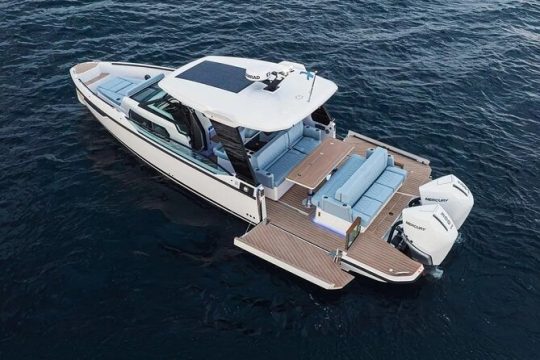
Cruises, Sailing & Water Tours
Prices from $6
Cultural & Theme Tours
Prices from $3
Day Trips & Excursions
Prices from $3
Water Sports
Prices from $11
Outdoor Activities
Prices from $6
Walking & Biking Tours
Prices from $3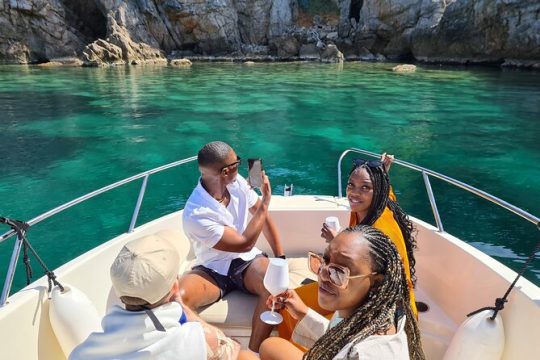
Private & Custom Tours
Prices from $3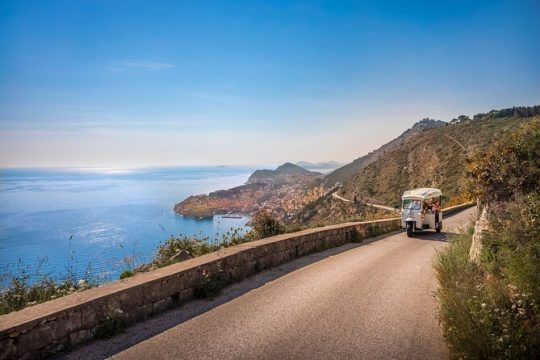
Shore Excursions
Prices from $9
Food, Wine & Nightlife
Prices from $17
Holiday & Seasonal Tours
Prices from $9
Lokrum Island
Prices from $3
Dubrovnik Ancient City Walls
Prices from $3
Dubrovnik Old Town
Prices from $3
St. Lawrence Fortress (Fort Lovrijenac)
Prices from $6
Blue Lagoon Croatia (Krknjasi Bay)
Prices from $54
Cathedral of St. Dominus (Katedrala Svetog Duje)
Prices from $4
Pile Gate
Prices from $3
Zlatni Rat Beach (Golden Horn)
Prices from $101
Banje Beach
Prices from $3
Bisevo Blue Cave (Modra Spilja)
Prices from $85
Elafiti Islands (Elaphites)
Prices from $31
Gregory of Nin (Grgur Ninski)
Prices from $4


Dalmatia Event Calendar
View all events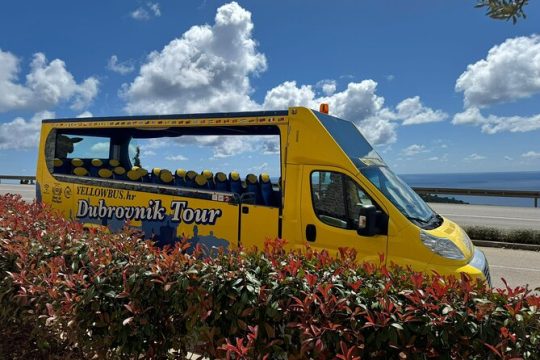
Hanukkah in Dalmatia
Dec 4–12, 2026
New Year’s Eve in Dalmatia
Thu, Dec 31, 2026
New Year’s Day long weekend in Dalmatia
Jan 1–3, 2027
Valentine's Day in Dalmatia
Sun, Feb 14, 2027
Easter in Dalmatia
Sun, Mar 28, 2027
Good Friday in Dalmatia
Fri, Mar 26, 2027