


Cluj-Napoca attractions
More things to do in the city
 #16
Turda Gorge (Cheile Turzii)
Turda Gorge, or Cheile Turzii, is a narrow limestone canyon in Transylvania, west of the town of Turda and south of Cluj-Napoca. A path follows the Hășdate River between sheer cliffs, and people come to hike it, spot caves and wildflowers and enjoy one of Romania's best-known natural reserves.The gorge was carved over a very long span of time as the small river cut down through thick beds of limestone laid down in an ancient sea. Local legend offers a faster explanation. In the Hungarian telling, King Ladislaus, fleeing raiders, prayed for help and the mountain split open behind him, leaving a chasm his pursuers could not cross. The tale is one of several stories that link the gorge to the region's medieval past. Protected as a reserve since the first half of the 20th century, it shelters a surprising variety of life.Sun-baked rock faces and shady corners create very different habitats within a short distance, so rare plants thrive here that grow in few other places in Romania, and the slopes bloom with color in spring. Birds of prey nest on the ledges, and the walls are riddled with dozens of caves. Some gave villagers shelter during invasions in the Middle Ages, and one is tied to Bălică, a local outlaw remembered as a Robin Hood figure.Inside the gorge, the walls tower over the river in shades of gray and ochre, and the narrowest stretches open suddenly into sunny clearings. The cliffs are a favorite with Romanian climbers, and the meadows at either end make natural places to rest. A guide can name the plants and birds, point out cave entrances and share the legends that cling to the rocks.
More #17
Turda Salt Mine (Salina Turda)
Turda Salt Mine is a former salt mine in the town of Turda, in the Transylvania region of Romania, where centuries of digging left vast chambers deep underground. Visitors come to walk the old galleries, look down into caverns the size of cathedrals and see a lake shining far below the surface.Salt has been taken from these hills since antiquity, and the mine appears in written records from the 13th century. Mining grew in the 17th century, and for hundreds of years workers cut the salt by hand, leaving huge chambers shaped like bells and cones. Extraction ended in the early 20th century. During the Second World War the mine served as a bomb shelter, and afterward it was used to store cheese. It opened to visitors in the late 20th century, and a major redesign in the early 21st century added the lighting and lifts that give it its striking, almost futuristic look.The visit follows the Franz Josef Gallery, a long tunnel cut through the salt that once carried it out of the mine. Off it lie rooms full of the mine's history, including the Echo Room in Joseph Mine, a tall cone where your voice comes back to you again and again, and the Crivac Room, which holds an old horse-driven winch, the only one of its kind still in its original place in Romania.Rudolf Mine is the showpiece, a huge rectangular hall more than 40 meters deep, with salt stalactites hanging from the ceiling and walls streaked in bands of gray and white. Its floor holds a small underground park with a Ferris wheel, mini golf, a bowling alley and an amphitheater, which look tiny from the balconies above. Below lies Theresa Mine, a bell-shaped chamber about 90 meters high with a lake at its foot. A guide explains how the miners worked and how the chambers took shape over the centuries.
MoreDiscover Cluj-Napoca

Classes & Workshops
Prices from $29
Cruises, Sailing & Water Tours
Prices from $1,006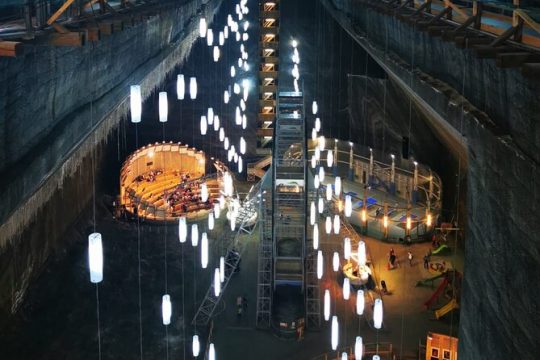
Cultural & Theme Tours
Prices from $7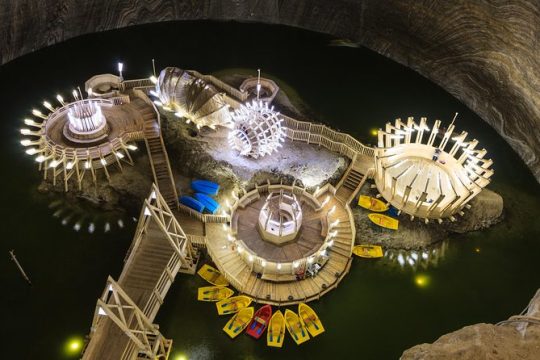
Day Trips & Excursions
Prices from $65
Food, Wine & Nightlife
Prices from $29
Holiday & Seasonal Tours
Prices from $31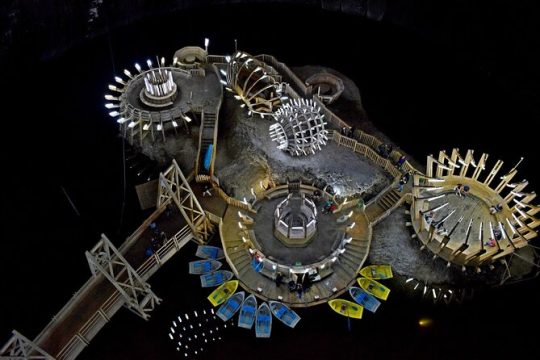
Luxury & Special Occasions
Prices from $7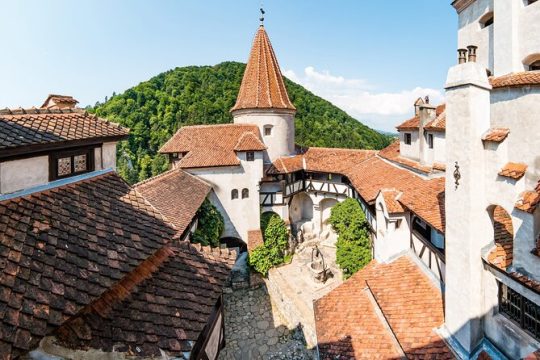
Multi-day & Extended Tours
Prices from $280
Outdoor Activities
Prices from $101
Private & Custom Tours
Prices from $7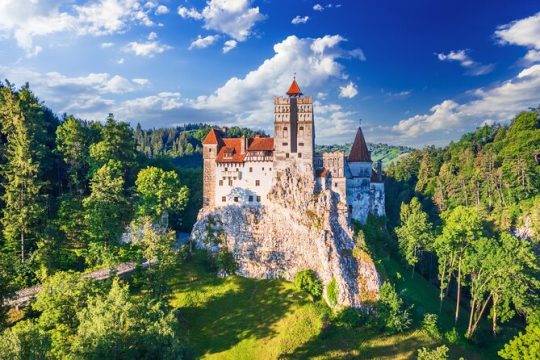
Sightseeing Tickets & Passes
Prices from $166
Tours & Sightseeing
Prices from $30


Balea Lake (Lacul Balea)
Prices from $1,005
Bay of Kotor
Prices from $4,574
Bran Castle (Dracula's Castle)
Prices from $167
Bridge of Lies (Podul Minciunilor)
Prices from $279
Castle Hill (Várhegy)
Prices from $4,574
Clock Tower
Prices from $959
Dubrovnik Cable Car
Prices from $4,574
Lake Balaton
Prices from $4,574
Lake Ohrid
Prices from $4,574
Peles Castle (Castelul Peles)
Prices from $1,219
Piata Mare (Great Square)
Prices from $122
Plitvice Lakes National Park
Prices from $4,574
Hanukkah in Cluj-Napoca
Dec 4–12, 2026
New Year’s Eve in Cluj-Napoca
Thu, Dec 31, 2026
New Year’s Day long weekend in Cluj-Napoca
Jan 1–3, 2027
Senior-friendly tours Cluj-Napoca
11 tours & activities
Cluj-Napoca Foodie Tours
4 tours & activities
Family-friendly Cluj-Napoca Tours
24 tours & activities
The best tours and activities for culture lovers in Cluj-Napoca
39 tours & activities
Top 10 Cluj-Napoca 2026
10 tours & activities
Top Day Trips from Cluj-Napoca
17 tours & activities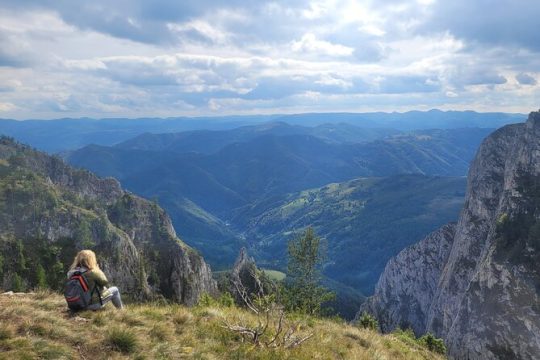
Things to do in Cluj-Napoca this summer
46 tours & activities
 From $3

 From $3
 From $3


