Frequently Asked Questions
The answers provided below are based on answers previously given to customers' questions.
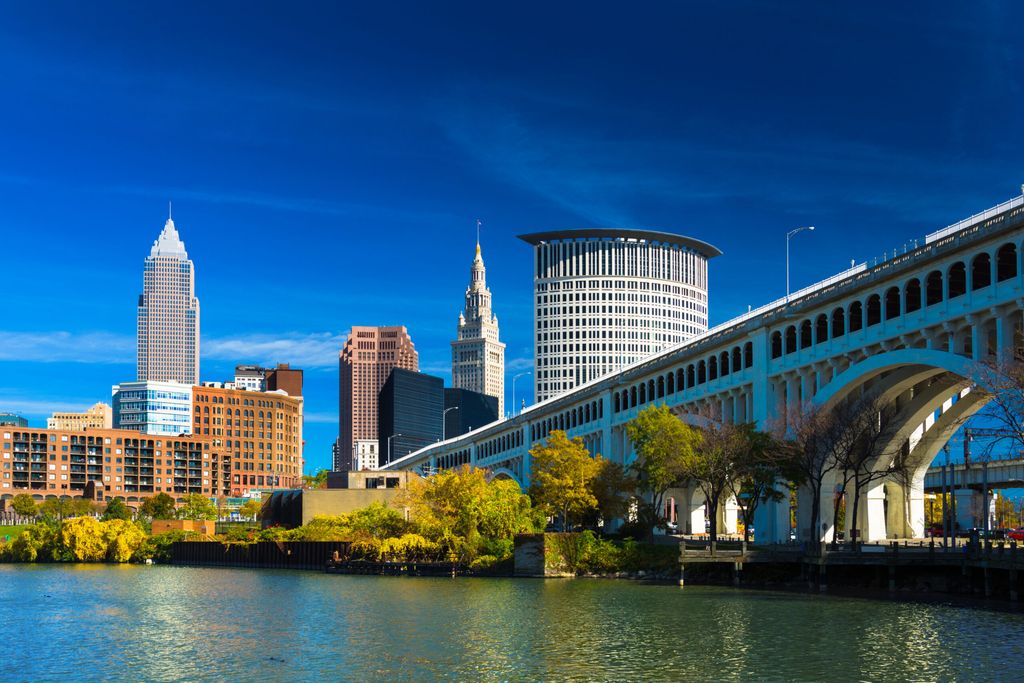
Cleveland stretches along the southern shore of Lake Erie, a port and industrial city where the Cuyahoga River twists through downtown under a tangle of lift bridges. Today it is known for rock music, a strong arts scene and neighborhoods packed with places to eat. Most guided experiences here take two to four hours, and they run through the morning, afternoon and evening, so you can fit a walking tour, a food stop and a museum into one comfortable day. A good share are private, and most offer free cancellation, which keeps your plans flexible.
The Rock & Roll Hall of Fame sits right on the lakefront in a glass pyramid, with exhibits of guitars, stage costumes and handwritten lyrics that can easily fill half a day. From there, downtown walking tours explore the grand old buildings left by the city's commercial boom. Arcade Cleveland, also called the Crystal Palace, is a soaring Victorian shopping hall with iron balconies under a long glass roof, and it ranks among the most photographed interiors in the city. Guides often add the riverfront, the Flats and stories of steel, shipping and the people who built them.
Audio-guided walks and short self-paced routes are handy if you prefer to explore on your own schedule.
West Side Market, in Ohio City, is a highlight for food lovers. Under its vaulted hall and clock tower, vendors sell pierogi, sausages, cheese, pastries and fresh produce, reflecting the many immigrant communities that shaped the city. Food tours here and in nearby neighborhoods mix tastings with history, and evening outings lead to breweries, bars and the lively dining scene in Tremont and the Gateway District. Many of these experiences suit couples and groups of friends looking for a relaxed afternoon or night out.
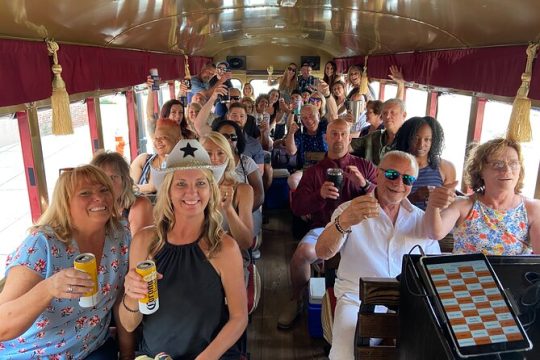
A Christmas Story House, the home used in the classic holiday film, is a fun visit for movie fans, with props, memorabilia and the famous leg lamp in the window. Families can also find kid-friendly options around the city, from interactive museums to easygoing sightseeing drives that cover the main landmarks without a lot of walking. Bus and minivan sightseeing is a good way to get your bearings on a first day.
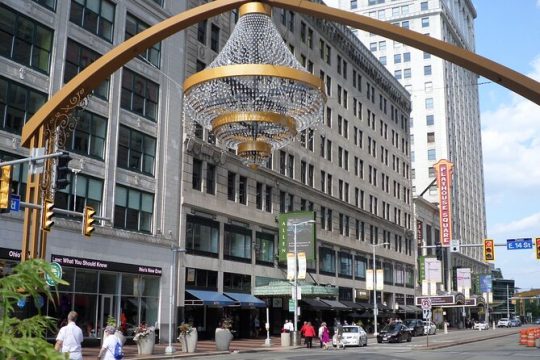
Two days cover the highlights well. Spend one on the lakefront museums and downtown architecture, and give the other to West Side Market, a neighborhood food walk and an evening out. If you have more time, add a drive past the lake and stop at the film house on the west side of the city. Evening walks downtown are a pleasant way to see the lit-up bridges and the theaters around Playhouse Square.
#1If you are looking for things to do in Cleveland we have 5 Tours and Activities to Experience Rock & Roll Hall of Fame. Check out our verified traveler reviews and photos of Rock & Roll Hall of Fame tours and other things to do in Cleveland, and book securely when you find the perfect one. Learn the best ways to see famous Rock & Roll Hall of Fame and explore the most popular things to do in Cleveland.
More
#2The West Side Market is Cleveland's oldest public market, a grand brick market hall in the Ohio City neighborhood on the city's west side. Locals and visitors come to browse and taste their way through dozens of family-run stands selling meat, cheese, bread, pastries, produce and food from many cultures.A market has stood on this corner since the middle of the 19th century, when Ohio City was still a separate town, and the present building opened early in the 20th century, built to serve a fast-growing industrial city. Its stalls reflect the waves of immigrants who settled Cleveland, especially from Germany, Ireland, Hungary, Poland and other parts of central and eastern Europe, and later from the Middle East, Latin America and Asia. Many stands have passed down through several generations of the same family.The building itself is a landmark. Designed in a blend of Neoclassical and Byzantine styles, it has a tall clock tower of yellow brick that stands out across the neighborhood, and inside, the main hall is covered by a great vaulted ceiling of tile built by the Guastavino company, famous for its graceful tile vaults. Long aisles of glass-fronted counters run beneath it, stacked with sausages, smoked meats, cheeses, breads and pastries, while the open-air produce arcade along one side overflows with fruit and vegetables.Beyond its looks, the market remains a working part of Cleveland's food life, where families do their weekly shopping and restaurant cooks hunt for ingredients alongside curious visitors. Listed on the National Register of Historic Places, it has come through a serious fire and decades of change in how Americans shop, and it sits at the heart of a revived Ohio City. A guide adds the history of the neighborhood and points out the stands locals swear by.
More
#3Arcade Cleveland, the Victorian landmark long nicknamed the Crystal Palace, is a downtown building where two tall towers are linked by a glass-roofed atrium lined with balconies. It is often described as one of the earliest indoor shopping arcades in the United States, and people come to admire the skylight, the ironwork and the sense of space inside.The building opened late in the 19th century, backed by some of the wealthiest men in Cleveland, John D. Rockefeller among them. Architects John Eisenmann and George H. Smith designed it in a Romanesque style and modeled it on the Galleria Vittorio Emanuele II, the grand covered gallery in Milan. Their plan placed a nine-story tower on Euclid Avenue and another on Superior Avenue, then joined them with a five-story atrium under a long glass skylight.Inside, balconies trimmed with ironwork rise in four tiers around the open court, and daylight falls through the roof onto the shopping floor below. It is easy to see where the Crystal Palace nickname came from. The building is a National Historic Landmark, and later redevelopment turned the two towers into a hotel, so guests now sleep above the same atrium where shoppers have strolled for more than a century.Shops and a food court fill the lower floors of the atrium, so the hall still serves much as its builders intended, as a place to browse, eat and linger out of the Lake Erie weather. Look up as well as around, because the light across the glass shifts through the day and the long skylight seems to run on and on. A guide can add the stories of the investors and designers behind the building and of the booming industrial city that produced it.
More
#4A Christmas Story House is the Victorian home in Cleveland's Tremont neighborhood that played the Parker family house in the holiday film A Christmas Story. Fans come to walk through rooms restored to match the movie, see the famous leg lamp glowing in the front window and browse props and memorabilia in the museum across the street. It is a cheerful pilgrimage for anyone who grew up with the movie.The film, based on stories by the humorist Jean Shepherd, follows young Ralphie Parker's campaign to get a Red Ryder BB gun for Christmas, and it has become a much-loved holiday tradition for families across America. Although the story is set in a fictional Indiana town, the filmmakers used this Cleveland house for its exterior and some interior scenes, while most of the indoor action was shot on a sound stage in Toronto.In the years after filming, earlier owners added modern windows and siding, and much of the house's movie look disappeared. It was later bought and painstakingly restored to match the film, outside and in, with the rooms arranged to recall familiar scenes. The result is a home that looks as if the Parkers might walk back through the door at any moment, right down to the lamp in the window.The complex now spans four buildings devoted to the film. The museum across the street holds original props, among them Randy's bulky snowsuit, the one that left him unable to put his arms down, and a Red Ryder BB gun used in filming. A gift shop caters to fans, and for true enthusiasts, overnight stays are offered in the house and in the home next door. A guide can share stories from the production and the quirks of shooting a holiday classic on a real city street.
MoreCleveland is a city you take in through short, varied outings rather than one big day. A typical visit pairs a guided walk or museum morning with a tasting stop, then a night at a theater, a ballgame or a brewery. Most people book a couple of outings of a few hours each and leave room to wander. It suits music fans, curious food lovers, architecture buffs and anyone who enjoys an honest, down-to-earth Midwest city.
Summer is the busiest and warmest season, when lakefront parks, patios and outdoor concerts are in full swing. Fall is crisp and colorful, and a short drive south to Cuyahoga Valley National Park shows off the changing leaves. Spring starts cool and damp before warming up by May. Winter is cold, gray and snowy thanks to the lake, but indoor museums, food halls and holiday events still make a pleasant weekend.
A rapid transit train runs from Cleveland Hopkins International Airport straight into the city center, and long-distance trains stop at a small lakefront station. Downtown is easy on foot, while a bus line along Euclid Avenue serves the museum district, and Ohio City and Tremont are a short ride away. Hotel pickup is uncommon, so check each starting point before you go. Pack layers, since wind off the lake can make any season feel colder, and wear comfortable shoes for walking tours. Book ahead on game nights and show weekends, and spread big museum visits across separate days.

The answers provided below are based on answers previously given to customers' questions.