Early Access! Black Friday 11HRS 16MIN 40SEC Up to 20% off gift cards BLACK FRIDAY
GIFT CARD SAVINGS
$100 – $249SAVE 5% $250 – $499SAVE 10% $500 – $999SAVE 15% $1,000+SAVE 20% Shop gift cards Discount applied automatically at checkout. Each card keeps its full value.
Top activities
Top landmarks
Cruise ship visitors
Trip ideas
Nearby places
Black Friday
Early Access! Black Friday 11HRS 16MIN 40SEC
UP TO 20% OFF GIFT CARDS
$100–$249(save 5%) $250–$499(save 10%) $500–$999(save 15%) $1,000+(save 20%)
Shop gift cards Discount applied automatically at checkout. Each card keeps its full value.
Cephalonia

Cool things to do in Cephalonia

Welcome to Cephalonia

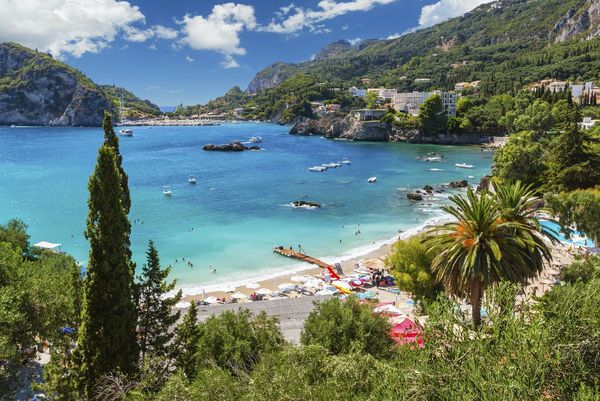
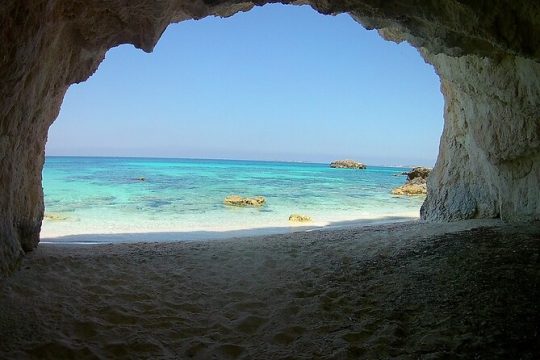
Cephalonia is the largest of the Ionian Islands, a rugged green island of mountains, fishing villages and white-pebble beaches above bright blue water. Its most famous view is Myrtos Beach, a curve of pale stone below steep cliffs, and the wider coast holds sea caves and coves you can reach by boat. Most tours here run four to eight hours or a full day, and well over half are set up around cruise arrivals, with pickup at the port. Many are kid friendly, making the island an easy choice for families, and past travelers rate them very well.

Beaches, Caves and Villages

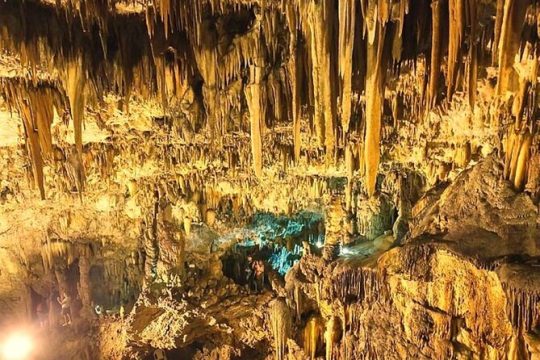
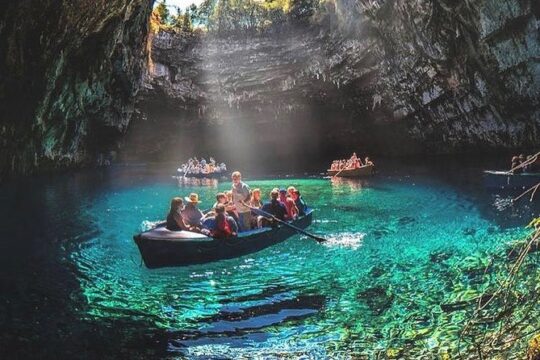
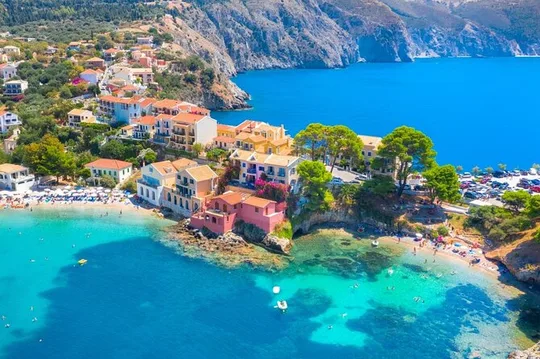
Myrtos Beach on the northwest coast is often listed among the finest beaches in Greece, and island tours usually stop at the viewpoint above it before heading down for a swim. Inland, Melissani Cave holds an underground lake where sunlight through a collapsed roof turns the water a vivid blue, and Drogarati Cave is known for its stalactites. Fiskardo in the north, with its pastel harbor houses, and the hillside village of Assos are favorite stops on island drives. Coastal drives also pass small harbor villages, olive groves and monasteries, often with a stop for local wine or honey. Bring water shoes, as many beaches here are pebbly.

Day Trips to Zakynthos

Neighboring Zakynthos lies a short ferry ride to the south. Boat trips from Agios Nikolaos on its northern tip reach the Blue Caves, where light reflecting off the sea floor makes the water glow, and Navagio Beach, the cove with a rusting shipwreck framed by tall white cliffs. Depending on conditions, you see Navagio from the water or from a viewpoint high on the cliff. These are long days, so start early and pack sun protection and snacks.

Ancient Olympia from Katakolon

Some cruise itineraries pair the island with Katakolon Cruise Port on the Peloponnese mainland, the gateway to Ancient Olympia, the sanctuary where the original Olympic Games were held. Guided visits walk you through the old stadium, the ruins of the temples of Zeus and Hera, and the Archaeological Museum of Olympia, home to fine classical sculpture. Standing at the start line of the stadium, where athletes raced in antiquity, is a moment many visitors remember. Half-day trips from the port suit passengers with limited time, and private guides can match the pace to your group.

Planning Your Days

If you arrive by ship, confirm your return time before booking anything. Hotel pickup is included on more than half of tours, and private options make up about half, a good fit for families who want to pause for swims or a long lunch in a taverna. Short tours are rare here, so plan around one long outing per day and leave the rest of the time for the beach. Most tours begin in the morning, and evening options are fewer, mostly food and wine tastings. Few tours suit wheelchair users, so ask about access in advance. Nearly every booking can be cancelled free, which makes it easy to rearrange a boat trip around the mood of the sea.

Read more
Top 7 attractions in Cephalonia
Myrtos Beach (Paralía Mirtos)#1
4.7 (1,910)

Myrtos Beach (Paralía Mirtos)

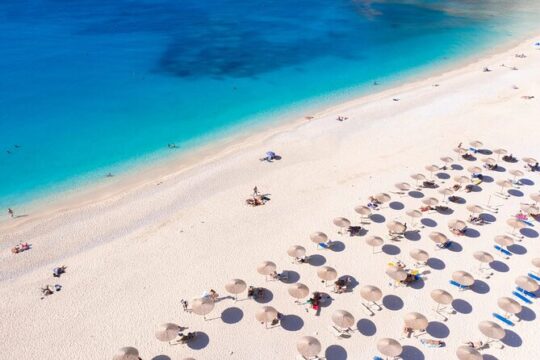
Myrtos Beach is a sweeping crescent of white pebbles on the northwest coast of Kefalonia, in Greece's Ionian Islands, set at the foot of steep, pale cliffs. Its vivid turquoise water has earned it the title of Greece's best beach many times over, and travelers come to swim, sunbathe and gaze down at it from the road high above.The beach lies between two mountains, Agia Dynati and Kalon Oros, whose slopes plunge almost straight into the sea. Its stones are mostly marble, worn round by the waves and growing smaller toward the waterline. The color of the sea is the beach's secret: the shore drops away steeply, so waves break with force, grinding fine marble particles and carrying them along the coast in pale clouds that turn the water a brilliant milky blue.Lookouts on the road down from the village of Divarata reveal the whole bay at once: a long band of white stones between scrubby mountainsides and a sea that deepens from turquoise near the shore to dark blue farther out. Down on the beach, the pebbles clatter as each wave pulls back, and the cliffs rising behind make the setting feel enclosed and theatrical. In calm weather the water is clear enough to see the stones beneath your feet.Myrtos also had a turn on the big screen, serving as the setting for the mine explosion scene in the film Captain Corelli's Mandolin, which brought Kefalonia to wide international attention. The island's coast offers other memorable spots nearby, including the pastel village of Assos with its hilltop Venetian fortress a short way north. A guide can explain the geology behind the colors and share stories of the island's past, from Venetian rule to the earthquake that reshaped Kefalonia in the 20th century.

More
Agios Nikolaos#2
4.5 (467)

Agios Nikolaos

If you are looking for things to do in Cephalonia we have 10 Tours and Activities to Experience Agios Nikolaos. Check out our verified traveler reviews and photos of Agios Nikolaos tours and other things to do in Cephalonia, and book securely when you find the perfect one. Learn the best ways to see famous Agios Nikolaos and explore the most popular things to do in Cephalonia.

More
Ancient Olympia#3
4.7 (3,448)

Ancient Olympia

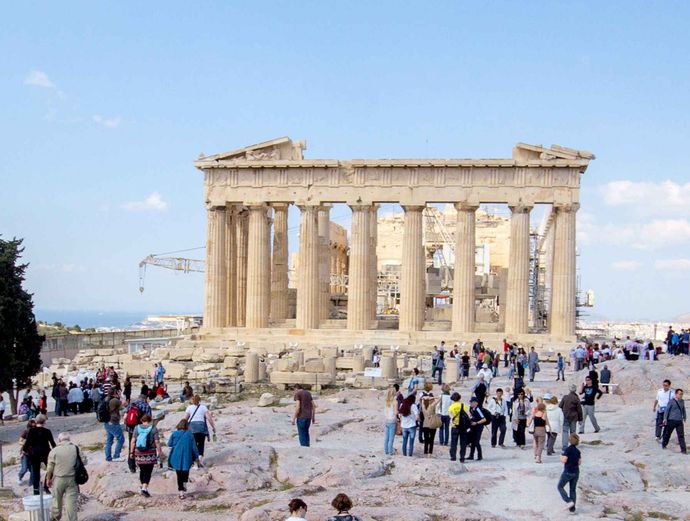
Ancient Olympia is the sanctuary of Zeus in the western Peloponnese of Greece, where the original Olympic Games were held for more than a thousand years. Visitors come to walk through the ruins of temples, training grounds and the old stadium, and to see the finds in the museum beside the site.Olympia was never a city. It was a sacred grove where two rivers meet, where people gathered to honor Zeus, and from the 8th century BC athletes from across the Greek world came here every four years to compete. A sacred truce let them travel safely, and winners earned an olive wreath and lasting fame at home. The Games continued under Roman rule until a Christian emperor banned pagan festivals late in the 4th century AD. Earthquakes and floods then buried the sanctuary under deep layers of silt, which helped preserve it until excavations brought it back to light in the 19th century.The ruins spread out under pine and olive trees. The great Temple of Zeus once held a huge gold and ivory statue of the god by the sculptor Phidias, counted among the Seven Wonders of the ancient world, and its fallen column drums still lie where they toppled. Nearby, the older Temple of Hera is where the Olympic flame is lit for each modern Games. You can trace the workshop where Phidias made his statue, the colonnaded exercise grounds, and a row of bases for bronze statues paid for by fines on athletes caught cheating. A vaulted stone tunnel leads into the stadium, where the original track and the earth banks for spectators survive.The archaeological museum holds some of the finest sculpture in Greece, including the carved figures from the Temple of Zeus, a winged Victory and the marble Hermes attributed to Praxiteles. A guide can bring the sanctuary to life with the rules, rituals and scandals of the ancient contests.

More
Archaeological Museum of Olympia#4
4.7 (2,876)

Archaeological Museum of Olympia

You can explore the museum on your own with the printed museum guide, though the finds mean more with context. A guided tour explains how the sanctuary worked, who competed and where each sculpture and bronze once stood. Many itineraries pair the museum with the archaeological site in Ancient Olympia, so you see the objects first and then the ruins they came from. The museum holds finds from the ancient sanctuary and the site of the Olympic Games, including sculpture, bronzes and terracottas. Last admission is 20 minutes before closing, so arrive with time to spare. The museum has a ramp, a lift and an accessible toilet, and there is a museum shop and parking. A printed museum guide is available on site if you explore on your own.
More
Blue Caves#5
4.6 (2,329)

Blue Caves

The Blue Caves are a cluster of sea caves and rock arches at Cape Skinari, the northern tip of the Greek island of Zakynthos. Sunlight bouncing off the pale seabed fills them with an intense, glowing blue, and gliding into them by boat is a highlight of any stay on the island.The caves were carved by the sea. Over countless years, waves pounded the white limestone cliffs of the island's north coast, opening hollows, tunnels and arches at the waterline. Some are large enough for small boats to slip inside, while others are narrow openings where the swell surges in and out. Above them, the coast rises steeply to the headland, crowned by the Skinari lighthouse and old windmills.The color is what makes the place famous. Light enters through the cave mouths, passes down through the clear water and reflects off the pale rock and sand on the bottom, so the water seems lit from within. The walls take on shifting reflections, and anyone who swims nearby appears to glow a ghostly blue beneath the surface. The effect changes with the angle of the sun, the movement of the sea and the depth of each cave, so no two passages look quite alike.Zakynthos, which its Venetian rulers called the Flower of the East, is known for its rugged northern and western coast, and the caves share this wild shoreline with Navagio, the Shipwreck Beach, where a rusting freighter lies on the sand below sheer cliffs. Between them the coast is a run of coves and inlets where the water shades from turquoise to deep blue. A skipper who knows the coast can point out formations that are easy to miss from a passing boat.

More
Katakolon Cruise Port (Katakolo Port)#6
4.4 (767)

Katakolon Cruise Port (Katakolo Port)

If you are looking for things to do in Cephalonia we have 16 Tours and Activities to Experience Katakolon Cruise Port (Katakolo Port). Check out our verified traveler reviews and photos of Katakolon Cruise Port (Katakolo Port) tours and other things to do in Cephalonia, and book securely when you find the perfect one. Learn the best ways to see famous Katakolon Cruise Port (Katakolo Port) and explore the most popular things to do in Cephalonia.

More
Navagio Beach (Shipwreck Beach)#7
4.6 (2,386)

Navagio Beach (Shipwreck Beach)

Navagio Beach, also known as Shipwreck Beach, is a small cove on the northwest coast of Zakynthos in Greece's Ionian Islands. Hemmed in by towering limestone cliffs and washed by bright turquoise water, it is famous for the rusting wreck of a ship lying on its pale sand, and visitors come by boat or to the clifftop to see it.The cove was once called Agios Georgios, after a nearby monastery, and it was a remote, almost secret spot reached only from the sea. Its fame began in the late 20th century, when a coastal freighter called the Panagiotis ran aground here in rough weather. Local stories say the ship was carrying smuggled cigarettes and was being chased by the authorities when it was driven ashore, though the details have grown with every telling. The crew left, the cargo vanished, and the hull was left on the beach, where it slowly rusted into the scene that now gives the cove its name.The beauty of Navagio comes from its setting. The cliffs rise almost straight from the water, pale and sharp against the sky, and the sea below shifts from milky turquoise near the shore to deep blue farther out, a color created by the fine white limestone sediment in the water. The wreck sits half buried in the pebbles and sand, its hull streaked with rust and old graffiti. From above, the clifftop platform near the village of Volimes looks straight down on the cove, giving the view seen on postcards around the world.Not far along the coast, the Blue Caves at Cape Skinari glow with reflected light, and the old monastery of Agios Georgios Krimnon stands on the plateau above. A guide or boat captain can share the legends of the wreck and the coastline.

More

Good to know Cephalonia

Cephalonia feels roomy and unhurried. A usual day pairs a scenic drive over winding mountain roads with a swim, often below the cliffs at Myrtos Beach, and many visitors save a day for a boat trip or a crossing to a neighboring coast.

Afternoons stretch into long lunches by a small harbor, and evenings turn to tavernas, local wine and sunset views out over the water.

The island suits families, couples and cruise passengers who want sea views, caves and village life rather than crowded resorts.

May and June bring warm days, wildflowers on the hills and seas mild enough for swimming by early summer. It is a relaxed time for island drives.

July and August are hot, sunny and the busiest months, with every taverna open and the beaches at their fullest. Head to popular coves early in the day.

September and early October are a favorite, with warm water and thinner crowds. Winter is mild but wet and very quiet, and many boats and seasonal hotels close until spring.

  • Flights land at the island airport near Argostoli, and ferries arrive from the mainland and nearby islands.
  • Cruise ships tie up in Argostoli, and many outings include pickup at the pier or your hotel.
  • Roads are steep and twisting and buses are limited, so drive a rental car with patience.
  • Leave a time buffer before your ship sails if you are arriving on a cruise.
  • Carry cash for tavernas and beach snack bars.
  • Pack water shoes, a hat, sunscreen and a light layer for breezy mountain viewpoints.
Cephalonia
Peak season Jul – Aug
Local Currency Euro (€)
Weather now
Time Zone EET (+2)
Attractions 7
Tours 103
Reviews 4,982

Frequently Asked Questions

The answers provided below are based on answers previously given to customers' questions.

Activity name

Discover Cephalonia