Early Access! Black Friday 07HRS 00MIN 07SEC Up to 20% off gift cards BLACK FRIDAY
GIFT CARD SAVINGS
$100 – $249SAVE 5% $250 – $499SAVE 10% $500 – $999SAVE 15% $1,000+SAVE 20% Shop gift cards Discount applied automatically at checkout. Each card keeps its full value.
Top activities
Top landmarks
Cruise ship visitors
Trip ideas
Nearby places
Black Friday
Early Access! Black Friday 07HRS 00MIN 07SEC
UP TO 20% OFF GIFT CARDS
$100–$249(save 5%) $250–$499(save 10%) $500–$999(save 15%) $1,000+(save 20%)
Shop gift cards Discount applied automatically at checkout. Each card keeps its full value.
Caen

Cool things to do in Caen

Welcome to Caen

Caen is the historic heart of lower Normandy, a university city of stone abbeys and a great medieval castle, and the natural base for visiting the landing beaches of the Second World War. Most visitors come to understand what happened along this coast, and the tours here reflect that: the large majority are private, many collect you from your hotel, and more than half fill a full day with beaches, memorials and museums. Give yourself time in the city as well, where the story of William the Conqueror is written in its buildings.

The Landing Beaches and Memorials

West of the city, Omaha Beach is a long, open stretch of sand below grassy bluffs, where guides walk you through the events of the assault and the cost to the soldiers who came ashore. On the cliff above, the Normandy American Cemetery and Memorial holds row upon row of white marble headstones facing the sea, a deeply moving place that calls for quiet. Nearby, Pointe du Hoc is a headland still pitted with craters, where Army Rangers scaled the cliffs under fire. A private guide helps you make sense of the ground, and many specialize in a single sector or in the stories of particular units.

Airborne Sites East and West

The landings began with troops dropped from the air on either flank. Close to Caen, Pegasus Bridge marks the spot where British glider troops seized a key crossing in the first hours of the invasion. Far to the west, the village of Sainte-Mere-Eglise is remembered for the paratroopers who landed in its streets, one of them famously caught on the church steeple. The Airborne Museum there displays aircraft, gliders and personal belongings that bring the night to life. Full-day outings often link these sites with the beaches, so expect a lot of time in the car between stops.

Caen's Castle, Abbeys and Museums

Back in the city, Caen Castle is one of the largest fortified enclosures in Europe, built by William the Conqueror and now home to museums and walkable ramparts. He also founded the Abbaye aux Hommes, where he is buried, and his wife Matilda founded the Abbaye aux Dames on the other side of town. The Caen Memorial Museum offers a thorough, sobering account of the war and the peace that followed, and many visitors spend a half day there before heading to the coast. Short walking tours of the old center make a good evening outing.

Beyond the Beaches

Two other famous sights lie within reach. In Bayeux, a short drive west, the long embroidered cloth that tells the story of the Norman conquest of England is displayed in a museum of its own. Mont Saint-Michel, the abbey on a tidal island near the border with Brittany, makes a long but rewarding day trip. When you choose:

  • Allow a full day for the beaches, since the sites are spread out.
  • Only a few tours are geared to children, though older kids often find the history powerful.
  • Free cancellation is available on just over half of tours, so read the terms.

Cruise passengers will find a good number of tours timed to suit a day in port.

Read more
Top 15 attractions in Caen
8th Arrondissement#1
4.3 (75,874)

8th Arrondissement

The 8th arrondissement is easy to explore on foot, and a walk from Place de la Concorde up the Champs-Élysées to the Arc de Triomphe covers its best-known stretch. Guided walking tours add history and stories behind the avenues, palaces and shops. Bus and evening itineraries can pair the district with nearby sights, and a guide helps you fit more into a day. The district suits walkers, shoppers and architecture lovers, and a few hours is enough to cover the Champs-Élysées and the main landmarks. The roundabout around the Arc de Triomphe is very busy, so use the underground passage to reach the monument. The Arc de Triomphe has a ticketed climb to the top for those who want the view. The Madeleine church is a working church, so dress modestly and keep quiet during services. Parc Monceau, in the northwest of the district, is a green place to rest between the shopping streets.

More
Abbaye aux Dames#2
4.9 (37)

Abbaye aux Dames

If you are looking for things to do in Caen we have 7 Tours and Activities to Experience Abbaye aux Dames. Check out our verified traveler reviews and photos of Abbaye aux Dames tours and other things to do in Caen, and book securely when you find the perfect one. Learn the best ways to see famous Abbaye aux Dames and explore the most popular things to do in Caen.

More
Abbaye aux Hommes#3
4.8 (37)

Abbaye aux Hommes

If you are looking for things to do in Caen we have 7 Tours and Activities to Experience Abbaye aux Hommes. Check out our verified traveler reviews and photos of Abbaye aux Hommes tours and other things to do in Caen, and book securely when you find the perfect one. Learn the best ways to see famous Abbaye aux Hommes and explore the most popular things to do in Caen.

More
Airborne Museum (Musée Airborne)#4
4.9 (2,990)

Airborne Museum (Musée Airborne)

The Airborne Museum in Sainte-Mère-Église, a small Normandy town, is devoted to the American soldiers who parachuted and glided in during the dark hours before the D-Day beach landings. Visitors come to see a real wartime glider and transport plane and to relive that night through displays that put them in the boots of the paratroopers.The town's fame rests partly on a single image. During the drop, the parachute of John Steele, an American paratrooper, snagged on the church tower, leaving him dangling above the square as fighting broke out below. That same night a house near the square was on fire, and townspeople fighting the blaze watched soldiers drift down through the glow, a scene retold in the film The Longest Day. By dawn the town was in American hands, and it is often called one of the first in France to be liberated.The museum opened two decades after D-Day, funded by donations from residents and veterans, and its first building, shaped like a parachute, stands on the site of that burning house. Inside rests a Waco glider, said to be the only original one in France, of the type that carried troops into Normandy. A second hall, also shaped like a parachute, holds a Douglas C-47 transport plane that took part in the airdrops. An American veteran, Philippe Jutras, later served as its volunteer curator for three decades and helped turn it into one of Normandy's leading historical sites.The newest building, devoted to Operation Neptune, seats visitors aboard a C-47 for the jump and then leads them through the street fighting, the flooded marshes, the bridges and the hedgerows. The collection of more than 10,000 items includes gear used by the airborne generals and John Steele's own medals. A guide can add the personal accounts of the men who landed here, which give the objects their human weight.

More
Arc de Triomphe#5
4.4 (23,695)

Arc de Triomphe

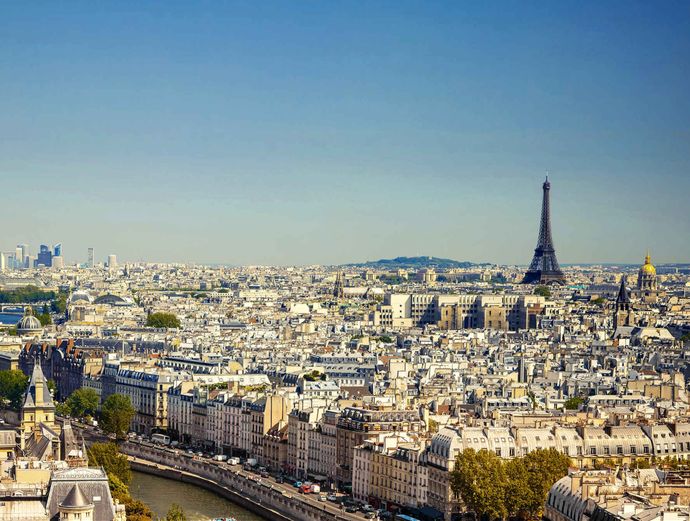
The Arc de Triomphe is the great triumphal arch at the top of the Champs-Élysées in Paris, standing in the middle of the circle where twelve avenues meet. It honors those who fought for France, and people come for its sculpture, its national memorial and the sweeping view from its roof.Napoleon ordered the arch in the early 19th century, after his victory at Austerlitz, to celebrate the achievements of his armies. Its design, by the architect Jean Chalgrin, drew on the triumphal arches of ancient Rome but on a far grander scale. Work slowed and stopped as Napoleon's fortunes fell, and the monument was only finished under King Louis-Philippe, who dedicated it to all the armies of the Revolution and the Empire. Napoleon himself passed beneath it only in death, when his remains returned to Paris.The arch has framed many of the defining moments of French history since. The writer Victor Hugo lay in state beneath it, victory parades marched through it at the end of both world wars, and the national day parade still sets off from here. Beneath the vault lies the Tomb of the Unknown Soldier, a French soldier of the First World War, and its eternal flame is rekindled each evening in a short ceremony attended by veterans' groups.Look closely and the arch is covered in detail. Large sculpture groups adorn the pillars, the best known being François Rude's Departure of the Volunteers, often called La Marseillaise, with a winged figure of Liberty urging soldiers forward. The inner walls are carved with the names of battles and of hundreds of generals, and a small museum inside the attic tells the monument's story. From the terrace on top, the avenues fan out in a star toward the city's landmarks. A guide can decode the reliefs and the stories hidden in the names.

More
Bayeux Cathedral (Cathédrale Notre-Dame de Bayeux)#6
4.9 (339)

Bayeux Cathedral (Cathédrale Notre-Dame de Bayeux)

Bayeux Cathedral, the Cathédrale Notre-Dame de Bayeux, is the great medieval cathedral of Bayeux in Normandy, rising above the rooftops of the small historic town. Consecrated in the presence of William the Conqueror, it blends Norman Romanesque and Gothic architecture, and for centuries it was the home of the famous Bayeux Tapestry.The cathedral was built in the 11th century by Bishop Odo of Bayeux, William's half-brother, and consecrated with great ceremony a little over a decade after the Norman conquest of England. It is widely believed that Odo commissioned the Bayeux Tapestry for the new building, where it was displayed in the nave on feast days for hundreds of years. Fire and war damaged the Romanesque church in the following century, and much of it was rebuilt in the Gothic style in the 13th century, leaving a fascinating mix of periods.The two western towers and the round arches of the nave survive from Odo's church, the spaces above the arches carved with interlace, lattice patterns and strange creatures. Above them rise tall Gothic windows and pointed vaults, and the soaring choir shows Norman Gothic at its most graceful. Beneath it lies the crypt from Odo's time, where faded late medieval paintings of angels playing musical instruments still decorate the vaults.Outside, the central tower is topped by a 19th-century crown of stone and copper that gives the skyline its distinctive silhouette. Bayeux was one of the first French towns freed after the D-Day landings, and it came through the Second World War largely unharmed, so the cathedral survives intact amid the old lanes. A guide can trace the links between the cathedral, the Tapestry and the Norman conquest of England, and point out the carvings most visitors walk past.

More
Bayeux Tapestry (Tapisserie de Bayeux)#7
4.8 (29)

Bayeux Tapestry (Tapisserie de Bayeux)

If you are looking for things to do in Caen we have 13 Tours and Activities to Experience Bayeux Tapestry (Tapisserie de Bayeux). Check out our verified traveler reviews and photos of Bayeux Tapestry (Tapisserie de Bayeux) tours and other things to do in Caen, and book securely when you find the perfect one. Learn the best ways to see famous Bayeux Tapestry (Tapisserie de Bayeux) and explore the most popular things to do in Caen.

More
Beuvron-en-Auge#8
5.0

Beuvron-en-Auge

If you are looking for things to do in Caen we have 2 Tours and Activities to Experience Beuvron-en-Auge. Check out our verified traveler reviews and photos of Beuvron-en-Auge tours and other things to do in Caen, and book securely when you find the perfect one. Learn the best ways to see famous Beuvron-en-Auge and explore the most popular things to do in Caen.

More
Caen Castle (Château de Caen)#9
4.8 (34)

Caen Castle (Château de Caen)

Caen Castle is the great stone fortress that William the Conqueror built in the center of Caen, in Normandy. One of the largest medieval enclosures in Europe, it now holds two museums, a medieval hall and gardens inside its walls, and visitors come to walk the ramparts and trace the story of the dukes of Normandy.William, still only Duke of Normandy, raised the castle in the middle of the 11th century, a few years before he crossed the Channel and won the crown of England. He chose a rocky spur above the town and made Caen one of the main seats of his power, founding two great abbeys nearby as well. His son Henry I strengthened the site early in the next century, adding a massive square keep and a grand hall for feasts and courts.The castle changed hands during the Hundred Years' War, when English armies captured Caen, and it later served the French crown as a garrison and barracks for centuries. The keep was pulled down during the Revolution. Heavy bombing in the summer of the Normandy landings wrecked much of the town around it, and the clearing of the ruins exposed the ramparts again, leading to a long restoration that turned the fortress into a cultural quarter.Inside the walls, the Museum of Normandy covers the region's life from prehistory to rural traditions, and the Museum of Fine Arts shows European painting from the Renaissance onward. The Exchequer hall, among the oldest civic halls in France, still stands, along with the small church of Saint George and the foundations of the vanished keep. From the ramparts, the view reaches the spire of Saint-Pierre and the roofs of the old town. A guide can bring William and his heirs to life.

More
Caen Memorial Museum (Mémorial de Caen)#10
4.7 (643)

Caen Memorial Museum (Mémorial de Caen)

The Caen Memorial, or Mémorial de Caen, is a large museum of war and peace on the northern edge of Caen in Normandy. It traces the conflicts of the 20th century, with the D-Day landings and the Battle of Normandy at its core, and many travelers use it to make sense of the invasion coast nearby.Caen paid a heavy price for liberation. In the weeks after D-Day, Allied bombing and heavy fighting left much of the city in ruins and killed many of its civilians. Decades later the city answered that history with a museum devoted as much to peace as to war, raised in the late 20th century on top of a former German command bunker dug into the hillside. The narrow fissure cut through its pale stone front is meant to recall the shattered city and the liberation that broke through.The galleries follow the century in order. The first sections look at the failed peace after the First World War, the rise of dictatorships and the slide into a second global war, then follow occupation and resistance in France, the Holocaust and total war across the world. D-Day and the Battle of Normandy fill their own halls, where film, maps, weapons, letters and personal belongings keep the human scale in view. Later rooms carry the story into the Cold War, the nuclear arms race and the long division of Europe.The tone is sober rather than triumphant, and the museum gives as much attention to civilians and the fallen of every side as to generals and battle plans. Outside, a valley of memorial gardens honors the American, British and Canadian forces, each shaped in its own style, offering a quiet place to reflect after the galleries. Many visitors find that a visit changes how they see the beaches, cemeteries and rebuilt towns around Caen.

More
Eiffel Tower#11
4.4 (103,664)

Eiffel Tower

The Eiffel Tower is the wrought-iron lattice tower on the Champ de Mars in Paris, rising beside the Seine and visible from much of the city. Built as the grand entrance to a world's fair in the late 19th century, it became the lasting symbol of Paris, and visitors come to ride up through its ironwork for sweeping views over the rooftops.The tower was designed and built by the engineering firm of Gustave Eiffel. Two of his engineers, Maurice Koechlin and Émile Nouguier, drew the first sketches, and the architect Stephen Sauvestre gave it its arches and finish. It went up for the Exposition Universelle that marked the centenary of the French Revolution, and when it opened it was the tallest structure in the world. Not everyone was pleased. A group of prominent artists and writers published an angry protest against what they saw as a useless iron monster spoiling the city.The tower was only meant to stand for a couple of decades, but it proved its worth for science, as a weather station and a platform for radio experiments, and it was allowed to stay. Over time the protests faded and Parisians claimed it as their own. It has been repainted by hand many times, always in its familiar bronze-brown shade, with tones that shift subtly from base to top so it looks even against the sky.Up close, the structure is a lesson in engineering: crisscrossing girders held by countless rivets, curved legs meeting in wide arches, and the names of French scientists and engineers engraved around the first level. Higher up, views open over the river, the lawns of the Champ de Mars and the grand boulevards, and at the very top you can peek into Eiffel's own restored office. After dark the tower glows gold and bursts into sparkling lights at the start of each hour. A guide can share the stories of its building and the rivalries it stirred.

More
Juno Beach Centre (Centre Juno Beach)#12
4.5 (3,497)

Juno Beach Centre (Centre Juno Beach)

The Juno Beach Centre is a museum of Canada's part in the Second World War, standing on the seafront at Courseulles-sur-Mer in Normandy, where Canadian troops landed on D-Day. Visitors come to learn how a nation far from Europe joined the fight, and to see the beach and German defenses that its soldiers faced that morning.The center exists because of the veterans themselves. Garth Webb, who had landed in Normandy with the Canadian forces, led a campaign to give Canada its own museum on the D-Day beaches, and volunteers and donors across the country helped raise the money to build it beside the shore where his comrades fought. The angular building is said to echo the shape of a maple leaf, and outside stands an inukshuk, a traditional Inuit stone figure built by Peter Irniq.Inside, the galleries trace Canada's war from the lean years before it began, through the mobilization of a small population and the work of the home front, to the landings and the long campaign across Europe that ended in liberation. Personal stories run through the displays, keeping the focus on the men and women who served. Outside, Juno Park preserves remains of the Atlantic Wall, the chain of German bunkers and gun positions built to stop an invasion from the sea.Beyond the museum, the beach itself carries the story. From the dunes you can picture the steel obstacles, the rising tide and the open sand the assault waves had to cross under fire, and the little harbor town behind you was freed by Canadian soldiers on the day of the landings. A guide who leads you through the old bunkers can explain how the German positions worked and what the Canadians met when the ramps of their landing craft went down.

More
Le Havre Cruise Port (Terminal Croisières Le Havre)#13
4.9 (2,034)

Le Havre Cruise Port (Terminal Croisières Le Havre)

Le Havre Cruise Port is the cruise terminal of Le Havre, a major port city in Normandy where the Seine meets the English Channel. Passengers arrive at the doorway to a city rebuilt in bold concrete after the Second World War, now a UNESCO World Heritage Site, and to the Normandy coast beyond.Le Havre was founded in the 16th century by King Francis I as a new royal port, and it grew into one of France's busiest harbors. Its center was almost wiped out by bombing in the Second World War, and the architect Auguste Perret led the rebuilding. Perret used reinforced concrete and a regular grid to create wide avenues, open squares and buildings with clean, classical lines, and UNESCO later honored the result as a landmark of postwar planning.The Church of Saint Joseph, whose slender concrete tower glows inside with thousands of pieces of colored glass, rises over the center and serves as a memorial to the bombing's victims. Near the water, the MuMa art museum holds a major Impressionist collection, fitting for the city whose harbor Claude Monet painted in Impression, Sunrise, the work that gave the movement its name. Le Volcan, a cultural center designed by Oscar Niemeyer, adds sweeping white curves to the grid.Beyond the city lie the chalk cliffs of the Alabaster Coast and the old harbor towns that drew painters to this shore. The port itself is one of the largest in France, and giant container ships moving through the harbor are part of the city's character. A long pebble beach lines the western edge of the center, giving this working port a seaside side many visitors do not expect. A guide can explain Perret's ideas, which may look severe at first but reward a closer look.

More
Longues-sur-Mer#14
4.9 (634)

Longues-sur-Mer

If you are looking for things to do in Caen we have 22 Tours and Activities to Experience Longues-sur-Mer. Check out our verified traveler reviews and photos of Longues-sur-Mer tours and other things to do in Caen, and book securely when you find the perfect one. Learn the best ways to see famous Longues-sur-Mer and explore the most popular things to do in Caen.

More
Louvre#15
4.4 (115,783)

Louvre

The Louvre is the great art museum of Paris, set in a former royal palace on the right bank of the Seine. It is one of the largest museums in the world, and visitors come for masterpieces such as the Mona Lisa and the Venus de Milo and for a collection that spans ancient civilizations to the 19th century.The building began as a fortress. In the late 12th century, King Philip Augustus built a stronghold here to guard the western side of Paris, and its massive foundations can still be seen beneath the Sully wing. Later kings turned the fortress into a palace, and from the Renaissance onward one ruler after another added wings, courtyards and grand galleries. When Louis XIV moved the court to Versailles, the Louvre was left to artists and academies, and during the French Revolution it opened as a public museum. Napoleon filled it with art taken during his campaigns, and in the late 20th century the glass pyramid by the architect I. M. Pei was added in the main courtyard as the new entrance.The collections are divided among three wings. The Denon wing holds the best-known Italian paintings, including Leonardo da Vinci's Mona Lisa, as well as large French canvases such as The Raft of the Medusa and Liberty Leading the People. At the top of a broad staircase stands the Winged Victory of Samothrace, a Greek statue of a goddess landing on the prow of a ship.The Sully wing is home to Egyptian antiquities, Greek sculpture including the Venus de Milo, and the remains of the medieval fortress. The Richelieu wing has the ancient Near East, with the law code of Hammurabi, along with Dutch and Flemish painting and the lavish apartments of Napoleon III. A knowledgeable guide makes a route through it all far easier to choose.

More

Good to know Caen

Caen trips tend to be reflective and unhurried. Most people book a private guide who collects them early for a long day along the coast, with stops at Omaha Beach, Pointe du Hoc and the cemetery on the bluff above the sand.

Back in town, evenings bring cider, seafood and creamy local cheese, and a slower day suits the abbeys, cafés and markets of the old streets.

The city suits history lovers, veterans' families and small groups who want to follow a family story at their own pace.

Normandy's climate is mild and damp, and showers can arrive in any month. Summer, June to August, gives the longest days and warmest weather, but the coast roads are busiest, and early June brings big crowds for the anniversary events.

Spring and early autumn are calmer, with apple blossom or harvest colors and cool, comfortable days for walking the bluffs.

Winter is cold, gray and windy, yet the beaches and memorials feel quiet and deeply moving. Some museums shorten their hours, so check before you go.

  • Direct trains run from Paris, and the station is a short walk from the center.
  • Ferries from England dock at Ouistreham, and cruise ships call at Le Havre and Cherbourg.
  • A tram crosses the compact center, but buses along the coast are sparse, so a car or pickup tour works best.
  • Book private guides well ahead for summer, and check the cancellation terms first.
  • Bring a rain jacket and good walking shoes, and dress respectfully at the cemeteries.
  • Split the coast across two days if you can.
Caen
Peak season Jun – Aug
Local Currency Euro (€)
Weather now
Time Zone CET (+1)
Attractions 26
Tours 46
Reviews 897

Frequently Asked Questions

The answers provided below are based on answers previously given to customers' questions.

Activity name

Discover Caen