Early Access! Black Friday 00HRS 44MIN 47SEC Up to 20% off gift cards BLACK FRIDAY
GIFT CARD SAVINGS
$100 – $249SAVE 5% $250 – $499SAVE 10% $500 – $999SAVE 15% $1,000+SAVE 20% Shop gift cards Discount applied automatically at checkout. Each card keeps its full value.
Early Access! Black Friday 00HRS 44MIN 47SEC
UP TO 20% OFF GIFT CARDS
$100–$249(save 5%) $250–$499(save 10%) $500–$999(save 15%) $1,000+(save 20%)
Shop gift cards Discount applied automatically at checkout. Each card keeps its full value.
Arles

Cool things to do in Arles

Welcome to Arles

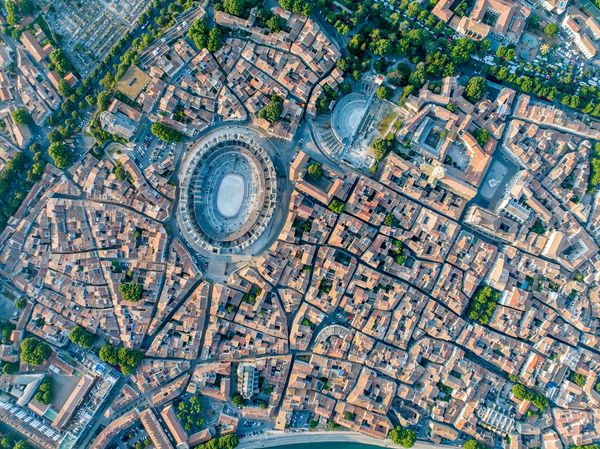
Arles is a compact old city on the Rhone, where Roman monuments stand beside the cafés and courtyards that Vincent van Gogh painted. It also makes a natural base for the villages, abbeys and lavender country of Provence. Many of the experiences here are private, with a guide and vehicle for just your party, and a large share are full-day outings that range well beyond the city walls. Cruise passengers are well served too, as a good number of trips work as shore excursions or port transfers. Every booking can be canceled for free, and guests rate them highly.

Roman Stones and Van Gogh's Arles

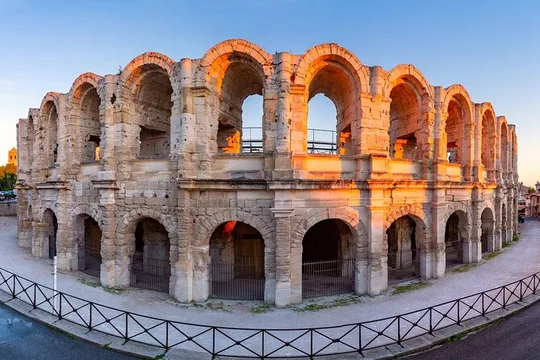
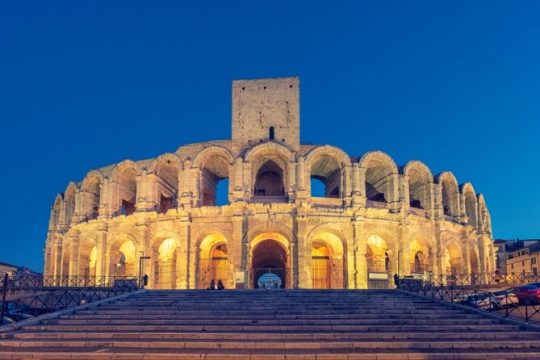
Walking tours start in the heart of town, at Place du Forum, where the café made famous in one of Van Gogh's night scenes still spreads its tables onto the square. From there, guides lead you past the Roman arena and theater to the Church of St. Trophime, with its celebrated carved Romanesque portal and a quiet cloister next door. The Espace Van Gogh, the former hospital where the painter was treated, keeps its arcaded garden much as he painted it. These city walks are among the shorter options, a good choice for a first morning or the hours before a ship departs.

Day Trips into Provence

Most longer outings head into the countryside by minivan. Les Baux-de-Provence sits on a rocky spur with a ruined castle above olive groves and limestone quarries. Near Saint-Rémy, the Saint-Paul de Mausole Monastery is the asylum where Van Gogh lived for about a year and painted some of his best-known canvases, and its cloister and fields can be visited. Further afield, the ochre cliffs of Roussillon glow red and orange, and Senanque Abbey sits in a quiet valley with rows of lavender in front of its stone walls. A full-day itinerary may link several of these in one loop, which suits couples and photographers who want a lot of Provence without driving.

  • Check whether a trip departs from your hotel, the town center or the port.
  • Allow plenty of time for return transfers if you are joining a ship.
  • Wear comfortable shoes for cobbled lanes and village streets.
  • Ask whether entry to the abbey and monuments is included.

Private Guides and Cruise Days

With most trips run privately, you can shape the day around Roman history, painting sites or a long lunch in a hill village. Hotel pickup is offered on fewer than half the trips, and some arrange collection from the cruise port and a return to the ship. Confirm the return time before you book any shore excursion, and choose an itinerary with a buffer if your ship has an early sailing.

Fitting It All Together

Every experience offers a morning start, most also run in the afternoon, and about half have evening slots, which are good for a stroll through the old town as the lights come on. Only about a third are flagged as suitable for children, so families should check the details. For a short stay, pair a half-day walk through the city with a full day out to the villages and abbeys.

Read more
Top 7 attractions in Arles
Place du Forum#1
4.3 (153)

Place du Forum

If you are looking for things to do in Arles we have 2 Tours and Activities to Experience Place du Forum. Check out our verified traveler reviews and photos of Place du Forum tours and other things to do in Arles, and book securely when you find the perfect one. Learn the best ways to see famous Place du Forum and explore the most popular things to do in Arles.

More
Church of St. Trophime (Eglise St-Trophime)#2
4.6 (15)

Church of St. Trophime (Eglise St-Trophime)

If you are looking for things to do in Arles we have 2 Tours and Activities to Experience Church of St. Trophime (Eglise St-Trophime). Check out our verified traveler reviews and photos of Church of St. Trophime (Eglise St-Trophime) tours and other things to do in Arles, and book securely when you find the perfect one. Learn the best ways to see famous Church of St. Trophime (Eglise St-Trophime) and explore the most popular things to do in Arles.

More
Espace Van Gogh (Médiathèque d'Arles)#3
4.5 (114)

Espace Van Gogh (Médiathèque d'Arles)

If you are looking for things to do in Arles we have 2 Tours and Activities to Experience Espace Van Gogh (Médiathèque d'Arles). Check out our verified traveler reviews and photos of Espace Van Gogh (Médiathèque d'Arles) tours and other things to do in Arles, and book securely when you find the perfect one. Learn the best ways to see famous Espace Van Gogh (Médiathèque d'Arles) and explore the most popular things to do in Arles.

More
Les Baux-de-Provence#4
4.9 (40)

Les Baux-de-Provence

If you are looking for things to do in Arles we have 4 Tours and Activities to Experience Les Baux-de-Provence. Check out our verified traveler reviews and photos of Les Baux-de-Provence tours and other things to do in Arles, and book securely when you find the perfect one. Learn the best ways to see famous Les Baux-de-Provence and explore the most popular things to do in Arles.

More
Roussillon#5
4.8 (3,565)

Roussillon

Roussillon is a hilltop village in the Luberon, in the Vaucluse area of Provence, built on a ridge of ochre that colors its houses, lanes and surrounding cliffs in shades from pale yellow to deep red. People come for the glowing landscape, the painted facades and the walk through the old quarries just below the village.Ochre is a natural pigment, sand and clay stained by iron oxide, and the hills around the village hold large deposits of it. Digging picked up in the 18th century, when the textile trade wanted more color, and from the end of that century the quarries were worked on an industrial scale. Thousands of people once dug, washed and dried the earth in the pits and factories of Roussillon and the nearby villages. The mines closed one by one in the 20th century, visitors replaced the pigment trade, and quarrying is now forbidden to protect the cliffs.The Ochre Trail runs through one of the old quarries, past fluted spires, sandy hollows and walls streaked orange, rust and gold, with dark pines and scrub making the colors look even brighter. Up in the village, the facades repeat that palette, and the lanes rise to a high point near the church with views toward Mont Ventoux. On the edge of town, the former Mathieu ochre factory now serves as a conservatory and working museum that explains how the earth became paint.Roussillon also has a literary footnote. The Irish writer Samuel Beckett sheltered here from the Nazis during the Second World War, worked on his novel Watt in the village and later slipped its name into Waiting for Godot. It belongs to the Most Beautiful Villages of France and sits inside the Luberon regional nature park. A guide can show you the old workings and read the layers of color in the rock in a way the signs cannot.

More
Saint-Paul de Mausole Monastery (Monastère Saint-Paul de Mausole)#6
4.7 (238)

Saint-Paul de Mausole Monastery (Monastère Saint-Paul de Mausole)

Saint-Paul de Mausole is a former monastery on the edge of Saint-Rémy-de-Provence, in the south of France, best known as the asylum where Vincent van Gogh spent about a year as a patient. Visitors come for its Romanesque church and cloister, its gardens and the rooms that recall the painter, who made some of his most celebrated works here.The monastery goes back to the Middle Ages, when a religious community settled at the foot of the Alpilles hills and built a Romanesque church and cloister. Its name is usually linked to the nearby Roman mausoleum, part of the ancient town of Glanum, whose ruins lie next door. From the early 17th century, Franciscan friars cared for the mentally ill here, and although the French Revolution ended its life as a monastery, it later reopened as an asylum for paying patients.Van Gogh admitted himself in the spring, a few months after the breakdown in Arles in which he cut off part of his ear. He was given a bedroom upstairs and a room on the ground floor to use as a studio, and while his health swung between calm and crisis, he worked with extraordinary energy. The asylum garden, the wheat field beyond the wall and the olive groves and cypresses of the hills gave him the subjects of paintings such as The Starry Night and Irises.Visitors today walk through the peaceful cloister, with its carved Romanesque capitals, and into the church, then climb to a reconstruction of a room like the one Van Gogh lived in, its window looking toward the fields. The gardens are planted with flowers he painted, and reproductions of his canvases stand near the scenes that inspired them. Because part of the complex still serves as a psychiatric clinic, the visit carries a quiet, thoughtful mood. A guide can link each view with the paintings it produced.

More
Senanque Abbey#7
4.8 (1,762)

Senanque Abbey

Sénanque Abbey is a Cistercian monastery in a narrow valley just north of Gordes, in the Luberon area of Provence. Its plain Romanesque church and cloister draw visitors for their calm and simplicity, and the rows of lavender planted in front of the abbey have made it one of the most photographed scenes in Provence.Cistercian monks from Mazan Abbey in the Ardèche founded Sénanque in the middle of the 12th century, with the backing of the bishop of Cavaillon and the Count of Provence. They lived in temporary huts at first, but the community grew fast, and with support from the local Simiane lords the abbey church was finished and consecrated before the century was out. Through the 13th and 14th centuries Sénanque prospered, running mills, outlying farms and wide estates across Provence.Its fortunes then turned. Fewer men took vows, Huguenot forces sacked the abbey during the Wars of Religion in the 16th century, and at the French Revolution the last monk was expelled and the buildings sold. A new Cistercian community bought it back in the 19th century, only to be expelled again early in the 20th century and move to the island abbey of Lérins, off Cannes. Monks returned late in the 20th century, and a small community still lives here, supporting itself by growing lavender and keeping bees.The buildings are among the purest examples of Cistercian design, with bare stone, little ornament and light falling softly through small windows. The church is shaped like a tau cross, and because the valley was too narrow for the usual layout, its altar end points north instead of east. Around the cloister lie the chapter house, the dormitory and a small warming room where the monks once worked on manuscripts. A guide can explain how each room fitted the monks' daily round of prayer, study and manual labor.

More

Good to know Arles

Arles invites a slow start, with coffee on a sunny square before the day opens out. Most visitors book one walk through the Roman and Van Gogh sites in town, then one or two full days by minivan to hill villages, abbeys and lavender fields.

With a private guide, the route bends to your interests, from painting spots to a long village lunch. Evenings are calm, made for dinner on Place du Forum.

It suits couples, art lovers and history fans, and cruise travelers with one day ashore who want it all arranged.

Spring is mild and green, with fewer visitors, so it suits walks through the old streets and drives out to the villages.

Summer is hot and crowded, and from late June into July the lavender near the abbeys reaches its deepest color. Set out early to enjoy the fields before the midday heat.

Early autumn keeps the warmth while the crowds ease, a good time for full days out. Winter is cool and quiet, and though the mistral can blow hard, the Roman sites are peaceful.

  • Trains stop in Arles on the line between Avignon and Marseille, and the closest airports are Marseille and Nîmes.
  • River cruise ships moor on the Rhone close to the old town.
  • The center is easy on foot, while a driver spares you slow, winding country roads.
  • Keep to two or three stops a day so each village gets proper time.
  • From late spring on, carry a hat, sunscreen and water, since village lanes have little shade.
  • Pack a light layer and cover shoulders in churches.
Arles
Peak season Jul – Aug
Local Currency Euro (€)
Weather now
Time Zone CET (+1)
Attractions 7
Tours 17
Reviews 501

Frequently Asked Questions

The answers provided below are based on answers previously given to customers' questions.

Activity name

Discover Arles