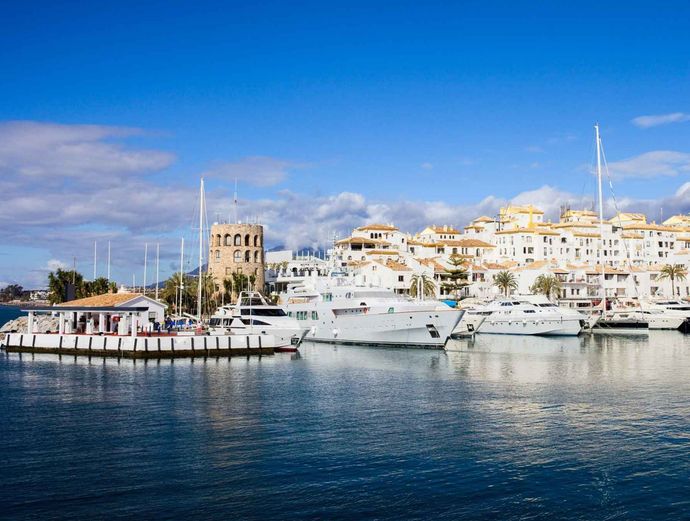
Almada attractions
More things to do in the city
 #16
Nazaré
On your own, ride the funicular from the beachfront up to Sitio, then walk or take a tuk-tuk to the fort and lighthouse. A guided day trip from Lisbon takes care of the drive and the parking problem near the lighthouse, and a local guide can explain the underwater canyon that builds the waves. Many trips combine Nazaré with other towns along the coast. The giant waves at Praia do Norte run roughly October to March, peak around December, and are never guaranteed because they depend on big swells far out at sea. The best viewpoint is the fort and lighthouse at Sitio, above the beach where the big waves break. The funicular from the beachfront climbs to Sitio, and the lighthouse is then about a 1 km walk or a short tuk-tuk ride. Praia do Norte is a beach for watching, so enjoy the waves from the cliff and keep back from the water.
More #17
Pena National Palace (Palacio Nacional da Pena)
Pena National Palace is a royal summer palace on a wooded hilltop in the Sintra Mountains, above the town of Sintra and within easy reach of Lisbon. Travelers come for its bold mix of towers, domes and painted walls, for royal rooms kept much as the last kings and queens left them, and for long views over the hills to the Atlantic.The hill was holy ground long before it held a palace. In the early 16th century King Manuel I founded a small monastery here for monks of the Order of Saint Jerome, dedicated to Our Lady of Pena. The great earthquake of the 18th century left it badly damaged, and it stood half ruined until the 19th century, when Ferdinand of Saxe-Coburg-Gotha, the German-born husband of Queen Maria II, bought the site. Working with the engineer Baron von Eschwege, he wrapped the old cloister and chapel in a Romantic residence that borrows from Moorish, Gothic, Manueline and Renaissance building all at once.Much of the pleasure lies in the details. Walls are washed in strong yellow, red and soft gray, glazed tiles cover terraces and arches, and a fierce half-man, half-fish figure crouches above one gateway as if holding the building up. Inside, the route leads through the monks' cloister, the chapel with its carved Renaissance altarpiece, royal bedrooms, a dining room set for a meal, a kitchen hung with copper pans and a grand ballroom lit by stained glass. The furnishings reflect the last years of the Portuguese monarchy in the early 20th century.Ferdinand also planted the hillside around the palace as a romantic park, with trees gathered from many continents, lakes, grottoes, follies and winding paths up to the highest crags of the range. The palace and its park belong to the Cultural Landscape of Sintra, a UNESCO World Heritage Site. A good guide reads the symbols in the stonework and the gossip of the royal household in the rooms.
More #18
Rossio Square (Praça de Dom Pedro IV)
Rossio is easy to enjoy on your own, but a guided walking tour adds the stories behind it, from its long life as a gathering place to the rebuilding of downtown after the great earthquake. Many walking tours of the Baixa district start or pause here, then link the square with neighboring plazas and the café culture around it. Food and tasting tours are another good way to see it with a local guide. Rossio is a public square in the Baixa district, so there is no gate, ticket or set visiting time. Most people stop for a short visit, then continue on foot through the surrounding streets of the Pombaline downtown. Look for the central column honoring King Pedro IV, the bronze fountains and the paving laid in Portuguese mosaic style. Cafés around the edge, including the long-established Café Nicola, make an easy place to sit and watch the square. The ginjinha, a local cherry liqueur, is a traditional drink to try at the small bars nearby.
More #19
Sintra National Palace (Palácio Nacional de Sintra)
Sintra National Palace is the old royal palace in the center of Sintra, a hill town in the forested hills near Lisbon, easy to spot by its two enormous white chimneys. It is the best-preserved medieval royal residence in Portugal, and visitors come for its painted ceilings, its tiled rooms and the stories of the kings and queens who lived there.The site was home to Moorish rulers before the Christian conquest, and Portuguese kings used it for summers and hunting trips for centuries afterward. Most of what stands today was built in two great phases: first under King John I in the early 15th century, then under King Manuel I in the early 16th, when wealth from the voyages of discovery paid for richer decoration. The palace mixes Gothic, Manueline and Moorish-inspired styles, and its collection of glazed tiles is among the oldest in the country. In the 17th century, King Afonso VI was held prisoner here by his own brother, and the floor of the room where he paced is said to be worn by his steps. Royals kept using the palace until the end of the monarchy, and it now belongs to the Cultural Landscape of Sintra World Heritage Site.Many rooms carry a legend. In the Magpie Room, the ceiling is covered with painted magpies, each holding a ribbon with the words "por bem"; the story goes that John I painted them after his queen, Philippa of Lancaster, caught him kissing a lady-in-waiting, mocking the court's gossip. The Swan Room has swans on its ceiling, each in a golden collar. The Coat of Arms Room shows the arms of Portugal's noble families on a gilded dome, above walls of blue and white tiles showing hunting scenes.A guide can tell the palace legends in the rooms they belong to.
MoreDiscover Almada

Cruises, Sailing & Water Tours
Prices from $254
Cultural & Theme Tours
Prices from $78
Day Trips & Excursions
Prices from $112
Food, Wine & Nightlife
Prices from $151
Luxury & Special Occasions
Prices from $78
Multi-day & Extended Tours
Prices from $254
Outdoor Activities
Prices from $84
Private & Custom Tours
Prices from $78
Shore Excursions
Prices from $78
Tours & Sightseeing
Prices from $78


25th of April Bridge (Ponte 25 de Abril)
Prices from $78
Alfama
Prices from $84
Bairro Alto
Prices from $84
Belém Tower (Torre de Belém)
Prices from $84
Cabo da Roca
Prices from $112
Commerce Square (Praça do Comércio)
Prices from $84
Costa da Caparica
Prices from $78
Edward VII Park (Parque Eduardo VII)
Prices from $84
Estoril
Prices from $112
Frigata Dom Fernando II e Glória
Prices from $78
Lisbon Cathedral (Sé de Lisboa)
Prices from $84


 From $1

 From $3
 From $22