Frequently Asked Questions
The answers provided below are based on answers previously given to customers' questions.
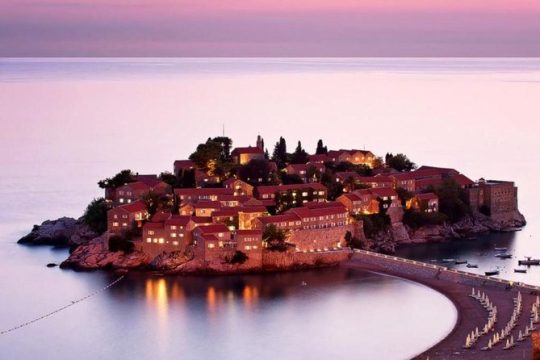
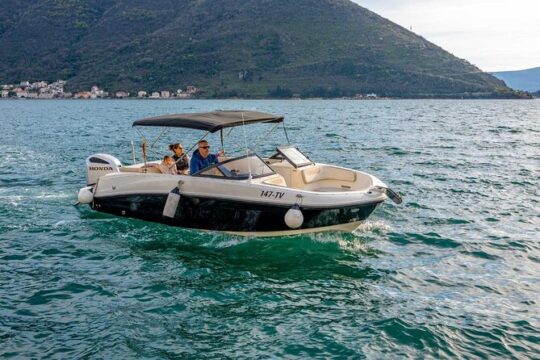
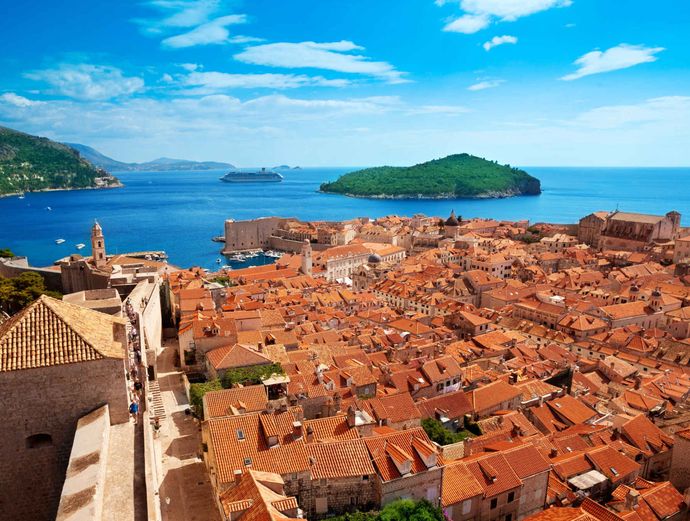
Montenegro's Adriatic Coast packs a remarkable amount of drama into a short stretch of shoreline. Limestone mountains rise almost straight out of the sea, medieval walled towns crowd the water's edge, and the coast is broken up by deep inlets, islets and sheltered coves that seem made for exploring by boat. The country is small, so peaks, beaches and centuries-old stone streets all lie close together, and you can see a great deal without long hours on the road, and a morning on a mountain road can easily end on a pebble beach the same afternoon. Most of the outings on offer reflect that compact geography: private sightseeing with a local driver, relaxed boat rides along the inlets, speedboat runs out to sea caves, water sports off the beaches, and cultural walks through old towns shaped by Venetian, Ottoman and Austro-Hungarian rule. Most experiences here can be booked privately, which suits families and small groups who want to set their own pace, and nearly all come with free cancellation. Many trips last half a day or a little more, and morning departures are almost universal, so afternoons stay open for a swim or a long lunch of grilled fish and local wine. A big share of visitors arrive by cruise ship, and plenty of the options are planned around port times. Ratings run very high, with an average close to five stars, a sign that small local outfits take real pride in showing off their home waters.
For most travelers, Kotor is the heart of this coast, and the first glimpse from the water explains why. The town sits at the far end of the Bay of Kotor, a winding, fjord-like inlet ringed by steep grey mountains, and its defensive walls climb the slope behind the rooftops in a long zigzag. Inside Kotor Old Town, a UNESCO World Heritage site, marble-paved lanes open onto small squares, Romanesque churches, bakeries and cafes, while the town's famous cats wander wherever they please. The fortifications above reward a steep climb with a view straight down the bay, and that climb is far kinder early in the morning, before the heat of the day builds. Evenings bring a different mood, as day visitors drift back to their ships, the squares fill with locals, and the walls glow under floodlights against the dark mountainside.
Because large ships call right below the walls, this is where shore excursions and ports-of-call outings are most in demand. A half-day trip can take in a boat ride out to Our Lady of the Rocks (Gospa od Skrpjela), a small man-made islet crowned by a blue-domed church, and still bring you back in good time for all aboard. Longer private outings follow the shore with a driver, or leave the bay by speedboat for the Blue Cave (Plava Spilja), where sunlight filtering through the water turns the inside of the grotto a vivid blue. Port transfers serve cruise passengers who start or finish a voyage here and need to reach an airport, a hotel or the next stop on their trip. If you come ashore for the day, start as early as you can, because the old town grows crowded when several ships are in at once, and a private driver can steer you toward quieter corners of the bay where the stone villages and waterside churches feel far from the bustle.
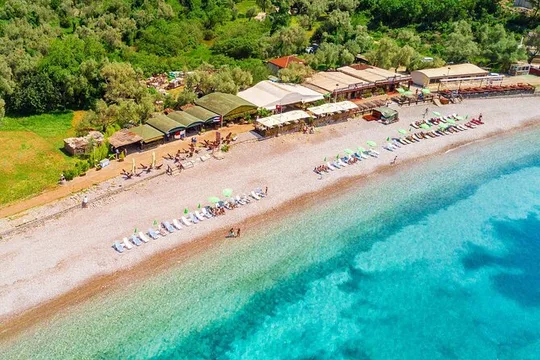
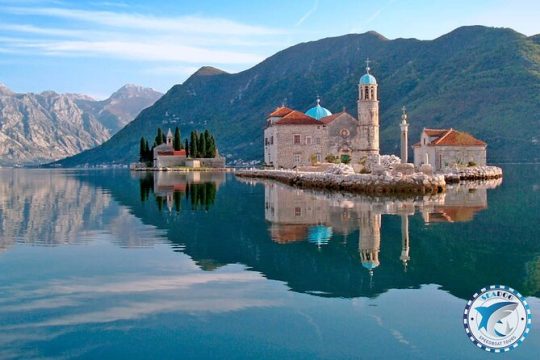
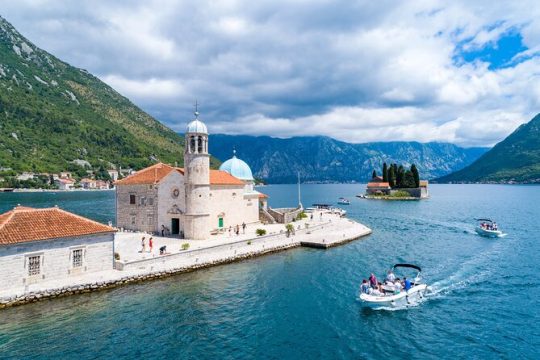
#1Our Lady of the Rocks is a small man-made island in the Bay of Kotor, just off the old seafaring town of Perast in Montenegro, topped by a domed Catholic church. People cross to see the church, its museum of Baroque paintings and sailors' offerings, and to hear how the island itself was made.Legend says that in the 15th century local seamen found an icon of the Madonna and Child resting on a rock in the bay. Bound by an oath, they began dropping a stone onto the spot after every safe voyage. Over the centuries the pile grew into an island, helped along by old and captured ships that were loaded with rock and sunk on purpose. The church that stands on it dates from the 17th century and was renovated in the 18th.The tradition has never really stopped. Once a year, on a summer evening, people from Perast set out in a flotilla of small boats and toss stones into the water around the island, a custom called the Fašinada that slowly widens its shores. Inside the church, dozens of paintings by Tripo Kokolja, a 17th-century Baroque artist from Perast, cover the walls and ceiling, and his vast canvas of the Death of the Virgin is the centerpiece. The revered icon that began the story, painted by an artist from Kotor, hangs here too.The small museum beside the church gathers gifts from the seafaring families of the bay, including a large collection of silver votive tablets and works by Italian painters. Its most moving piece is an embroidery by a local woman, Jacinta Kunić-Mijović, who is said to have stitched it for about a quarter of a century while waiting for her sailor husband to come home. She used gold and silver thread and worked in strands of her own hair, and her eyesight failed over those long years. A guide gives these objects their human stories.
More
#2The Bay of Kotor is a deep, winding inlet of the Adriatic Sea on the coast of Montenegro, ringed by steep limestone mountains and old stone towns. Often called the southernmost fjord in Europe, it draws travelers for its dramatic scenery, its walled town of Kotor and its waterfront villages.Geologically the bay is a drowned river canyon rather than a true fjord, which explains its twisting shape of inner and outer basins joined by narrow straits. People have settled its shores since ancient times. Romans left mosaics at Risan, and in the Middle Ages Kotor grew into a busy trading town. For centuries much of the bay was ruled by Venice, which left its mark in fortifications, palaces and lion emblems carved over gateways. The bay became known for its seafaring families, and its sailors and captains traveled the Mediterranean and beyond. The whole area is now recognized as a World Heritage site.Kotor's old town is a maze of stone lanes, squares and churches, led by the Romanesque Cathedral of Saint Tryphon. Above it, defensive walls zigzag up the mountainside to a fortress with views straight down the bay. Perast, a small town of baroque captains' palaces and bell towers, faces two islets offshore. Our Lady of the Rocks was built up from the sea floor by local sailors who dropped stones and sank old ships on a reef, and its church is filled with votive paintings and silver offerings. Its neighbor, Saint George, holds a monastery among cypress trees.Around the rest of the bay are Tivat with its modern marina, the old fortress town of Herceg Novi near the open sea, and smaller fishing villages strung along the shore road. The mountains drop straight into calm water, so reflections shift with the light all day. A guide can add the stories of sieges, saints and sailors behind each town.
More
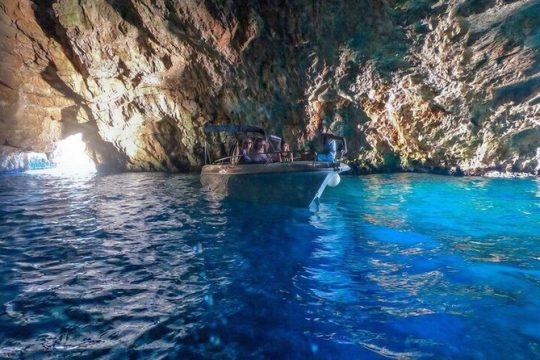
#3The Blue Cave, known locally as Plava Spilja, is a sea cave on the coast of the Luštica Peninsula in southwestern Montenegro, close to the cape of Rt Veslo near the mouth of the Bay of Kotor. Visitors come to float and swim inside its chamber, where sunlight filtering through the water turns everything a glowing shade of blue.The cave was carved by the Adriatic Sea, which has worn away at the limestone cliffs of Luštica over a very long time. Waves found a weakness in the rock and hollowed out a vaulted chamber, leaving an arched opening at sea level that small boats can slip through in calm weather. For generations it was known mainly to local fishermen and sailors, and as tourism grew along the Montenegrin coast it became one of the best-loved sights of the region.The color is the reason to go. Light enters through the underwater part of the mouth and reflects off the floor of the cave, so the water lights up from below in shades from turquoise to deep sapphire while the rocky ceiling stays in shadow. Swimmers seem to glow as they move through it, and the echo of voices and lapping waves adds to the atmosphere. The water is clear enough to see the bottom and the rocks along the edges of the chamber.The coastline around the cave is wild and quiet, with steep cliffs, small pebble coves and pine-covered slopes rising above the sea. Nearby, the fortress island of Mamula guards the entrance to the bay, and tunnels where Yugoslav navy submarines once hid are cut into the shoreline. A skipper who knows these waters can share local stories about the coast and the old military sites along it.
More
#4Kotor Old Town is the walled medieval heart of Kotor, a port at the inner end of the Bay of Kotor on Montenegro's Adriatic coast. Its marble-paved lanes, churches and palaces sit at the foot of a steep mountain, and visitors come for the architecture, the long Venetian history and the views from the fortress walls high above.People have lived on this sheltered shore since ancient times, and the town passed through the hands of Romans, Byzantines and medieval Serbian rulers before Venice took control in the 15th century. Under Venetian rule, which lasted for centuries, Kotor became a fortified trading port and grew the stone houses and defenses that shape it now. Later it came under Austrian rule, and after a damaging earthquake in the 20th century much of the town was carefully restored. UNESCO lists the old town and its bay as a World Heritage Site.The town is a tangle of narrow streets that open into small squares, each with its own church or palace. The Cathedral of Saint Tryphon, a Romanesque church with twin bell towers, is the town's spiritual center and holds relics and frescoes. Nearby, the little Church of Saint Luke once served both Catholic and Orthodox worshippers, while the Orthodox Church of Saint Nicholas stands on its own square. Grand family palaces, a clock tower and a maritime museum recall the wealth of local sea captains. Above it all, the defensive walls zigzag up the mountainside to the fortress of San Giovanni, passing the small Church of Our Lady of Remedy along the way. Kotor is also known for its many cats, which roam the lanes and have become a local symbol.A guide can bring out the stories of the sailors, merchants and saints who built this compact town.
More
#5Budva Old Town is the walled heart of Budva, a compact maze of stone lanes, squares and churches on a small peninsula on Montenegro's Adriatic coast. Travelers go for its Venetian walls, its quiet churches and the way the old town meets the sea, with beaches lying just beyond its gates.Budva ranks among the oldest settlements on the Adriatic, and legend credits its founding to Cadmus, a prince of Greek myth who settled here in exile. Greeks, Romans and Byzantines all left their mark, and for several centuries the town belonged to the Republic of Venice, which knew it as Budua and built most of the walls that still ring it. Austrian rule followed, and later the town became part of Yugoslavia. In the late 20th century a powerful earthquake struck the coast and badly damaged the old town, and the restoration that followed took years, rebuilding houses, churches and walls stone by stone in their old form.Inside the walls, narrow streets of pale stone open onto small squares where several churches stand close together. The Church of St. John, with its slender bell tower, served as the town's cathedral, while the small Church of Santa Maria in Punta and the Church of St. Sava keep their own long histories. The Orthodox Church of the Holy Trinity, with its striped facade of red and white stone, stands nearby. A small museum within the walls displays finds from Greek and Roman graves uncovered nearby. At the seaward tip, the Citadel looks out over the water and the island of Sveti Nikola.Along the walls, the path gives views over terracotta rooftops on one side and the open sea on the other. A guide can explain how Greek, Venetian and Slavic traditions blend in the town's churches and street plan.
More
#6The Church of St. Luke is a small medieval church on St. Luke's Square in the walled Old Town of Kotor, Montenegro. Built in the late 12th century, it is among the oldest buildings in town, and visitors stop to see a modest stone church whose story belongs to both Catholic and Orthodox Christians.According to an inscription, the church was founded by a local nobleman, Mauro, and his wife Bona, at a time when Kotor lay within the realm of the Serbian ruler Stefan Nemanja. It was built as a Catholic church, and its compact form blends Byzantine and Western features, with a single nave and plain, sturdy stone walls. In the 17th century it passed to the Orthodox community, and it belongs to the Serbian Orthodox Church.Around the same time, the painter Dimitrije Daskal created the icons for its iconostasis, the screen of painted panels that separates the sanctuary from the body of the church. Traces of medieval frescoes still cling to parts of the walls, hints of how richly the interior was once painted. Remarkably, the little church came through the earthquakes that battered Kotor over the centuries, including the severe quake of the late 20th century, with little damage.The church sits in one of the Old Town's quieter squares, surrounded by stone houses and narrow lanes, and its simple facade gives little hint of how much history it holds. Close by stand the larger Orthodox Church of St. Nicholas and the Romanesque Cathedral of St. Tryphon, seat of the Catholic bishop, which together show how different faiths have shaped the town. The whole Old Town belongs to a UNESCO World Heritage Site that takes in the Bay of Kotor. A guide brings out the stories of the communities who worshipped here.
More
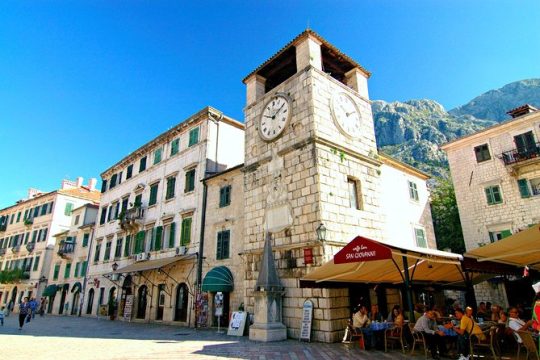
#7The Kotor Clock Tower is the stone tower with a large clock face that greets visitors on the main square of Kotor's walled Old Town, on Montenegro's Adriatic coast. It faces the town's main sea gate, and people stop here as the natural first sight of the town, a marker of its Venetian centuries and a meeting point on the square.Kotor spent several centuries under the Republic of Venice, which fortified the town at the head of its deep, mountain-ringed bay. The tower dates from the early 17th century, during that Venetian period, and it has stood through every century since, a familiar landmark for the town. If you look carefully, you can see that it leans slightly, a reminder of the ground shifting beneath it over the years.The tower blends features from different periods, with a sturdy stone base, small windows and an ornamented upper section crowned by the clock. In front of it stands a small stone pyramid known as the pillar of shame, where people who broke the town's laws were once made to stand on display for passers-by to see. The square around it, Trg od Oružja or the Square of the Arms, takes its name from the weapons that were once made, repaired and stored there under Venetian rule.The rest of the square fills in the picture of Kotor's past. Old stone buildings line its edges, among them the former palace of the Venetian governors, and the polished paving has been worn smooth by generations of feet. Behind the rooftops, the town walls zigzag up the steep mountainside toward the fortress above. A guide can point out the carved coats of arms and lion reliefs that Venetian Kotor left on its facades.
More
#8Lake Skadar is the largest lake in the Balkans, spreading across the border between Montenegro and Albania south of Podgorica. The Montenegrin side is a national park of reed beds, water lilies and steep limestone hills, and travelers come for boat trips past island monasteries, fishing villages and huge numbers of birds.The lake sits in a karst basin, fed mainly by the Morača River and by springs that rise from the lake bed itself, and it drains through the Bojana River to the Adriatic Sea. Its size swells and shrinks with the seasons, as the water spreads over wide areas on the northern side while the southwestern shore stays rocky and steep. In the late Middle Ages the shores were the heart of Zeta, the medieval state that came before Montenegro, and its rulers built churches and monasteries on the small islands. The Crnojević family made the lakeside fortress of Žabljak their capital before moving into the mountains. Later centuries brought Ottoman forts, border struggles and, during the Second World War, a sunken steamboat that still lies near Rijeka Crnojevića.On the water, boats glide through channels lined with reeds and lily pads to islets such as Beška, with its two small churches, and Grmožur, a former fortress that later served as a prison. The lake is one of Europe's most important bird reserves and one of the last strongholds of the Dalmatian pelican, the park's symbol, along with herons, cormorants and many migrating species. Fishermen still catch carp and the tiny bleak that appear on local menus. Villages such as Virpazar and Rijeka Crnojevića, with its graceful old stone bridge, keep a slow pace, and the hills around them are known for vineyards producing red Vranac wine.A local boat guide knows the hidden channels, the best bird spots and the stories of the island churches.
More
#9Lovćen National Park protects Mount Lovćen, the limestone mountain that rises behind Kotor and Cetinje in southwest Montenegro. Travelers go for the mausoleum of Petar II Petrović Njegoš near the summit and for some of the widest views in the country, reaching from the Bay of Kotor to the Adriatic and far inland.The mountain holds a special place in Montenegrin identity. Its dark slopes, once thickly covered in forest, are often said to have given the country its name, Crna Gora, the Black Mountain. Njegoš, a 19th century prince-bishop and the nation's best-known poet, asked to be buried on the peak of Jezerski Vrh. A small chapel was built there for him, but it was badly damaged during the First World War. After the Second World War a new monument was planned, and in the second half of the 20th century it was replaced by the mausoleum designed by the Croatian sculptor Ivan Meštrović.At the summit, two granite figures of women in traditional dress stand guard at the entrance. Inside, a large statue shows Njegoš seated in thought with a great eagle spreading its wings behind him, set beneath a gilded mosaic ceiling. Beyond the building, a circular viewing platform sits on the edge of the peak, with layers of ridges, valleys and coastline falling away on every side. On clear days the panorama takes in the winding bay, Lake Skadar and the open sea.The rest of the park is a karst landscape of beech forests, rocky meadows and small upland villages. Hikers follow marked trails between the peaks, and the old road from the coast twists up through switchbacks with views over Kotor. Njeguši, the village where Njegoš was born, is known for its smoked ham and cheese. A local guide adds the history and legends that bind the mountain to the nation.
More
#10Ostrog Monastery is a Serbian Orthodox monastery built into a sheer cliff face high above the Zeta valley in central Montenegro, between Podgorica and Nikšić. It is the most visited pilgrimage site in the country, drawing believers and travelers alike to its gleaming white facade and the relics of Saint Basil of Ostrog.The monastery was founded in the 17th century by Saint Basil, a bishop of Herzegovina, who sought refuge in the rock from Ottoman raids and settled in natural caves high on the mountain. After his death, his body was kept in the cave church, and stories of healing spread across the Balkans. Over the centuries the monastery was damaged by fire and war and rebuilt each time, and pilgrims of many faiths, Orthodox Christians, Catholics and Muslims among them, still come to pray at his shrine.The complex has two parts. The Lower Monastery, set among trees farther down the slope, centers on the Church of the Holy Trinity, built in the 19th century, with the monks' quarters and lodgings for pilgrims. The Upper Monastery is the famous one, its whitewashed walls set into the cliff so that from below it looks as if it grows from the stone. Inside are two tiny cave churches, their walls and ceilings painted directly onto the rock with frescoes of saints. Saint Basil's relics rest in the Church of the Presentation, and a grapevine growing out of the rock nearby is said to be miraculous. Many pilgrims make the climb between the two monasteries barefoot as an act of devotion.A guide can explain the life of the saint, the meaning of the icons and the rituals that pilgrims follow at the shrine, and why the cliff has drawn the faithful for so long.
More
#11St. Tryphon Cathedral is the Roman Catholic cathedral at the heart of Kotor's walled Old Town, on Montenegro's Bay of Kotor. Travelers come to see one of the best-preserved Romanesque churches on the eastern Adriatic, with its twin bell towers, faded medieval frescoes and treasury of relics.The story begins with Saint Tryphon, an early Christian martyr from Asia Minor. In the ninth century, the tale goes, merchants carrying his relics took refuge in the bay from bad weather, and a local man bought the remains and built a small church for them. The townspeople took Tryphon as their protector, and in the 12th century they raised the present, much larger cathedral on the same spot, consecrating it to him.Centuries of rebuilding have shaped its look. A powerful quake in the 17th century brought down much of the front, and the two bell towers were rebuilt in a baroque style, which is why they do not quite match. In the late 20th century it needed further repair, and careful restoration brought it back to its best. The building is made from pale stone with a pinkish tint, and a large rose window sits between the towers above the arched entrance.Inside, the nave is lined with stone columns and round arches, and the mood is calm and spare. Above the high altar rises a Gothic stone canopy carved in the 14th century, topped with scenes from the saint's life, and behind it hangs a gilded silver altarpiece. Fragments of frescoes painted by Byzantine-trained artists survive on the arches and walls. Upstairs, the treasury keeps reliquaries, church silver and the relics of the saint himself. A guide brings out the legends of the saint and the town's sea-trading past that shaped the church.
More
#12The Tara River Canyon is a deep, wooded gorge in northern Montenegro, carved by the Tara River through the mountains of Durmitor National Park. Often counted among the deepest canyons in Europe, it draws travelers for the views from its high arched bridge, its clear green water and the rafting trips that run through its rapids.The river rises in the mountains of eastern Montenegro and flows northwest through limestone country, cutting a gorge so steep that for long stretches the only way through is on the water. Forests of black pine, fir and beech cling to the slopes, and springs and waterfalls pour in from the cliffs. The river and its basin are protected as a UNESCO biosphere reserve, and much of the canyon lies inside a national park listed as a World Heritage Site. The water is famously clean and clear, a cool green even in summer.The Đurđevića Tara Bridge is the canyon's best-known landmark, a concrete arch bridge completed shortly before the Second World War to carry the road high above the river. During the war, partisans blew up one of its arches to stop advancing Italian troops, and the engineer who had helped build it took part in the demolition and was later captured and executed. The bridge was repaired after the war, and its graceful arches have become a symbol of the region. A zip line now sends riders flying across the gorge beside it.Downstream, the Tara meets the Piva River at the border with Bosnia and Herzegovina, and together they form the Drina. Along the way, the canyon walls rise far overhead while the river runs through calm pools and fast white water. A guide on the river knows each rapid by name and can share the local stories tied to the villages and bends along its course.
MoreDays on Montenegro's Adriatic Coast start early and end slowly. Most visitors take a boat ride around the bay below Kotor or a private drive along the shore in the morning, then stop for a seafood lunch and a swim.
Later in the day, the stone lanes and the climb to the fortress reward a slower pace, and dinner by the water rounds things off.
The coast suits couples, families and cruise passengers with one day ashore, along with travelers who prefer sea views to museum halls.
June to August brings hot sun, warm water and the most cruise calls, so Kotor and its bay are at their busiest. Book drivers and boats early for these weeks.
May and September keep the sea warm enough for a swim while the old town lanes grow quieter. Spring and autumn are also cooler for the fortress steps and mountain drives.
Winter is mild but wet, with quiet streets and a few boat trips paused until calmer weather returns. Keep plans flexible and pack a rain jacket.

The answers provided below are based on answers previously given to customers' questions.