


attractions de Chine
Plus d'activités à faire dans le pays
 #16
Base des pandas de Dujiangyan
Si vous cherchez des activités en Chine, nous vous proposons une excursion à la base de pandas de Dujiangyan. Consultez les avis et photos de voyageurs vérifiés sur les excursions à la base de pandas de Dujiangyan et d'autres activités en Chine, et réservez en toute sécurité dès que vous trouvez l'activité idéale. Découvrez les meilleures façons de visiter la célèbre base de pandas de Dujiangyan et explorez les activités les plus populaires en Chine.
Autres #17
Route de Duolun
Si vous cherchez des activités en Chine, nous vous proposons une excursion sur la route de Duolun. Consultez les avis et photos de voyageurs vérifiés sur les excursions sur la route de Duolun et d'autres activités en Chine, et réservez en toute sécurité dès que vous trouvez l'activité idéale. Découvrez les meilleures façons de visiter la célèbre route de Duolun et explorez les activités les plus populaires en Chine.
Autres #18
Grand Canal
The Grand Canal is a vast network of waterways in northern and eastern China, linking Beijing in the north with Hangzhou far to the south. Often called the longest artificial waterway on earth, it is a UNESCO World Heritage Site, and travelers come to glide past stone bridges, old city gates and waterside streets in canal cities such as Suzhou.Its oldest sections date to the Spring and Autumn period, when local states began cutting channels between rivers. Under the Sui dynasty the scattered stretches were joined into one great system, and for centuries afterward it carried grain and goods between the Yangtze, Yellow and Hai river basins, feeding imperial capitals far from the rice-growing south. Later dynasties repaired and rerouted it, and the full course runs for nearly 1,800 kilometers.Much of the canal remains a working waterway, and in its older cities it also feels like an open-air museum. In Suzhou the water slips past ten city gates and more than 20 stone bridges, through districts of whitewashed houses, dark tiled roofs and stone steps leading down to the canal's edge. Watching heavy cargo barges and small sightseeing boats share the same channels is part of the appeal, a reminder that this is history still in use.The canal shaped the towns along its banks as much as the trade that passed through them. Merchants prospered on the cargo moving between north and south, and much of their wealth went into the gardens, temples and fine houses that make cities such as Suzhou and Yangzhou so rewarding to explore. Officials, scholars and travelers used the same route, so ideas and tastes moved along it with the grain. A guide can bring out the stories behind the bridges, gates and waterfront houses that are easy to pass without a second look.
Autres #19
Grand Hall du Peuple
The Great Hall of the People is the vast state building on the west side of Tiananmen Square in Beijing, where China's national legislature meets and leaders receive foreign guests. People come to stand inside the rooms where the country's biggest political occasions unfold and to take in a building designed to impress on every level.The hall was built as one of the Ten Great Constructions, a set of landmark buildings raised in Beijing for the tenth anniversary of the People's Republic. Thousands of workers completed it in about ten months, a remarkable pace for a structure of this size. Its long front of tall stone columns gives it a monumental, classical look, softened by Chinese decorative details, and it faces the National Museum across the square, so the two buildings frame the open space between them.Inside, the scale is the story. The Great Auditorium seats about 10,000 people beneath a ceiling studded with lights around a large red star, and this is where the annual national congress gathers. The State Banquet Hall can serve up to 5,000 diners at once and has hosted dinners for visiting presidents and monarchs. More than 30 conference halls are each named for a Chinese province or region and decorated with art and crafts from that part of the country.Walking the public route gives a rare look inside the working heart of Chinese politics, where the furnishings, artworks and sheer proportions are meant to express national unity and ambition. Even the entrance hall and corridors are built on a scale that makes ordinary visitors feel small. The provincial rooms are especially revealing, since each one tries to capture the character of a different region, from the far west to the southern coast. A guide can decode the symbols in the decoration and point out where famous meetings and handshakes took place.
Autres #20
La Grande Muraille de Badaling
Si vous cherchez des activités en Chine, nous vous proposons 3 circuits et excursions pour découvrir la Grande Muraille à Badaling. Consultez les avis et photos de voyageurs vérifiés sur les circuits à la Grande Muraille de Badaling et d'autres activités en Chine, et réservez en toute sécurité dès que vous trouvez l'excursion idéale. Découvrez les meilleures façons d'admirer la célèbre Grande Muraille à Badaling et explorez les activités les plus populaires en Chine.
Autres #21
La Grande Muraille de Jiankou
Si vous cherchez des activités en Chine, nous vous proposons 3 circuits et excursions pour découvrir la Grande Muraille à Jiankou. Consultez les avis et photos de voyageurs vérifiés sur les circuits à la Grande Muraille de Jiankou et d'autres activités en Chine, et réservez en toute sécurité dès que vous trouvez l'excursion idéale. Découvrez les meilleures façons d'admirer la célèbre Grande Muraille à Jiankou et explorez les activités les plus populaires en Chine.
Autres #22
Grande Muraille de Chine
The Great Wall of China is a vast series of fortifications across northern China, and its best-known stretches climb the mountains north of Beijing. Travelers come to walk its ramparts and watchtowers, take in long views over the ridges and see for themselves the scale of one of the largest building projects in human history.The wall was built to guard China's farmland against nomadic groups from the steppe, and it is not a single wall at all. Over many centuries, different dynasties raised walls, trenches, ramparts, watchtowers and forts, and the surviving walls and related sites stretch for thousands of miles. The earliest sections were mostly rammed earth or stone, and later rulers joined and extended them into longer defensive lines. It is often said to be visible from space, but that popular claim is a myth.The wall most visitors picture is the work of the Ming dynasty, which rebuilt key sections in brick and stone. Ming builders added crenellated battlements, signal towers that passed warnings along the ridges with smoke and fire, and barracks for the garrisons stationed there. In places the wall follows the very crest of the ridge, dropping and rising so sharply that the steps become a climb. Walking these stretches, you climb steep stairways between towers and look out from the same openings soldiers once watched through.Near Beijing, each section has its own character. Badaling is the best known and was the first opened to the public, with broad, restored walkways. Mutianyu runs along steep, wooded mountains and was among the first sections restored in modern times. Jinshanling, about 11 kilometers long, follows dramatic slopes studded with watchtowers, with stretches that feel wilder and more weathered. A guide explains how the defenses worked and how the wall changed from one dynasty to the next.
Autres #23
Grande Muraille de Gubeikou
Si vous cherchez des activités en Chine, nous vous proposons une excursion à la Grande Muraille de Gubeikou. Consultez les avis et photos de voyageurs vérifiés sur les excursions à la Grande Muraille de Gubeikou et d'autres activités en Chine, et réservez en toute sécurité dès que vous trouvez l'offre idéale. Découvrez les meilleures façons de visiter la célèbre Grande Muraille de Gubeikou et explorez les activités les plus populaires en Chine.
Autres #24
Salle de prière pour la bonne récolte
Si vous cherchez des activités en Chine, nous vous proposons 3 circuits et visites pour découvrir le Hall de prière pour une bonne récolte. Consultez les avis et photos de voyageurs vérifiés sur les visites du Hall de prière pour une bonne récolte et d'autres activités en Chine, et réservez en toute sécurité dès que vous trouvez l'activité idéale. Découvrez les meilleures façons de visiter le célèbre Hall de prière pour une bonne récolte et explorez les activités les plus populaires en Chine.
Autres #25
Grande Muraille de Huanghuacheng
Si vous cherchez des activités en Chine, nous vous proposons une excursion pour découvrir la Grande Muraille de Huanghuacheng. Consultez les avis et photos de voyageurs vérifiés sur les excursions à la Grande Muraille de Huanghuacheng et d'autres activités en Chine, et réservez en toute sécurité dès que vous trouvez l'activité idéale. Découvrez les meilleures façons d'admirer la célèbre Grande Muraille de Huanghuacheng et explorez les activités les plus populaires en Chine.
Autres #26
Rivière Huangpu
The Huangpu River is the waterway that runs through the heart of Shanghai, splitting the city into the historic Puxi side and the high-rise district of Pudong. Travelers come to see both faces of the city at once, with the grand old buildings of the Bund on one bank and the towers of Lujiazui on the other.The river begins at Dianshan Lake, west of the city center, and flows north through Shanghai to meet the Yangtze estuary near Baoshan. Suzhou Creek, its main tributary, joins it near the northern end of the Bund. The river gave Shanghai its harbor, linking the city to the Yangtze and the open sea beyond. It remains a working river, with ferries and freight boats sharing the water with sightseeing vessels, and that constant movement is part of its character.On the west bank lies Puxi, the older heart of the city, where the Bund presents a long row of historic buildings in many architectural styles, a legacy of the years when Shanghai grew into a great trading port. Across the water, the Lujiazui district of Pudong answers with a cluster of glass towers that has become the modern face of Shanghai. Seen from the river itself, the two banks tell more than a century of the city's story in one sweep.Many visitors take in the river from the deck of a boat, watching the skyline slide past as the banks change around them. From mid-river, the scale of both skylines is far easier to grasp than from the streets. After dark, the waterfront buildings glow with light, and their reflections turn the river into a moving ribbon of color. A guide can put names and stories to the buildings on both banks, so the view becomes a lesson in how Shanghai grew.
Autres #27
Jardin de l'humble administrateur (Zhuo Zheng Yuan)
The Humble Administrator's Garden, or Zhuo Zheng Yuan, is a classical Chinese garden in the old city of Suzhou and the largest of the city's famous gardens. Part of the UNESCO-listed Classical Gardens of Suzhou, it draws visitors for its lake, pavilions, bridges and carefully framed views, a masterclass in the art of making nature feel endless within walls.The garden was created by Wang Xianchen, a scholar-official who left government service and laid out his retreat on the site of a ruined temple. Its name borrows from an old Chinese literary phrase suggesting that tending a garden is the only governing a humble, unambitious man is fit for, a wry choice for someone who had stepped away from public life. Wang's friend, the celebrated painter Wen Zhengming, produced works commemorating the garden. Scholars also believe it inspired the setting of Dream of the Red Chamber, one of the great classic novels of Chinese literature.Covering about 5.2 hectares, the garden is laid out in three sections around a large lake, with water making up much of the scene. Some 48 buildings, from halls and pavilions to covered walkways, sit along the shores and on islands, each placed to frame a particular view. Winding paths and zigzag bridges slow the walk down, revealing the garden a little at a time, and the Flying Rainbow Bridge, described as the only arched bridge in a Suzhou garden, is a favorite detail to look for.The garden also holds more than 700 penjing, the Chinese art of miniature landscapes in trays and pots, where small trees and stones stand in for whole mountains and forests. Every element here, from the shape of a window to the placement of a rock, was meant to invite reflection. A guide can share the poetry behind the garden's names, so each pavilion becomes a line in an old scholar's story.
Autres #28
Temple du Bouddha de Jade (Yufo Si)
You can walk the courtyards and halls on your own in about an hour, but the temple has a lot of layered history that is easy to miss without context. A guided visit explains the statues, the rituals and the story of the two jade Buddhas, and many guides pair the temple with other Jing'an sights or a wider city itinerary, so the half-day feels easy and well organized. Plan on about an hour to an hour and a half, or closer to forty minutes if you only see the main halls. Cover your shoulders and knees, and take your hat off when you step inside a hall. Photos without flash are fine in most areas, but photography is not allowed in the hall that holds the jade Buddha. The staircase up to the jade Buddha hall is narrow and steep, which makes it hard with strollers or limited mobility. A vegetarian restaurant near the east exit serves noodles and dumplings, and it gets busy around midday.
Autres #29
Parc Jingshan (Jingshan Gongyuan)
Le parc Jingshan (Jingshan Gongyuan) est un ancien jardin impérial aménagé autour d'une colline artificielle, juste au nord de la Cité interdite à Pékin. Son pavillon sommital offre une vue imprenable sur les toits dorés du palais, et les visiteurs viennent autant pour ce panorama que pour les pavillons du parc, ses arbres centenaires et l'animation de la vie locale. Cette colline est un vestige de travaux publics qui avait une fonction bien précise. Lorsque les empereurs Ming construisirent leur palais au XVe siècle, les ouvriers creusèrent des douves et des canaux, et la terre excavée fut entassée ici, derrière le palais. Cet emplacement respectait les principes du feng shui, qui préconise une colline au nord pour protéger un édifice des vents violents et des influences néfastes, d'où son autre nom, la colline du Feng Shui. Un second surnom, la colline du Charbon, est souvent lié à une légende selon laquelle du charbon était autrefois entreposé à son pied. Pendant des siècles, ce fut un jardin privé des empereurs, interdit au peuple. Ce lieu fut également le théâtre d'un des dénouements les plus tragiques de l'histoire chinoise : lorsque les armées rebelles envahirent Pékin, le dernier empereur Ming s'enfuit du palais et se donna la mort sur la colline. Un arbre marqué témoigne encore de ce moment. Cinq pavillons couronnent les cinq sommets de la colline, s'élevant en gradins vers le point culminant central, jadis le point le plus élevé de la vieille ville. Du sommet, la Cité interdite s'étend à perte de vue comme une mer de toits de tuiles jaunes, traversée par l'ancien axe central de Pékin. À l'ouest se dresse le dagoba blanc du parc Beihai, tandis qu'au nord s'élèvent les tours du Tambour et de la Cloche. Plus bas, au milieu des arbres, le parc est le domaine des Pékinois, qui s'y retrouvent pour danser, chanter de l'opéra et jouer de la musique ensemble. Un guide pourra vous expliquer la symbolique de cet axe et vous raconter l'histoire des empereurs qui, jadis, gardaient ce panorama pour eux seuls.
Autres #30
Musée du site de Jinsha
Si vous cherchez des activités en Chine, nous vous proposons une visite du musée de Jinsha. Consultez les avis et photos de voyageurs vérifiés sur les visites du musée de Jinsha et d'autres activités en Chine, et réservez en toute sécurité dès que vous trouvez l'activité idéale. Découvrez les meilleures façons de visiter le célèbre musée de Jinsha et explorez les activités les plus populaires en Chine.
Autres #31
Allée Kuan Zhai (Kuan Zhai Xiang Zi)
Si vous cherchez des activités en Chine, nous vous proposons deux circuits pour découvrir la ruelle Kuan Zhai (Kuan Zhai Xiang Zi). Consultez les avis et photos de voyageurs vérifiés sur les circuits dans la ruelle Kuan Zhai (Kuan Zhai Xiang Zi) et d'autres activités en Chine, et réservez en toute sécurité dès que vous trouvez l'activité idéale. Découvrez les meilleures façons de visiter la célèbre ruelle Kuan Zhai (Kuan Zhai Xiang Zi) et explorez les activités les plus populaires en Chine.
Autres #32
Temple des Lamas (Yonghegong)
Si vous cherchez des activités en Chine, nous vous proposons deux circuits pour découvrir le temple des Lamas (Yonghegong). Consultez les avis et photos de voyageurs vérifiés sur les visites du temple des Lamas (Yonghegong) et d'autres activités en Chine, et réservez en toute sécurité dès que vous trouvez l'activité idéale. Découvrez les meilleures façons de visiter le célèbre temple des Lamas (Yonghegong) et explorez les activités les plus populaires en Chine.
Autres #33
Bouddha géant de Leshan (Da Fo)
The Leshan Giant Buddha (Da Fo) is a colossal seated Buddha carved into a riverside cliff near the city of Leshan in Sichuan, within day-trip reach of Chengdu. About 71 meters tall, it is among the largest stone Buddhas anywhere, and travelers come to stand at its huge feet, gaze up from beside its head and see it from the water.The statue sits on the face of Lingyun Mountain, right at the confluence of the Min, Qingyi and Dadu rivers, waters once feared for their dangerous currents. During the Tang dynasty, in the 8th century, a monk named Hai Tong began the carving in the hope that the Buddha's presence would calm the waters and protect the boatmen who passed below. He did not live to see it finished, and his disciples completed the work with the backing of local officials, a project that took decades.Look closely and the craftsmanship becomes clear. The Buddha's tightly coiled hair, collar and chest hide a system of gutters and channels that carry rainwater away from the stone, a clever piece of engineering that has helped the statue survive for well over a thousand years. A great wooden shelter once covered the figure, but it was destroyed at the end of the Yuan dynasty, and the Buddha has sat open to the sky ever since. Two stone guardians are carved into the cliff on either side, and greenery softens the rock all around.The setting adds to the wonder. Lingyun Mountain also holds old temples and tombs cut into the rock, and the Buddha forms part of the Mount Emei Scenic Area UNESCO World Heritage Site, which it shares with one of China's sacred Buddhist mountains. Seen from the river, the seated figure fills the cliff from head to toe, while up close its scale is almost overwhelming. It is a rare meeting of faith, art and engineering.
Autres #34
Rivière Li (Li Jiang)
The Li River winds south through Guangxi in southern China, carrying boats from Guilin toward Yangshuo past some of the most celebrated scenery in the country. People come to drift between steep limestone peaks, green bamboo banks and quiet villages, a landscape painted and photographed so often that it appears on the back of a Chinese banknote.The river runs for about 160 kilometers, rising in the Mao'er Mountains to the north and later joining other streams to form the Gui River. Its fame comes from what surrounds it. Over countless ages, rain and groundwater dissolved the limestone of this region into a karst landscape of hills, caves and towers, and around Yangshuo those towers stand alone, rising abruptly from flat farmland. Chinese poets and painters have praised these shapes for centuries, and the river has long stood for the beauty of the Chinese countryside.From the water, the view changes at every bend. Peaks crowd in close, then open out to reveal water buffalo grazing on the banks, fishermen on narrow bamboo rafts and farming hamlets half hidden by trees. Many of the hills have earned names from their outlines, and part of the fun is matching a ridge to the animal or figure it is said to resemble. The stretch near Xingping, roughly halfway between Guilin and Yangshuo, is often called the finest, and the view on the banknote was taken from its banks.The river shapes Guilin itself as well. In the city, Elephant Trunk Hill dips a rock arch into the water like an elephant drinking, and it has become the emblem of Guilin. Downstream, the boats reach Yangshuo, a small town ringed by peaks that has long drawn travelers who want to linger among the karst. Millions of people take to the water every year, and a knowledgeable guide adds the folk tales and poems that have gathered around the hills.
Autres #35
Rizières en terrasses de Longji
The Longji Rice Terraces climb the mountainsides of Longsheng County in Guangxi, about 100 kilometers from Guilin in southern China. Their name means Dragon's Backbone, and travelers come to walk among the curving fields, watch the hills change color with the seasons and visit the Zhuang and Yao villages that farm them.Most of the terraces were carved by hand more than six centuries ago, turning steep slopes into narrow steps that rise from around 600 to 800 meters above sea level. Seen from above, the stacked fields look like the scales of a dragon, with the mountain crest as its spine, which is how the place got its name. The fields are still worked by local communities: Ping'an is a Zhuang village, while the Jinkeng area, with Dazhai and Tiantou, is mainly Yao.Around Ping'an, signposted viewpoints carry poetic names such as Nine Dragons and Five Tigers, and Seven Stars with Moon, each framing a different pattern of curves and ridges. The terraces change through the farming year, from water shining in the flooded paddies to green young rice, then golden ripe grain and finally a dusting of frost. Wooden houses stand among the terraces, and daily farm life carries on around them much as it has for generations.What makes Longji so striking is the human effort written into the land. Each narrow field follows the curve of the mountain, and water has to be guided down from level to level to keep the rice growing. Walking the paths between villages, you see farming as a living craft rather than a postcard view, with the whole landscape shaped by centuries of patient work. A local guide can share how the Zhuang and Yao communities farm the slopes and what the seasons mean for village life.
Autres #36
Ravin de Longqingxia
Longqingxia, également connue sous le nom de gorges de Longqing, est un canyon aux parois abruptes situé dans le district rural de Yanqing, à Pékin, au nord-ouest du centre-ville. Un barrage a transformé les gorges en un long et étroit lac, niché entre d'imposantes falaises. On y vient pour des promenades en bateau, admirer les panoramas montagneux et, durant l'hiver, assister à un festival de sculptures de glace illuminées. Le lac s'est formé lors de la construction du barrage, qui a inondé le fond des gorges et laissé apparaître des parois rocheuses abruptes émergeant d'une eau vert clair. Ce paysage rappelle à de nombreux visiteurs les plus beaux panoramas fluviaux de Chine, et le canyon est souvent comparé aux Trois Gorges du Yangtsé et aux pics karstiques de la rivière Li, situés bien plus au sud. Pour les Pékinois, c'est un avant-goût de ces paysages au cœur même de la capitale. La visite a aussi un côté ludique. Un long escalator, installé à l'intérieur d'une gigantesque figure de dragon, permet aux visiteurs de grimper le long du barrage ; une attraction devenue l'un des symboles du site. Du haut du canyon, des bateaux ouverts s'enfoncent plus profondément, là où les falaises se resserrent et où l'eau reflète la roche. Un téléphérique grimpe jusqu'au sommet d'une montagne dominée par un petit temple taoïste, et depuis l'un des pics, les plus téméraires s'élancent dans un saut à l'élastique. En hiver, le canyon gelé se pare d'un tout autre visage. Le site accueille chaque année un festival de lanternes de glace, où environ 150 sculptures s'illuminent de couleurs vives à la nuit tombée, se détachant sur les parois rocheuses sombres des gorges. Le reste de l'année, l'attrait principal réside dans le contraste saisissant entre les montagnes escarpées du nord et les eaux calmes, une association rare si près de la ville. Un guide peut expliquer comment le barrage a remodelé la vallée et montrer des détails des falaises souvent négligés.
Autres #37
Mausolée du premier empereur Qin (tombeau Qin Shi Huang)
The Mausoleum of the First Qin Emperor, the tomb of Qin Shi Huang, lies in Lintong District just east of Xi'an in northwest China. Travelers come to see the vast burial complex of the ruler who first unified China, and above all the Terracotta Army, thousands of clay soldiers buried nearby to guard him.Qin Shi Huang brought the warring states of China under one rule in the 3rd century BC and named himself its first emperor, setting common standards for writing, weights and coinage. His tomb was conceived as a complete world for the afterlife. The great earthen mound, shaped like a pyramid with its top cut flat, stands within inner and outer walls laid out to mirror his capital. The main burial chamber beneath it has never been excavated, and what lies inside remains one of archaeology's great open questions.The army came to light by chance, when farmers digging a well struck pieces of clay figures. Excavation has since uncovered thousands of warriors and horses across several pits. The largest, Pit 1, holds the main force, rank after rank of infantry lined up in parallel trenches beneath a vast hangar-like roof. Pit 2 holds cavalry, infantry and war chariots, and Pit 3 appears to be a command post filled with high-ranking officers. Each figure was given its own face, hairstyle and armor, and many once held real bronze weapons.Other pits around the mound show the emperor expected far more than soldiers in the next life. Archaeologists have found figures of acrobats and officials, finely made bronze carriages and animal burials, hinting at an entire court recreated underground. The whole complex is a UNESCO World Heritage Site, and a guide helps tie the scattered pits back to the single vision of one ruler preparing for eternity.
Autres #38
Porte du Méridien (Wumen)
La Porte du Méridien, ou Wumen, est la majestueuse entrée sud de la Cité interdite de Pékin, résidence des empereurs de Chine pendant près de cinq siècles. La plus grande des portes du palais, elle accueille les visiteurs avec ses imposants murs rouges et ses pavillons. La franchir marque le premier pas vers le cœur de la Chine impériale. Construite au début du XVe siècle, lorsque l'empereur Ming Yongle transféra sa capitale à Pékin, elle fut reconstruite sous la dynastie Qing. Son nom provient de sa position sur l'axe nord-sud du palais, face au soleil de midi. C'est depuis ses murs que les empereurs annonçaient chaque année le nouveau calendrier et recevaient les prisonniers de guerre après leurs campagnes victorieuses. Les fonctionnaires qui déplaisaient au trône pouvaient être flagellés sur la place qui s'étendait devant la porte. Sa forme est singulière : un U massif de briques et de pierres, flanqué de deux longues ailes s'étendant vers le sud pour entourer une vaste cour. Cinq pavillons la surplombent : un hall principal à double toiture au centre et quatre pavillons plus petits sur les ailes, formant ce que l'on appelle les Cinq Tours du Phénix. Cinq passages percent les murs. Le passage central était réservé à l'empereur seul, bien que l'impératrice l'ait emprunté une fois, le jour de son mariage, et que les trois meilleurs élèves aux examens impériaux l'aient également franchi pour célébrer leur réussite. Au-delà de la porte, la rivière d'Or serpente à travers une vaste cour, enjambée par cinq ponts de marbre, et la Porte de l'Harmonie Suprême mène aux grandes salles de cérémonie. Depuis la cour, on embrasse du regard l'étendue des murs rouges sous les toits de faïence jaune. Les salles situées au-dessus de la Porte du Méridien accueillent souvent des expositions temporaires issues des collections du palais. Un guide peut expliquer les règles de hiérarchie et les rituels qui régissaient la circulation dans l'ancien palais.
Autres #39
Tombeaux des Ming (Ming Shisan Ling)
Si vous cherchez des activités en Chine, nous vous proposons deux circuits pour découvrir les tombeaux Ming (Ming Shisan Ling). Consultez les avis et photos de voyageurs vérifiés sur les visites des tombeaux Ming (Ming Shisan Ling) et d'autres activités en Chine, et réservez en toute sécurité dès que vous trouvez l'activité idéale. Découvrez les meilleures façons de visiter les célèbres tombeaux Ming (Ming Shisan Ling) et explorez les activités les plus populaires en Chine.
Autres #40
Monument aux héros du peuple
Si vous cherchez des activités en Chine, nous vous proposons deux circuits pour découvrir le Monument aux Héros du Peuple. Consultez les avis et photos de voyageurs vérifiés sur les circuits au Monument aux Héros du Peuple et d'autres activités en Chine, et réservez en toute sécurité dès que vous trouvez l'offre idéale. Découvrez les meilleures façons de visiter le célèbre Monument aux Héros du Peuple et explorez les activités les plus populaires en Chine.
Autres #41
Mont Qingcheng
Mt. Qingcheng is a forested mountain in Dujiangyan, in the west of the Chengdu region of Sichuan, and it is revered as one of the birthplaces of Taoism. Visitors climb its stone stairways through green, shady woods to old temples, caves and pavilions, pairing a mountain walk with a glimpse of China's native Taoist faith.Tradition holds that Zhang Daoling, founder of the Way of the Celestial Masters, taught here in the 2nd century, making the mountain one of the cradles of organized Taoism. Over the following centuries monks and hermits built temples and shrines among its dozens of peaks. The name means green city, inspired by the ring of wooded summits that encircle the slopes like ramparts, and an old saying calls Qingcheng the most secluded place under heaven.The main route up the front of the mountain links a chain of sacred sites. Jianfu Palace, near the foot, is the first Taoist temple along the way, its graceful halls tucked against the hillside. Higher up, Tianshi Cave is linked with Zhang Daoling himself, and Chaoyang Cave shelters beneath steep cliffs. Rustic wooden pavilions offer resting places along the climb. The path ends at Shangqing Palace, more than 1,500 meters up, where the views stretch across forested ridges and misty valleys.The mountain shares a UNESCO World Heritage listing with the nearby Dujiangyan irrigation system, an ancient feat of water engineering that still waters the Chengdu Plain. Together they show two sides of Sichuan's heritage, the spiritual and the practical. Along the paths, Taoist priests in traditional robes, incense drifting through temple courtyards and moss-covered stone all add to the calm. A guide can explain the symbols in the temple halls, from yin and yang to the deities of the Taoist pantheon.
Autres #42
Quartier musulman
The Muslim Quarter is a lively warren of food streets and old lanes in the center of Xi'an, just behind the city's Drum Tower. Home to the city's Hui Muslim community, it draws travelers for its sizzling street food, its busy market atmosphere and the Great Mosque, one of the best-known mosques in China.Xi'an, once called Chang'an, was the capital of the Tang dynasty and the eastern end of the Silk Road, and merchants from Arabia and Persia who came here to trade often stayed. Over the centuries their descendants married into local families, spoke Chinese and became the Hui, a people who kept their Islamic faith while absorbing much of Chinese culture. The quarter grew up around their mosques, shops and homes, and food has long been at the center of its daily life.The Great Mosque is the quarter's most remarkable sight. Instead of domes and slender minarets, it is laid out like a Chinese temple, with wooden halls, upturned tiled roofs and a tower shaped like a pagoda, arranged through four courtyards. Look closely and you will find Arabic calligraphy alongside Chinese decorative motifs, a blend of two traditions that sets it apart from mosques almost anywhere else in the world.Most visitors, though, come to eat. Beiyuanmen Street, the main food street, runs for about 500 meters and is lined with roast meat stalls, juice sellers and snack counters, while side lanes lead to craft shops and quieter corners. Local favorites include yangrou paomo, a lamb stew poured over flatbread that diners tear into small pieces themselves, and biang biang noodles, broad hand-pulled ribbons whose name is written with one of the most complicated characters in Chinese. Cold skin noodles, known as liangpi, and sweet fried persimmon cakes round out a classic grazing session.
Autres #43
Grande Muraille de Mutianyu
Mutianyu est une section restaurée de la Grande Muraille de Chine, située dans le district de Huairou à Pékin, au nord-est du centre-ville. La muraille y serpente le long de crêtes escarpées et boisées. Les visiteurs viennent parcourir ses remparts d'une tour de guet à l'autre et admirer la muraille qui se déploie à travers des collines densément boisées. Le site est fortifié depuis très longtemps. La première muraille y fut érigée au VIe siècle sous la dynastie des Qi du Nord, ce qui rend Mutianyu plus ancienne que la section plus connue de Badaling. La partie sur laquelle on marche date en grande partie de la dynastie Ming : la construction de la muraille actuelle commença sous le général Xu Da, par-dessus l'ancienne ligne, et la section fut reconstruite à la fin du XVIe siècle pour protéger les accès nord de la capitale. La muraille, construite principalement en granit, est particulièrement robuste et s'élève à plusieurs mètres de hauteur. Un chemin de ronde y est suffisamment large pour permettre le passage des troupes. Sa caractéristique la plus remarquable est le crénelage présent des deux côtés : des merlons bordent le parapet intérieur comme le parapet extérieur, permettant ainsi aux archers de tirer à couvert dans les deux directions, un détail rarement observé ailleurs sur la muraille. Plus de 2 000 mètres de muraille et plus de 20 tours de guet constituent la principale section restaurée. Au col de Mutianyu, trois tours reliées se partagent une même terrasse : une grande tour centrale flanquée de deux plus petites. Le cadre contribue largement à son charme. Bois et ruisseaux recouvrent les pentes au pied des remparts, donnant l’impression que la muraille surplombe une mer d’arbres, d’un vert éclatant en été et de teintes rouges et dorées en automne. La restauration de la fin du XXe siècle a permis de redonner à une grande partie de la section son aspect de l’époque Ming, et l’ensemble de la Grande Muraille est inscrit au patrimoine mondial de l’UNESCO. Un guide peut expliquer comment les garnisons vivaient le long de cette frontière et à quoi servait chaque tour.
Autres #44
Route de Nanjing (Nanjing Lu)
Si vous cherchez des activités en Chine, nous vous proposons deux circuits pour découvrir la rue Nanjing (Nanjing Lu). Consultez les avis et photos de voyageurs vérifiés sur les circuits de la rue Nanjing (Nanjing Lu) et d'autres activités en Chine, et réservez en toute sécurité dès que vous trouvez l'activité idéale. Découvrez les meilleures façons de visiter la célèbre rue Nanjing (Nanjing Lu) et explorez les activités les plus populaires en Chine.
Autres #45
Nanluoguxiang
If you are looking for things to do in China we have 4 Tours and Activities to Experience Nanluoguxiang. Check out our verified traveler reviews and photos of Nanluoguxiang tours and other things to do in China, and book securely when you find the perfect one. Learn the best ways to see famous Nanluoguxiang and explore the most popular things to do in China.
AutresDécouvrir la Chine

Luxe et occasions spéciales
Prix à partir de $20
Visites et visites
Prix à partir de $20
Visites à pied et à vélo
Prix à partir de $22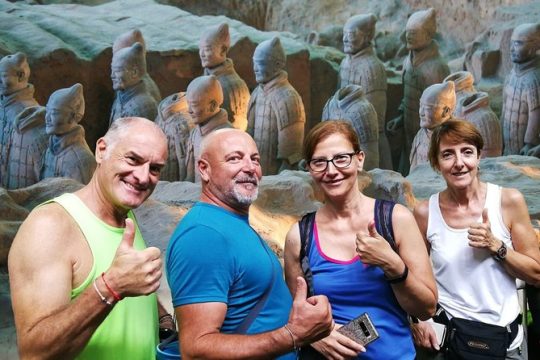
Visites culturelles et thématiques
Prix à partir de $10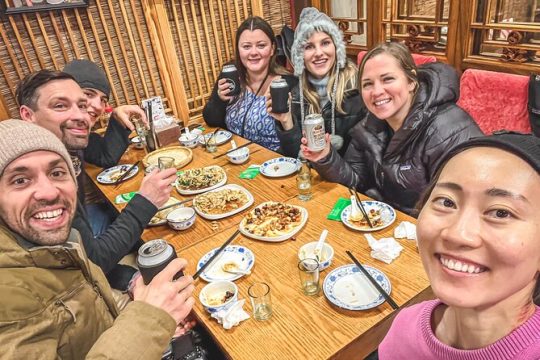
Gastronomie, vin et vie nocturne
Prix à partir de $30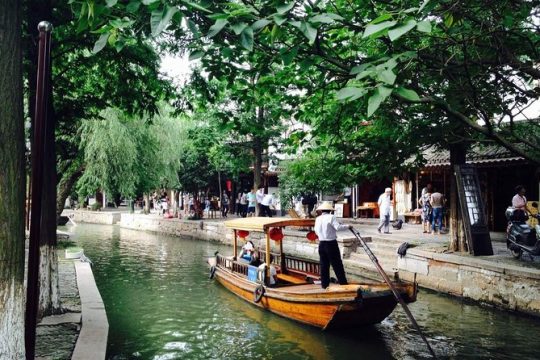
Croisières, voile et excursions en bateau
Prix à partir de $49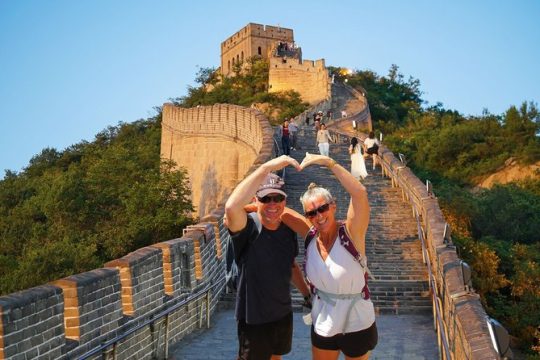
Excursions et sorties d'une journée
Prix à partir de $65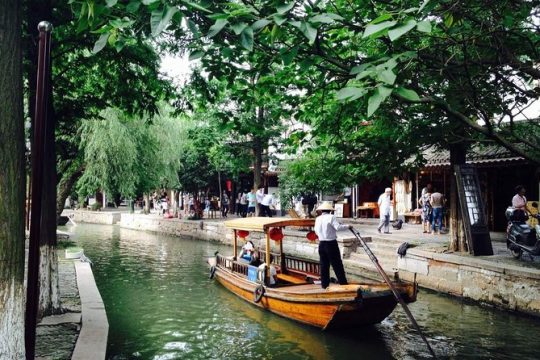
Activités de plein air
Prix à partir de $45
Visites privées et personnalisées
Prix à partir de $27
Shopping et mode
Prix à partir de $56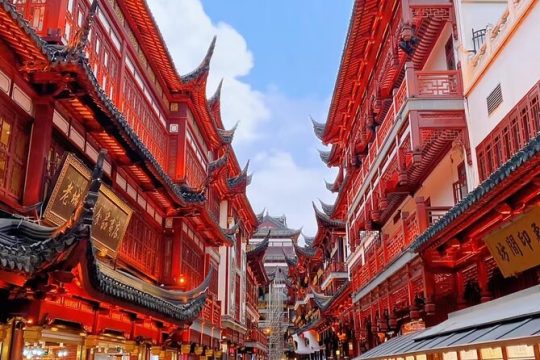
Excursions
Prix à partir de $47
Billets et pass touristiques
Prix à partir de $10
Cartes cadeaux
Offrez l'aventure
Gagner des récompenses
Économisez sur votre prochaine réservation
Offres spéciales
Voyages en vente dès maintenant
Voyage de groupe
Organisez un voyage pour votre groupe
À propos de nous
Fiable depuis 2004
Réservez en toute confiance
Prix le plus bas, annulation gratuite
Contactez-Nous
Nous sommes là pour vous aider
Cité Interdite (Musée du Palais)
Prix à partir de $22
Jardin impérial du musée du palais
Prix à partir de $10
Place Tiananmen (Tiananmen Guangchang)
Prix à partir de $22
Remparts de la ville de Xi'an (Chengqiang)
Prix à partir de $24
Lacs arrière (Hou Hai)
Prix à partir de $49
Village de Banpo
Prix à partir de $29
Parc Beihai (Beihai Gongyuan)
Prix à partir de $52
Stade national de Beijing
Prix à partir de $48
Parc olympique de Pékin
Prix à partir de $48
Tour de la Cloche (Zhonglou)
Prix à partir de $35
Grande Pagode de l'Oie Sauvage (Dayanta)
Prix à partir de $24
Salle commémorative du président Mao (Maozhuxi Jinian Tang)
Prix à partir de $86
Hanoukka en Chine
4-12 décembre 2026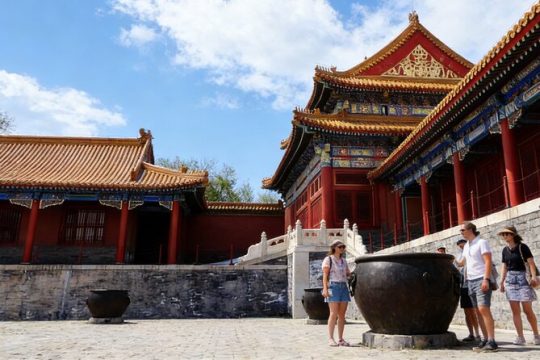
Le réveillon du Nouvel An en Chine
Jeu.31 déc.2026
Week-end prolongé du Nouvel An en Chine
1-3 janvier 2027
Activités pour les jours de pluie en Chine
6 visites et activités
Voyages adaptés aux seniors en Chine
41 visites et activités
Circuits gastronomiques en Chine
18 visites et activités
Voyages en Chine adaptés aux familles
107 visites et activités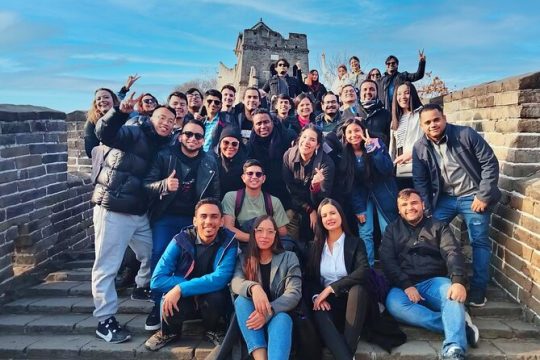
Les meilleurs circuits et activités pour les amateurs de culture en Chine
79 visites et activités
Les meilleures excursions d'une journée au départ de la Chine
10 visites et activités
Que faire en Chine cet été
119 visites et activités
 Dès $5
 Dès $7
 Dès $30
 Dès $6
 Dès $11


