Atracciones de Alemania
Más cosas que hacer en el país
 #16
Torre de Televisión de Berlín (Berliner Fernsehturm)
La Torre de Televisión de Berlín, o Berliner Fernsehturm, es una alta torre de transmisión situada junto a Alexanderplatz, en el centro de Berlín, Alemania, y la estructura más alta del país. Su esbelto fuste de hormigón y su esfera plateada se pueden ver desde casi cualquier punto de la ciudad, y la gente acude por las vistas desde la cima y el restaurante giratorio. La torre fue construida por el gobierno de Alemania Oriental durante la Guerra Fría, en el corazón de lo que entonces era Berlín Oriental. Su objetivo era mejorar la cobertura de televisión y radio, pero también era una muestra de la habilidad técnica y la ambición del país, visible desde ambos lados de la ciudad dividida. Su diseño, una alta aguja con una esfera cerca de la cima, se inspiraba en la era espacial y los satélites de la época. Tras la reunificación alemana, la torre se convirtió en un símbolo no de un solo lado, sino de Berlín en su conjunto, y suele aparecer en postales y souvenirs. La esfera tiene una peculiaridad famosa: cuando la luz del sol incide sobre sus paneles de acero inoxidable, el reflejo forma la figura de una cruz brillante, una imagen extraña para un estado oficialmente ateo. Los berlineses la apodaron la venganza del Papa, y la historia aún la cuentan con una sonrisa tanto guías como lugareños. Dentro de la esfera, el mirador ofrece una vista panorámica de toda la ciudad. Se pueden divisar la Puerta de Brandeburgo, la cúpula del Reichstag, la Isla de los Museos y la Catedral de Berlín, el río Spree y la extensa zona verde del Tiergarten, con los suburbios y lagos al fondo. Un nivel más arriba, el restaurante gira lentamente para que los comensales puedan contemplar toda la ciudad mientras disfrutan de una comida. Un guía en un recorrido más amplio por Mitte puede explicar cómo el este y el oeste se fusionaron alrededor de la torre.
Más #17
Jardín Inglés (Englischer Garten)
The English Garden, or Englischer Garten, is Munich's great public park, stretching from the edge of the old town north along the Isar River. One of the largest city parks in the world, it draws locals and visitors to stroll its meadows and woods, watch surfers ride the Eisbach wave, linger in beer gardens and climb to the Greek-style temple of the Monopteros.The park was created near the end of the 18th century under Elector Karl Theodor as a people's park open to all, at a time when royal gardens were usually closed to commoners. The idea came from Benjamin Thompson, an American-born soldier and scientist in Bavarian service later known as Count Rumford, and the garden designer Friedrich Ludwig von Sckell shaped it in the informal English landscape style, with winding paths, streams, open lawns and clumps of trees instead of formal hedges and geometry. Over time it grew and changed, but it kept that spirit of a natural landscape in the middle of the city.Its landmarks are scattered across the green. The Monopteros, a round temple on an artificial hill, looks out over the rooftops and spires of the old town. The Chinese Tower, a wooden pagoda, rises over one of the city's best-loved beer gardens, where brass bands play and long tables fill with families and friends. The Japanese Teahouse sits on an island in a pond, and the Kleinhesseloher See is a lake with rowboats and another beer garden on its shore. At the southern tip, by the Haus der Kunst, surfers in wetsuits ride a standing wave on the Eisbach stream all year, watched by crowds on the bridge.On fine days the meadows fill with sunbathers, cyclists, joggers and picnickers, while paths farther north lead through woods and fields where the city seems to disappear. A guide can tell how a former hunting ground of the electors became Munich's favorite backyard.
Más #18
Hackescher Markt
Hackescher Markt is a lively square in Berlin's Mitte district, set beside the red brick arches of an elevated railway and ringed by cafés, shops and galleries. Just off it lie the Hackesche Höfe, a famous chain of linked Art Nouveau courtyards, and together they make one of the city's most appealing places to browse, eat and soak up the feel of old Berlin.The square dates from the middle of the 18th century, when King Frederick II of Prussia had Berlin's city commandant, Count von Hacke, lay out a market where the old Spandau gate had stood. For decades it held little more than makeshift buildings and wooden stalls. Late in the 19th century the city railway was carried over the old fortress moat on a viaduct of brick arches, and the station that opened here was first named after the nearby stock exchange.The Hackesche Höfe followed at the start of the 20th century. The architect Kurt Berndt planned a run of interlinked courtyards mixing apartments, workshops, offices, shops and banquet halls, while the designer August Endell gave the first courtyard its swirling facades of colored glazed brick. The apartments were unusually modern for their day, with indoor bathrooms, central heating and balconies, and a cinema later moved into a former ballroom.The neighborhood around it was long a center of Jewish life in Berlin, and the gilded dome of the New Synagogue rises nearby on Oranienburger Straße, a building saved from Nazi arsonists by a local police officer before wartime bombing badly damaged it. After the war the area slipped into decline under East Germany, and the courtyards were restored only after reunification, reopening late in the 20th century. Today they hold boutiques, cafés, a cinema and the Chamäleon theater, which carries on the circus traditions of the district.
Más #19
Museo Mercedes-Benz
El Museo Mercedes-Benz de Stuttgart narra la historia del automóvil a través de uno de sus fabricantes más antiguos, desde el primer automóvil hasta las carreras y el diseño modernos. Se encuentra a las puertas de la fábrica principal de la marca en el distrito de Untertürkheim, y los visitantes acuden por los coches, el impresionante edificio y la forma en que la historia se despliega nivel a nivel. El museo abrió sus puertas a principios del siglo XXI en un edificio de los arquitectos holandeses UNStudio que no tiene pisos comunes. Su forma está inspirada en una espiral de ADN, una estructura sinuosa de metal y vidrio donde las rampas se curvan alrededor de un alto atrio central. Los visitantes suben en ascensor hasta la cima, a los albores del automovilismo, y luego descienden a través de más de un siglo de ingeniería. Dos rutas serpentean a través de nueve niveles. Una sigue la historia de la marca a través de siete salas míticas, cada una vinculada a una época y ambientada en los acontecimientos de su tiempo. La otra pasa por cinco salas de colección que agrupan vehículos por tema, como viajes, carga, rescate y propietarios famosos. En conjunto, albergan unos 160 vehículos y más de 1,500 objetos en exposición, y los dos pasillos se cruzan con la suficiente frecuencia como para que puedas alternar entre ellos durante tu visita. El edificio está diseñado para ser admirado tanto desde el exterior como desde el interior, y sus curvas plateadas se han convertido en un símbolo del valle del Neckar. La pieza más preciada es el Benz Patent Motor Car, construido por Carl Benz y considerado el primer automóvil con motor de combustión interna. En otras zonas, podrás admirar los coches de carreras Flechas Plateadas, un papamóvil utilizado por Juan Pablo II y majestuosos automóviles fabricados para el emperador Guillermo II y el emperador Hirohito. Un guía te explicará la ingeniería y las personalidades detrás de cada máquina, lo que te permitirá recordar los detalles mucho después de la visita.
Más #20
Isla de los Museos (Museumsinsel)
La Isla de los Museos es el extremo norte de una isla en el río Spree, en el centro de Berlín, dedicada casi por completo a cinco grandes museos. Los viajeros acuden para admirar colecciones que abarcan miles de años, desde el antiguo Egipto y el Cercano Oriente hasta la pintura y la escultura europeas, todas a poca distancia unas de otras. La idea surgió de la familia real prusiana, que deseaba abrir sus colecciones de arte al público. El Altes Museum de Karl Friedrich Schinkel, con su larga hilera de columnas frente al Lustgarten, abrió sus puertas a principios del siglo XIX. Durante el siglo siguiente le siguieron el Neues Museum, la Alte Nationalgalerie, el Bode Museum y, finalmente, el Museo de Pérgamo, a medida que el sueño del rey Federico Guillermo IV de un santuario para el arte y la ciencia tomaba forma. Los bombardeos de la Segunda Guerra Mundial dejaron los edificios gravemente dañados, y la isla pasó la Guerra Fría en Berlín Oriental. Tras la reunificación, se inició una larga restauración, y todo el conjunto es ahora Patrimonio de la Humanidad. Cada museo tiene su propio carácter. El Neues Museum conserva el busto pintado de Nefertiti, y la reconstrucción de David Chipperfield dejó visibles las cicatrices de la guerra junto a los ladrillos y el yeso frescos. El Altes Museum exhibe antigüedades griegas y romanas bajo una rotonda con cúpula. La Alte Nationalgalerie, elevada como un templo sobre una base alta, alberga pintura del siglo XIX, con paisajes románticos de Caspar David Friedrich. El Museo Bode, que emerge del agua en el extremo norte, está repleto de esculturas, arte bizantino y monedas. El Museo de Pérgamo es famoso por su arquitectura monumental reconstruida en el interior, incluyendo el Altar de Pérgamo y la Puerta de Ishtar de Babilonia, con sus vidrieras azules. La más reciente Galería James Simon sirve como entrada compartida, y su esbelta columnata evoca los edificios más antiguos. Un guía experto en las colecciones puede explicar cómo se reunió cada pieza y conducirle directamente a los objetos más importantes.
Más #21
Palacio de Nymphenburg (Schloss Nymphenburg)
Si buscas qué hacer en Alemania, te ofrecemos 17 tours y actividades para descubrir el Palacio de Nymphenburg (Schloss Nymphenburg). Consulta las opiniones y fotos de viajeros verificados sobre tours al Palacio de Nymphenburg (Schloss Nymphenburg) y otras actividades en Alemania, y reserva con seguridad cuando encuentres la opción perfecta. Descubre las mejores maneras de visitar el famoso Palacio de Nymphenburg (Schloss Nymphenburg) y explora las actividades más populares en Alemania.
Más #22
olympiapark
Si buscas qué hacer en Alemania, te ofrecemos 11 tours y actividades para disfrutar del Olympiapark. Consulta las opiniones y fotos de viajeros verificados sobre los tours al Olympiapark y otras actividades en Alemania, y reserva con seguridad cuando encuentres la opción perfecta. Descubre las mejores maneras de visitar el famoso Olympiapark y explora las actividades más populares de Alemania.
Más #23
Ciudad del pánico
Panik City is an interactive multimedia experience beside the Reeperbahn in Hamburg's St. Pauli district, devoted to Udo Lindenberg, one of Germany's most enduring rock stars. It leads visitors through his life with music, art and virtual reality, and it draws longtime fans as well as travelers curious about German pop culture.Lindenberg grew up in a small Westphalian town, began as a drummer and made his name in Hamburg, helping prove that rock could be sung in German when most local bands still sang in English. With his Panikorchester, his trademark hat and sunglasses and his laconic, half-mumbled delivery, he became a fixture of German music. His songs poked at politics too, and a cheeky number aimed at the East German leader Erich Honecker eventually led to a rare concert in East Berlin during the Cold War. He has lived for years in a grand Hamburg hotel, and the city treats him as one of its own.The tour moves through seven stations that trace his career from small-town beginnings to sold-out stadiums. Touch tables let you browse photos and stories, a virtual reality show plunges you into his world, and a recording studio invites you to step up to the microphone. Along the way you meet his Likörelle, colorful pictures he paints with liqueurs instead of water, and the visit closes with a small glass of egg liqueur.Panik City occupies part of the Klubhaus St. Pauli on Spielbudenplatz, in the heart of the nightlife quarter where the Beatles once sharpened their act in smoky clubs, a fitting home for a rocker who even sang an ode to the Reeperbahn itself. Even visitors who know little of his music leave understanding why several generations of Germans sing along to his songs.
Más #24
Castillo de Schwetzingen (Schloss Schwetzingen)
Si buscas qué hacer en Alemania, te ofrecemos 4 tours y actividades para descubrir el Castillo de Schwetzingen (Schloss Schwetzingen). Consulta las opiniones y fotos de viajeros verificados sobre los tours al Castillo de Schwetzingen y otras actividades en Alemania, y reserva con seguridad cuando encuentres la opción perfecta. Descubre las mejores maneras de visitar el famoso Castillo de Schwetzingen y explora las actividades más populares en Alemania.
Más #25
Casa de Alberto Durero
Si buscas qué hacer en Alemania, te ofrecemos 16 tours y actividades para descubrir la Casa de Albrecht Dürer. Consulta las opiniones y fotos de viajeros verificados sobre los tours a la Casa de Albrecht Dürer y otras actividades en Alemania, y reserva con seguridad cuando encuentres la opción perfecta. Descubre las mejores maneras de visitar la famosa Casa de Albrecht Dürer y explora las actividades más populares en Alemania.
Más #26
Alexanderplatz
Alexanderplatz is a vast public square at the center of Berlin, overlooked by the soaring TV Tower. Once the heart of East Berlin, it draws visitors for its Cold War architecture, its famous clock and fountain, and the sense of a city that has rebuilt itself many times over.The square began as a cattle market outside the old city gates and was renamed in honor of Tsar Alexander I of Russia after his visit to Berlin in the early 19th century. By the early 20th century it had become a crowded traffic and shopping hub, the setting for Alfred Döblin's novel Berlin Alexanderplatz. Bombing and street fighting in the Second World War left it in ruins. The East German state then cleared the site and rebuilt it as a broad, wind-swept showcase of socialist modernism, with wide pavements, high-rise blocks and the tower rising nearby. Weeks before the Berlin Wall fell, a huge crowd gathered here to demand free speech and reform, in the largest protest the country had seen.Around the edges of the plaza stand landmarks of that era. The House of the Teacher wears a colorful frieze of everyday life wrapped around its upper floors, and the House of Travel nearby carries a copper relief. On the square itself, the Urania World Clock shows the time in cities across the globe beneath a revolving model of the solar system, while the Fountain of International Friendship sprays water over a ring of enamel and copper. Newer department stores and offices fill the gaps, mixing glass with East German concrete.Standing in the open space, you can trace the shift from imperial city to socialist capital to reunited metropolis. A guide can bring out the stories behind the buildings and the protest that helped change Germany.
Más #27
Deutsches Museum
El Deutsches Museum de Múnich es uno de los museos de ciencia y tecnología más grandes del mundo, ubicado en una isla en el río Isar, a pocos pasos del casco antiguo. Los visitantes acuden para ver aviones, barcos, motores e instrumentos científicos reales, y para realizar experimentos prácticos que muestran cómo funcionan la naturaleza y las máquinas. El museo fue la obra de toda una vida de Oskar von Miller, un ingeniero muniqués que creía que la gente común, no solo los especialistas, debía comprender los inventos que transformaban sus vidas. A principios del siglo XX, reunió a un grupo de ingenieros y científicos para crear una colección, que creció de forma constante incluso cuando la Primera Guerra Mundial retrasó durante años la inauguración de su sede permanente. El edificio fue pionero en su género, uno de los primeros en Alemania construido con hormigón armado, apoyado sobre más de 1,500 pilotes hincados profundamente en el suelo blando de la isla. Las exposiciones abarcan casi todas las ramas de la ciencia y la ingeniería. Entre los elementos más destacados se encuentran el primer motor diésel jamás construido, un tractor histórico, una exposición sobre la salud centrada en una maqueta gigante de un corazón humano, y una impactante escultura en la sala de electrónica conocida como el Tornado de Chatarra. Otras galerías abarcan la física atómica, la robótica, la química, las matemáticas, la agricultura y la alimentación, la aviación, la navegación y los instrumentos musicales, y muchas exhibiciones invitan a los visitantes a pulsar botones, girar manivelas y realizar pequeños experimentos. Las demostraciones en vivo dan vida a los aspectos más fascinantes de la física, mientras que un área de juegos para niños de tres a ocho años permite a los más pequeños construir, jugar con agua y explorar a su propio ritmo. Los académicos y los curiosos también pueden consultar una extensa biblioteca de investigación dedicada a la historia de la ciencia y la tecnología. Un guía ayuda a comprender esta vasta colección, destacando los objetos que cambiaron la forma en que vivimos y trabajamos.
Más #28
Centro de documentación Campo de concentración del Partido Nazi
Si buscas qué hacer en Alemania, te ofrecemos 24 tours y actividades para visitar el Centro de Documentación y los terrenos de los mítines del Partido Nazi. Consulta las opiniones y fotos verificadas de viajeros sobre los tours al Centro de Documentación y los terrenos de los mítines del Partido Nazi, así como otras actividades en Alemania, y reserva con seguridad cuando encuentres la opción perfecta. Descubre las mejores maneras de visitar el famoso Centro de Documentación y explora las actividades más populares en Alemania.
Más #29
Galería East Side
Si buscas qué hacer en Alemania, te ofrecemos 49 tours y actividades para disfrutar de la East Side Gallery. Consulta las opiniones y fotos verificadas de otros viajeros sobre los tours a la East Side Gallery y otras actividades en Alemania, y reserva con seguridad cuando encuentres la opción perfecta. Descubre las mejores maneras de visitar la famosa East Side Gallery y explora las actividades más populares en Alemania.
Más #30
Gendarmenmarkt
Gendarmenmarkt is a grand square in Berlin's Mitte district, often called the most beautiful square in the city. Two matching domed churches face each other across it, with the Konzerthaus concert hall between them, and people come to admire the architecture, climb for views, catch a concert or simply stroll across the open plaza.The square was laid out at the end of the 17th century as part of the Friedrichstadt, a planned new quarter of Berlin. Its name comes from the Gens d'armes, a cavalry regiment whose stables stood here in the 18th century. Early on, two congregations built churches facing each other: the French Church for the Huguenots, Protestant refugees from France who had found a welcome in Brandenburg-Prussia, and the German Church for a German-speaking congregation.The square's famous look came later. In the late 18th century, Frederick the Great had the architect Carl von Gontard add a tall domed tower beside each church, purely for show, which is why the two buildings look like twins although the churches behind them differ. The word Dom here refers to the domes, not to cathedrals. Between them, Karl Friedrich Schinkel designed a theater in the early 19th century, a masterpiece of Neoclassical architecture that is now the Konzerthaus, home to one of Berlin's leading orchestras, and a statue of the poet Friedrich Schiller stands in front.The Second World War left the square in ruins, and all three buildings were painstakingly rebuilt in the decades that followed. Inside the French Church, a museum tells the story of the Huguenots and their influence on Berlin, while the German Church holds an exhibition on the history of parliamentary democracy in Germany. Standing in the middle of the square, with the domes rising on either side and the columned theater ahead, you see one of the most harmonious ensembles in the city.
Más #31
Mercado central
Si buscas qué hacer en Alemania, te ofrecemos 22 tours y actividades para disfrutar de Hauptmarkt. Consulta las opiniones y fotos de viajeros verificados sobre tours a Hauptmarkt y otras actividades en Alemania, y reserva con seguridad cuando encuentres la opción perfecta. Descubre las mejores maneras de visitar Hauptmarkt y explora las actividades más populares de Alemania.
Más #32
Hofgarten
Si buscas qué hacer en Alemania, te ofrecemos 17 tours y actividades para disfrutar del Hofgarten. Consulta las opiniones y fotos de viajeros verificados sobre los tours al Hofgarten y otras actividades en Alemania, y reserva con seguridad cuando encuentres la opción perfecta. Descubre las mejores maneras de visitar el famoso Hofgarten y explora las actividades más populares de Alemania.
Más #33
Casa de las Artes (Haus der Kunst)
Haus der Kunst is a major contemporary art museum in Munich, set in a long colonnaded building on Prinzregentenstraße at the edge of the English Garden. It has no permanent collection, and visitors come for its changing exhibitions of international modern and contemporary art, and for a building whose own history is as striking as anything on its walls.The museum was built in the years before the Second World War on Hitler's orders, designed by the architect Paul Ludwig Troost as a temple for officially approved German art. Its stark row of stone columns was meant to project power, and it opened with an exhibition celebrating the regime's taste while modern artists were being banned and their works seized. After the war, the American army used part of the building as an officers' club, and lines from a basketball court once marked the floor of the central hall. In the following years the museum set out to rehabilitate the very art the Nazis had rejected, and it famously showed Picasso's Guernica in its halls.Since then, Haus der Kunst has become a stage for leading artists from around the world, with large shows of painting, sculpture, installation, photography and performance. The vast central hall and the high-ceilinged galleries give room for monumental works, and the museum has chosen to keep the building's past in plain view rather than hide it. A permanent display in the archive gallery traces that history through documents and photographs, so a visit can move between the art of the moment and the story of the walls around it.Details reward a closer look. The Golden Bar, with its gilded wall panels showing the wines and spirits of distant lands, survives from the original design, and the terrace looks onto the trees of the English Garden. A guided visit adds context on both the exhibitions and the building's difficult past.
Más #34
Castillo Imperial de Nuremberg (Kaiserburg)
El Castillo Imperial de Núremberg, el Kaiserburg, es una fortaleza medieval situada en una cresta de arenisca sobre el casco antiguo de Núremberg, en Baviera. Durante siglos acogió a los emperadores del Sacro Imperio Romano Germánico en sus viajes, y los visitantes acuden por sus salones imperiales, sus torres y pozos, y las amplias vistas de los tejados rojos de la ciudad. Los emperadores medievales no tenían una capital fija y se trasladaban entre residencias, y Núremberg se convirtió en una de las más importantes. Casi todos los reyes y emperadores alemanes de la Alta y Baja Edad Media se alojaron aquí, y un famoso decreto imperial del siglo XIV exigía que cada rey recién elegido celebrara su primera asamblea imperial en la ciudad. Junto al castillo imperial se encontraba el castillo de los burgraves, quienes lo custodiaban en nombre del emperador, un cargo que la familia Hohenzollern ocupó durante generaciones antes de ascender al poder en Brandeburgo y, posteriormente, en Prusia. El castillo sufrió graves daños durante la Segunda Guerra Mundial y fue reconstruido con esmero. El Palas, la residencia principal, alberga el Salón Imperial y el Salón de los Caballeros, con pesados techos de madera y mobiliario de época. La capilla doble románica es un raro ejemplo de su conservación, construida en dos niveles para que el emperador pudiera orar arriba mientras su corte se reunía abajo. Un museo recorre la historia del castillo y la época imperial, con exhibiciones de armas y armaduras medievales. En los patios, el Pozo Profundo fue excavado en roca sólida para abastecer el castillo durante un asedio, y una demostración muestra hasta qué profundidad se encuentra el agua. La Torre Sinwell, de forma circular, recompensa la subida con una vista panorámica de la ciudad vieja, y la antigua Torre Pentagonal y la Torre Pagana tallada recuerdan las primeras etapas de la fortaleza. Un guía revive la época de los emperadores, los burgraves y las ceremonias de la corte.
Más #35
lenbachhaus
The Lenbachhaus is an art museum in central Munich, housed in a golden-yellow Italianate villa beside Königsplatz. It holds the world's largest collection of paintings by the Blue Rider circle, the group of artists who helped launch modern abstract art, and people come to see those vivid canvases alongside striking contemporary work.The villa was built in the late 19th century for Franz von Lenbach, one of the most celebrated portrait painters of his day, who wanted a home and studio that looked like a Renaissance palazzo. After his death, the city bought the property and opened it as a municipal gallery. Its fortunes changed after the Second World War, when the painter Gabriele Münter gave the museum an extraordinary gift: a large hoard of works by Wassily Kandinsky and other Blue Rider artists that she had hidden from the Nazis in her house in the Bavarian countryside. That donation turned a local gallery into a museum of international importance.The Blue Rider rooms are the heart of a visit. Here you can follow Kandinsky's leap from colorful landscapes toward pure abstraction, see Franz Marc's blue and yellow horses, and compare the bright work of August Macke, Paul Klee, Alexej von Jawlensky, Marianne von Werefkin and Münter herself. Other galleries cover Munich painting of the 19th century, and some of Lenbach's own rooms have been restored with their rich original decoration.A modern extension by the architects Foster and Partners added a gleaming metallic facade and a bright atrium, where a huge sculpture of colored glass and steel rings by Olafur Eliasson hangs overhead. The contemporary collection includes major installations by Joseph Beuys, and the museum also runs a long exhibition space inside a nearby subway station. A guided tour helps link the artists, their friendships and the ideas that bound the group together.
Más #36
Antiguo Ayuntamiento de Múnich (Altes Rathaus)
El antiguo ayuntamiento de Múnich (Altes Rathaus) es un edificio gótico tardío con una esbelta torre con aguja, situado en el extremo oriental de Marienplatz, el corazón del casco antiguo. Durante siglos sede del gobierno de Múnich, aún acoge actos oficiales de la ciudad, y su torre alberga un encantador museo de juguetes que deleita tanto a niños como a coleccionistas. El edificio aparece documentado por primera vez a principios del siglo XIV, y su gran salón se añadió a finales de ese siglo. A finales del siglo XV, el maestro de obras Jörg von Halsbach, quien también construyó la Frauenkirche, lo remodeló en el estilo gótico tardío que aún lo caracteriza. La torre fue originalmente la Puerta de Talburg, parte de la primera muralla de Múnich, y los pasajes que la atraviesan siguen permitiendo el paso de vehículos y personas entre Marienplatz y las calles aledañas. El ayuntamiento se reunió aquí hasta finales del siglo XIX, cuando se trasladó al imponente Nuevo Ayuntamiento, situado en la misma plaza. En su interior, el gran salón es la joya del edificio, con un techo abovedado de madera y copias de los famosos bailarines de Morris talladas por Erasmus Grasser, figuras llenas de vida capturadas en pleno salto. El salón también tiene un pasado oscuro: en vísperas de la Segunda Guerra Mundial, Joseph Goebbels pronunció aquí un discurso que desencadenó el pogromo de la Noche de los Cristales Rotos contra los judíos alemanes. Los bombardeos posteriores dañaron gravemente el edificio, que fue reconstruido en su estilo gótico tardío, y la torre se añadió a finales del siglo XX. La torre reconstruida se convirtió en sede del Museo del Juguete, fundado por el caricaturista checo Ivan Steiger, quien llenó sus estrechas plantas con piezas de su propia colección, desde juguetes de hojalata y trenes en miniatura hasta muñecas y ositos de peluche. Justo en el exterior se alza una estatua de bronce de Julieta de Shakespeare, un regalo de Verona, ciudad hermanada con Múnich, que añade un toque romántico al borde de la concurrida plaza.
Más #37
Nueva Pinacoteca (Neue Pinakothek)
Si buscas qué hacer en Alemania, te ofrecemos 5 tours y actividades para descubrir la Nueva Pinacoteca (Neue Pinakothek). Consulta las opiniones y fotos de viajeros verificados sobre los tours a la Nueva Pinacoteca (Neue Pinakothek) y otras actividades en Alemania, y reserva con seguridad cuando encuentres la opción perfecta. Descubre las mejores maneras de visitar la famosa Nueva Pinacoteca (Neue Pinakothek) y explora las actividades más populares en Alemania.
Más #38
Antigua Pinacoteca (Alte Pinakothek)
Si buscas qué hacer en Alemania, te ofrecemos 5 tours y actividades para descubrir la Antigua Pinacoteca (Alte Pinakothek). Consulta las opiniones y fotos de viajeros verificados sobre los tours a la Antigua Pinacoteca (Alte Pinakothek) y otras actividades en Alemania, y reserva con seguridad cuando encuentres la opción perfecta. Descubre las mejores maneras de visitar la famosa Antigua Pinacoteca (Alte Pinakothek) y explora las actividades más populares en Alemania.
Más #39
Palacio de las Lágrimas (Tränenpalast)
Si buscas qué hacer en Alemania, te ofrecemos 19 tours y actividades para descubrir el Palacio de las Lágrimas (Tränenpalast). Consulta las opiniones y fotos de viajeros verificados sobre tours al Palacio de las Lágrimas (Tränenpalast) y otras actividades en Alemania, y reserva con seguridad cuando encuentres la opción perfecta. Descubre las mejores maneras de visitar el famoso Palacio de las Lágrimas (Tränenpalast) y explora las actividades más populares en Alemania.
Más #40
Hermosa fuente
Si buscas qué hacer en Alemania, te ofrecemos 13 tours y actividades para descubrir Schöner Brunnen. Consulta las opiniones y fotos de viajeros verificados sobre los tours a Schöner Brunnen y otras actividades en Alemania, y reserva con seguridad cuando encuentres la opción perfecta. Descubre las mejores maneras de visitar Schöner Brunnen y explora las actividades más populares en Alemania.
Más #41
SEA LIFE® Múnich
Si buscas qué hacer en Alemania, te ofrecemos 5 tours y actividades para disfrutar de SEA LIFE® Munich. Consulta las opiniones y fotos de viajeros verificados sobre los tours de SEA LIFE® Munich y otras actividades en Alemania, y reserva con seguridad cuando encuentres la opción perfecta. Descubre las mejores maneras de visitar el famoso SEA LIFE® Munich y explora las actividades más populares en Alemania.
Más #42
Amalienburg
The Amalienburg is a small Rococo hunting lodge in the gardens of Nymphenburg Palace in Munich, and it is often counted among the finest Rococo interiors in Europe. Visitors come for its round Hall of Mirrors, a dazzle of silver and pale blue, and for the playful rooms built around a princely passion for the hunt.The court architect François de Cuvilliés designed the lodge in the 18th century for Elector Karl Albrecht of Bavaria, who later became Holy Roman Emperor, and it was named for his wife, Maria Amalia of Austria, a keen huntress. Pheasants were driven toward the building, and the electress and her guests could shoot from a latticed platform hidden on the roof. It had no farm buildings of its own, since the main palace supplied its needs.The Hall of Mirrors sits at the center, a circular room where tall mirrors alternate with windows onto the park, all framed by silver stucco on a pale blue ground, the colors of Bavaria. Johann Baptist Zimmermann and the carver Joachim Dietrich filled it with garlands, musical instruments, birds and hunting motifs that seem to tumble across the walls and ceiling. Outside, Zimmermann's stucco Diana, goddess of the hunt, presides over the eastern front.The smaller rooms carry the theme further. Beside the Blue Cabinet, little niches once housed the hunting dogs, and a gun room kept the weapons close at hand, while the electress's resting room and the hunting and pheasant rooms lead around to the kitchen. There, Chinese-style flowers and birds on blue-and-white Delft tiles cover the walls, though the tiles were reportedly set in the wrong order, and an early stove is among the first designs to fully enclose its fire. A guide brings out the court life behind each room.
Más #43
Berlín Hauptbahnhof
La estación central de Berlín (Berlin Hauptbahnhof) es la principal estación de ferrocarril de la capital alemana, un vasto vestíbulo de vidrio y acero donde confluyen trenes de larga distancia, regionales y urbanos en dos niveles. Incluso los viajeros que no toman un tren vienen a admirar su llamativa arquitectura, símbolo del Berlín reunificado, situada junto al río Spree, a poca distancia del barrio gubernamental. El lugar tiene una larga historia ferroviaria. En el siglo XIX se encontraba aquí la grandiosa Lehrter Bahnhof, una terminal para trenes a Hamburgo y Escandinavia tan suntuosa que se la apodaba "un palacio entre estaciones", con una estación más pequeña para el ferrocarril elevado de la ciudad a su lado. Los daños de la guerra y la división de Berlín dejaron la zona aislada en los límites de Berlín Occidental, y la antigua terminal fue demolida después de la Segunda Guerra Mundial. Tras la reunificación, el gobierno federal eligió este lugar para una nueva estación central que finalmente conectaría las líneas de la ciudad desde las cuatro direcciones. La firma hamburguesa Gerkan, Marg and Partners, dirigida por Meinhard von Gerkan, ganó el concurso de diseño, y la construcción duró casi una década, incluyendo túneles excavados bajo el Tiergarten y un desvío temporal del río. El resultado se inauguró a principios del siglo XXI. Los trenes que van de este a oeste circulan a gran altura sobre puentes bajo un techo curvo de cristal de más de 300 metros de longitud, mientras que los trenes que van de norte a sur paran en las profundidades del subsuelo, y la luz del día entra a través de los niveles abiertos entre ellos. Dos bloques de oficinas se arquean sobre el vestíbulo principal como puentes, dándole al edificio su perfil inconfundible. Parte del techo de cristal funciona también como planta de energía solar, y una escultura llamada "Caballo Rodante" de Jürgen Goertz, ubicada en una de las terrazas, hace un guiño a las estaciones anteriores del lugar. Desde la plaza de acceso se puede ver hacia el sur, al otro lado del río, el barrio gubernamental y la Cancillería. Un guía puede explicar cómo la estación unió una ciudad que una vez estuvo dividida en dos, una historia escrita en sus vías de cruce.
Más #44
Elbphilharmonie
The Elbphilharmonie is Hamburg's great concert hall, rising above the River Elbe at the tip of the HafenCity district in northern Germany. A shimmering glass structure sits on top of an old brick warehouse, and visitors come for the building's bold design, its public viewing deck and some of the finest acoustics in Europe.The base of the building is the Kaispeicher A, a massive brick warehouse from the mid 20th century once used to store cocoa, tea and tobacco. The Swiss architects Herzog and de Meuron kept its shell and placed a new glass building on top, with a roof that rises and falls in curves like waves or tents. Construction took far longer than planned and became the subject of fierce public debate, but when the hall opened, it quickly became a symbol of the city. Hamburg residents often call it the Elphi.Between the old warehouse and the glass top lies the Plaza, a public terrace that wraps around the whole building and looks out over the harbor cranes, the river and the rooftops of the old town. A long curved escalator carries visitors up through the warehouse to reach it. Above the Plaza sits the Grand Hall, built in a vineyard style, with seats rising in terraces around the stage so no one sits far from the musicians. Its walls are lined with thousands of gypsum panels, each with a unique pattern of small hollows that scatter the sound evenly. A smaller Recital Hall serves chamber music, and a large organ fills one wall of the main space. The building also holds a hotel and apartments.The curved glass panels outside reflect the sky and water, changing color through the day. A guide shares how the building was made and how the halls are tuned for sound.
Más #45
Museo Judío (Jüdisches Museum)
The Jewish Museum Munich is a city-run museum devoted to Jewish history and life in Munich, set on Sankt-Jakobs-Platz in the heart of the old town. Part of a Jewish center beside the city's main synagogue, it draws visitors interested in faith, culture and memory, with a permanent exhibition and changing shows on Jewish life past and present.The museum belongs to a group of buildings that returned Jewish life to the center of Munich, alongside the Ohel Jakob synagogue and the community center. The city built it as a freestanding cube with a transparent ground-floor lobby, a design that lets passersby see inside and signals openness to the city around it. Its story reaches across centuries, through persecution under the Nazis to the revival of Jewish life after the Second World War.The permanent exhibition on the lower level introduces Jewish religion, festivals and rites of passage, from birth and coming of age to marriage and mourning, through ritual objects and documents. It reveals both the rhythm of the Jewish year and the ways in which individual lives were bound up with the city. The upper floors hold changing exhibitions on a wide range of themes, along with a learning center and a library.Memory runs through the building. The museum includes a memorial to the victims of the attack on the Israeli team at the Munich Olympic Games, honoring athletes and coaches whose deaths shocked the world. Beyond the galleries, the museum keeps an archive and an online collection of objects, so the work of recording Jewish life in Munich reaches far past its walls. Standing on an open square in the old town rather than on the margins, the museum places this history at the center of the city's life, where locals and visitors cross paths every day.
MásDescubre Alemania

Lujo y ocasiones especiales
Precios desde $3
Tours y visitas turísticas
Precios desde $3
Tours culturales y temáticos
Precios desde $3
Excursiones a pie y en bicicleta
Precios desde $3
Tours privados y personalizados
Precios desde $3
Comida, vino y vida nocturna
Precios desde $7
Excursiones y viajes de un día
Precios desde $3
Tours de vacaciones y temporada
Precios desde $3
Actividades al aire libre
Precios desde $3
Cruceros, navegación y excursiones acuáticas
Precios desde $22
Excursiones a la playa
Precios desde $26
Entradas y pases turísticos
Precios desde $5
Marienplatz
Precios desde $3
Catedral de Colonia (Kölner Dom)
Precios desde $3
Reichstag
Precios desde $3
Odeonsplatz
Precios desde $3
Puerta de Brandeburgo (Brandenburger Tor)
Precios desde $3
Monumento en memoria de los judíos asesinados en Europa (Monumento del Holocausto)
Precios desde $3
Sitio conmemorativo del campo de concentración de Dachau
Precios desde $44
Führerbunker
Precios desde $4
Tiergarten conmemorativo de la guerra soviética
Precios desde $4
Topografía del terror
Precios desde $4
Mercado de avituallamientos (Viktualienmarkt)
Precios desde $3
Catedral de Nuestra Señora (Frauenkirche)
Precios desde $3
Actividades para los días de lluvia en Alemania

Tours para personas mayores en Alemania

Tours gastronómicos por Alemania

Tours por Alemania ideales para familias

Los mejores tours y actividades para los amantes de la cultura en Alemania

Los 10 mejores equipos de Alemania en 2026

Las mejores excursiones de un día desde Alemania

Cosas que hacer en Alemania este verano

Calendario de eventos en Alemania
Ver todos los eventos
Actividades navideñas en Alemania
Vie, 25 dic 2026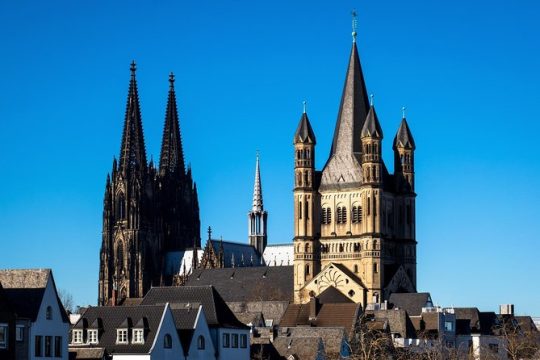
Janucá en Alemania
4 al 12 de diciembre de 2026
Nochevieja en Alemania
Jue, dic 31, 2026
La víspera de Navidad en Alemania
Jue, dic 24, 2026
Fin de semana largo de Año Nuevo en Alemania
1 al 3 de enero de 2027
Día de San Valentín en Alemania
Dom, 14 de febrero de 2027
Pascua en Alemania
Dom 28 mar 2027
Viernes Santo en Alemania
Vie, 26 de marzo de 2027