Tysklands attraktioner
Flere ting at lave i landet
 #76
Mirabell palads og haver (Schloss Mirabell und Mirabellgarten)
Hvis du leder efter ting at lave i Tyskland, har vi 78 ture og aktiviteter, hvor du kan opleve Mirabell Slot og Haver (Schloss Mirabell und Mirabellgarten). Se vores verificerede rejseanmeldelser og billeder af ture til Mirabell Slot og Haver (Schloss Mirabell und Mirabellgarten) og andre ting at lave i Tyskland, og book sikkert, når du finder den perfekte tur. Lær de bedste måder at se det berømte Mirabell Slot og Haver (Schloss Mirabell und Mirabellgarten) på, og udforsk de mest populære ting at lave i Tyskland.
Mere #77
Museum Ludwig
Museum Ludwig is Cologne's museum of modern and contemporary art, standing right beside the cathedral and the Rhine in the heart of the city. Art lovers come for one of the largest Picasso collections in Europe, a superb gathering of American Pop Art, German Expressionism and the Russian avant-garde, and a major photography collection.The museum grew out of generosity. After the Second World War, the lawyer Josef Haubrich gave the city his collection of German Expressionist art, much of it work the Nazis had condemned as degenerate, and later the chocolate manufacturer Peter Ludwig and his wife Irene donated a large collection of modern works on condition that Cologne build a museum to house them. The Ludwigs kept giving, adding many more works by Picasso, and their Pop Art purchases, made when American artists were still controversial in Europe, became the core of one of the finest Pop collections outside the United States.Its building, completed in the late 20th century, stands out for its rippling roofline of zinc-clad, saw-toothed skylights that pour daylight into the galleries, and it shares the site with the city's Philharmonie concert hall, which lies underground beneath the square outside. Inside, you can follow Picasso through many phases of his career, see Andy Warhol and Roy Lichtenstein beside Ernst Ludwig Kirchner and Otto Dix, and trace the bold geometry of Russian artists such as Kazimir Malevich and Natalia Goncharova.The photography holdings trace the medium from its early days onward, drawing on major private collections, and changing exhibitions regularly bring fresh contemporary work into dialogue with the modern masters. Stepping out of the galleries, you meet the cathedral's Gothic towers almost at the door, a striking contrast of eras. A guide can steer you to the highlights and tell the stories of the collectors whose gifts made the museum possible.
Mere #78
Nationalpark Berchtesgaden
Berchtesgaden National Park (Nationalpark Berchtesgaden) protects a corner of the Bavarian Alps on Germany's border with Austria, a landscape of limestone peaks, deep valleys and clear mountain lakes. People come to hike, to see the Watzmann massif and the fjord-like Königssee, and to watch for wildlife in Germany's only Alpine national park.The area was protected long before it became a national park. Its valleys were royal hunting grounds for the kings of Bavaria, and a nature reserve around the Königssee was set aside early in the 20th century. The national park followed in the late 20th century, and UNESCO later recognized the wider Berchtesgaden region as a biosphere reserve. Inside the park, nature is largely left to run its course, so storm-felled trees stay where they fall and forests are allowed to change on their own.The Watzmann dominates the scene, its sheer east face falling toward the Königssee in one of the tallest rock walls in the Eastern Alps. Local legend says the mountain and its smaller summits are a cruel king, his queen and their children turned to stone. On the lake's western shore, the red onion domes of the pilgrimage church of St. Bartholomä stand on a small peninsula below the cliffs, and beyond the Königssee lies the quieter Obersee, backed by a long waterfall. Elsewhere, the Wimbach gorge funnels a rushing stream through narrow rock walls, and the Hintersee reflects the surrounding peaks.Higher up, alpine meadows and bare karst plateaus are home to chamois, ibex, marmots and golden eagles, and summer brings wildflowers to the pastures where cattle still graze. The Haus der Berge visitor center explains how these habitats fit together, from the valley floor to the summits. A ranger-led walk adds the stories of the people who farmed and hunted these valleys.
Mere #79
Nyt palads (Neues Palais)
Hvis du leder efter ting at lave i Tyskland, har vi 14 ture og aktiviteter, hvor du kan opleve Neues Palais (Det nye palads). Se vores verificerede rejseanmeldelser og billeder af ture til Neues Palais (Det nye palads) og andre ting at lave i Tyskland, og book sikkert, når du finder den perfekte destination. Lær de bedste måder at se det berømte Neues Palais (Det nye palads) på, og udforsk de mest populære ting at lave i Tyskland.
Mere #80
Nonnberg Abbey (Stift Nonnberg)
Nonnberg Abbey is a Benedictine convent on the slope below Salzburg's fortress, known as the oldest convent in the German-speaking world to have existed without a break. Visitors come for its late Gothic church, its quiet cemetery and its link to Maria von Trapp, who was preparing to become a nun here before her life inspired The Sound of Music.Saint Rupert, the missionary bishop who made Salzburg a Christian center, established the convent early in the 8th century, and his relative Erentrude became its first abbess. She is buried in the crypt and honored as a saint, and the community of nuns has lived and prayed here ever since. A fire in the 15th century led to the church being rebuilt in the late Gothic style, though fragments of far older Romanesque wall paintings survived.The abbey's best-known aspiring nun arrived in the 20th century. Maria Kutschera, later Maria von Trapp, joined the community as a young woman, was sent to tutor a daughter of the widowed naval officer Georg von Trapp, and later married him in the abbey church. Her memoir became the basis for The Sound of Music, and the film shows the abbey as the convent Maria leaves behind, so fans of the musical often seek out its gate.Inside the church, slender columns rise to a high vaulted ceiling, and the crypt below, with the tomb of Erentrude, has a hushed, ancient feel. Outside, the small cemetery is a quiet place to pause, and the abbey's hillside position gives views across the rooftops of the old town. Few places in Salzburg feel so removed from the bustle below. A guide can explain how the nuns' daily rhythm has shaped the abbey and point out the details that link the real Maria to the story the world knows.
Mere #81
Nürnbergs gamle bydel (Altstadt)
Hvis du leder efter ting at lave i Tyskland, har vi 5 ture og aktiviteter, der kan hjælpe dig med at opleve Nürnbergs gamle bydel (Altstadt). Se vores verificerede rejseanmeldelser og billeder af ture i Nürnbergs gamle bydel (Altstadt) og andre ting at lave i Tyskland, og book sikkert, når du finder den perfekte. Lær de bedste måder at se den berømte Nürnbergs gamle bydel (Altstadt) på, og udforsk de mest populære ting at lave i Tyskland.
Mere #82
Nürnbergs Justitspalads
The Nuremberg Palace of Justice is the courthouse in Nuremberg, Bavaria, where leading figures of Nazi Germany stood trial before an international tribunal after the Second World War. Visitors come to see Courtroom 600, where the trials took place, and the Memorium exhibition on the top floor, which explains how they changed the course of international law.The large stone complex was built in the early 20th century as the seat of Bavaria's courts and a prison, in a grand style that echoes the Renaissance. When the war ended, much of Nuremberg lay in ruins, but the Palace of Justice had come through largely intact, with a big courtroom and a prison attached. The Allies also saw meaning in the choice of city. Nuremberg had hosted the huge Nazi party rallies and given its name to the race laws, so it was fitting that the regime's leaders should answer for their crimes there.The main trial brought senior political, military and economic leaders, among them Hermann Göring, Rudolf Hess and Albert Speer, before judges from the United States, Britain, France and the Soviet Union. For the first time, leaders of a state were held personally responsible before an international court for aggressive war, war crimes and crimes against humanity. A further series of trials followed in the same building, dealing with doctors, judges, industrialists and others. To handle four languages at once, the court used a new system of simultaneous interpretation through headphones, a forerunner of the interpreting heard at international meetings ever since. The principles set out here later shaped the courts that try war crimes and genocide.The exhibition traces the path from the crimes to the verdicts with photographs, film, sound recordings and documents, including the bench where the defendants sat. Courtroom 600 has been altered since then, yet standing in it still carries great weight. A guide can explain the legal arguments and the personalities on both sides of the bench.
Mere #83
oberammergau
Hvis du leder efter ting at lave i Tyskland, har vi 40 ture og aktiviteter, der kan give dig mulighed for at opleve Oberammergau. Se vores verificerede rejseanmeldelser og billeder af ture og andre ting at lave i Oberammergau i Tyskland, og book sikkert, når du finder den perfekte destination. Lær de bedste måder at se det berømte Oberammergau på, og udforsk de mest populære ting at lave i Tyskland.
Mere #84
olympiske tårn
Hvis du leder efter ting at lave i Tyskland, har vi 2 ture og aktiviteter, hvor du kan opleve Olympiatårnet. Se vores verificerede rejseanmeldelser og billeder af ture til Olympiatårnet og andre ting at lave i Tyskland, og book sikkert, når du finder den perfekte tur. Lær de bedste måder at se det berømte Olympiatårn på, og udforsk de mest populære ting at lave i Tyskland.
Mere #85
Ydre Alster-sø (Aussenalster)
Hvis du leder efter ting at lave i Tyskland, har vi 9 ture og aktiviteter, hvor du kan opleve den ydre Alster (Aussenalster). Se vores verificerede rejseanmeldelser og billeder af ture til den ydre Alster (Aussenalster) og andre ting at lave i Tyskland, og book sikkert, når du finder den perfekte. Lær de bedste måder at se den berømte Ydre Alster (Aussenalster) på, og udforsk de mest populære ting at lave i Tyskland.
Mere #86
Planten und Blomen Park
Hvis du leder efter ting at lave i Tyskland, har vi 4 ture og aktiviteter, hvor du kan opleve Planten und Blomen Park. Se vores verificerede rejseanmeldelser og billeder af ture i Planten und Blomen Park og andre ting at lave i Tyskland, og book sikkert, når du finder den perfekte. Lær de bedste måder at se den berømte Planten und Blomen Park på, og udforsk de mest populære ting at lave i Tyskland.
Mere #87
Hamburg Havn
The Port of Hamburg is Germany's largest seaport, a vast working harbor spread along the Elbe River in the heart of the northern city. Visitors come to watch giant container ships, cranes and dry docks at close range, and to explore the waterfront where Hamburg's maritime character is on full display, from historic piers to the striking concert hall.Although Hamburg lies well inland, the tidal Elbe has made it a gateway to the sea for centuries. The city dates its harbor to a charter said to have been granted by Emperor Frederick Barbarossa in the late 12th century, freeing ships from tolls on the lower river, and the anniversary is still celebrated with a festival on the water. Membership of the Hanseatic League turned Hamburg into one of the great merchant cities of northern Europe, and in the 19th century it became a leading departure point for vast numbers of emigrants heading to the Americas.On the north bank, the Landungsbrücken piers, a long stone hall with a clock tower, have greeted passengers since the early 20th century. Nearby, a domed entrance building leads down to the Old Elbe Tunnel, where lifts carry people and cars to a tiled passage under the river. East of the piers, the red-brick warehouses of the Speicherstadt rise on oak piles above the canals, once filled with coffee, tea, spices and carpets and now a UNESCO World Heritage site, and the Elbphilharmonie concert hall crowns an old warehouse block with a wave of glass.Across the water, the scale changes completely. Container terminals stretch along the south bank, with gantry cranes loading ships that stack boxes many stories high, while shipyards and floating docks repair vessels in plain view. Museum ships moored at the piers, including a tall sailing ship and a cargo liner, show how seafaring looked before containers. A guide explains how the whole port fits together.
Mere #88
Nigra portal
The Porta Nigra is a massive Roman city gate in Trier, Germany's oldest city, and the best-preserved Roman gateway north of the Alps. Built from colossal blocks of stone in the 2nd century, it draws visitors for its sheer bulk and a history that took some unexpected turns.Work on the gate began in the later 2nd century, when Trier, then called Augusta Treverorum, was one of the leading cities of the Roman west. The sandstone blocks were laid without mortar and held together with iron clamps, and over time the stone darkened, giving rise to the name Porta Nigra, the black gate. No one knows what the Romans called it, and locals have their own nickname, Pochta.The gate survived the Middle Ages thanks to an unusual resident. In the 11th century a Greek hermit named Simeon lived as a recluse inside it, and after his death the archbishop of Trier turned the structure into a church dedicated to him. While many Roman buildings were quarried for stone, its new role kept the gate intact. On Napoleon's orders in the early 19th century, most of the church was stripped away to reveal the Roman structure once more, though a Romanesque apse survives on its east side.It forms part of a UNESCO World Heritage Site that also takes in Trier's other Roman monuments, its cathedral and the Church of Our Lady. Inside, every era has left its mark, from worn Roman stonework to Baroque reliefs and the outlines of the medieval church. Outside, look for the rows of arched windows and the pockmarks left where medieval scavengers pried out the iron clamps. A guide can help you picture the Roman city around it, with walls, a busy road and carts rolling through its twin arches.
Mere #89
Potsdams haver
Hvis du leder efter ting at lave i Tyskland, har vi 5 ture og aktiviteter, hvor du kan opleve Potsdams haver. Se vores verificerede rejseanmeldelser og billeder af ture i Potsdams haver og andre ting at lave i Tyskland, og book sikkert, når du finder den perfekte tur. Lær de bedste måder at se de berømte Potsdams haver på, og udforsk de mest populære ting at lave i Tyskland.
Mere #90
Potsdamer Platz
Potsdamer Platz is the busy square of glass towers in the center of Berlin, rebuilt from scratch on land that the Berlin Wall had left empty. People come to see its bold modern architecture, the marked line of the Wall running through it and the story of a crossroads that has been reinvented more than once.The square began as a meeting of roads outside a city gate on the route to Potsdam, and by the early 20th century it had become one of the busiest traffic junctions in Europe, alive with trams, cafes, hotels and the vast entertainment palace of Haus Vaterland. One of the continent's first traffic lights was installed here to tame the chaos. Bombing in the Second World War left much of it in ruins, and when the Wall went up the square was split between East and West and cleared into a bare strip of wasteland.After the Wall fell, the empty ground became one of the largest building sites in Europe, and leading architects such as Renzo Piano and Helmut Jahn designed a new district of offices, homes, theaters and shops. The roofed plaza of the Center am Potsdamer Platz, crowned with a tent-like canopy that glows with colored light at night, became its centerpiece. Look for the replica of the old traffic light tower, the Weinhaus Huth, one of the few buildings to make it through the war, and the panoramic deck in the Kollhoff Tower, reached by one of Europe's fastest elevators.Just west of the square, the Kulturforum gathers the golden Berlin Philharmonie, the Gemäldegalerie and the Neue Nationalgalerie, and each winter the cinemas here host premieres of the Berlinale film festival. A guide helps you picture the lost city beneath the new one and trace where the Wall once ran.
Mere #91
Reeperbahn & St Pauli District
The Reeperbahn is the main street of St. Pauli, the harbor-side district of Hamburg famous for its nightlife, music clubs, theaters and red-light venues. Known across Germany as the sinful mile, it draws visitors for its neon-lit evenings, its Beatles history and the gritty, good-humored character of one of the city's most distinctive neighborhoods.The name comes from the ropemakers who once worked here, twisting long ropes for sailing ships on a straight open stretch of land. St. Pauli lay outside Hamburg's city walls, between the city and the then-Danish town of Altona, so it gathered the trades and pleasures the city kept at arm's length, from noisy workshops to taverns, dance halls and sailors' lodgings. By the 19th century it had become Hamburg's entertainment quarter.Its most famous chapter came when a young band from Liverpool played long nights in clubs such as the Indra, the Kaiserkeller and the Star-Club. The Beatles honed their act here before fame found them, and Beatles-Platz, a round plaza with steel outlines of the band members, marks the corner of Grosse Freiheit. Along the street you also pass the Davidwache, the district's well-known police station, the theaters of Spielbudenplatz, and Herbertstrasse, the screened-off lane at the heart of the red-light trade.St. Pauli is more than its nightlife. It is a working neighborhood with a strong local identity, home to the FC St. Pauli football club and its Millerntor stadium, street art, music venues and old sailors' pubs, and it runs down to the harbor and the Elbe. The mix of glitter and grit is what gives the district its pull. A guide who knows the streets can tell the stories of entertainers, dockworkers and local characters behind the facades, and point out details that are easy to walk past.
Mere #92
Rickmer Rickmers
Hvis du leder efter ting at lave i Tyskland, har vi 4 ture og aktiviteter, hvor du kan opleve Rickmer Rickmers. Se vores verificerede rejseanmeldelser og billeder af Rickmer Rickmers-ture og andre ting at lave i Tyskland, og book sikkert, når du finder den perfekte. Lær de bedste måder at se de berømte Rickmer Rickmers på, og udforsk de mest populære ting at lave i Tyskland.
Mere #93
Romersk-Germansk Museum (Römisch-Germanische Museum)
The Roman-Germanic Museum is Cologne's museum of its Roman past, holding finds from the days when the city was a provincial capital of the Roman Empire on the Rhine. People come to see everyday and luxury objects from the ancient city, from delicate glass and jewelry to bronze portraits and carved stone.Roman Cologne was founded as Colonia Claudia Ara Agrippinensium, a name abbreviated on a stone arch from the old northern town gate, displayed in front of the museum's main building. The museum's story turned on a lucky find. During the Second World War, workers digging an air-raid shelter beside the cathedral uncovered a Roman villa with a superb floor mosaic of Dionysus, the god of wine. The mosaic could not easily be moved, so after the war architects designed a new museum building around it, with courtyards echoing the layout of the ancient house, and it opened in the later 20th century. While that building is renovated, the museum shows a selection of its treasures in temporary galleries.The collection is famous for Roman glass, described as the largest of its kind in the world, with more than 4,000 complete pieces from the first to the fourth centuries. Its star is the Cologne cage cup, a small late Roman beaker wrapped in a delicate openwork net of glass cut from the same piece. Alongside the glass come jewelry, bronze portraits of the emperor Augustus and his wife Livia, coins, wall paintings and stone inscriptions. The reconstructed tomb of Poblicius, a legionary, shows how proudly a Roman citizen of the Rhine frontier wanted to be remembered.Together the pieces show Roman Cologne as a busy, wealthy town, with workshops, temples and villas along the river. A guide can connect the objects to the streets of the modern city, where Roman walls and foundations still surface in unexpected places.
Mere #94
Romantisk vej
Hvis du leder efter ting at lave i Tyskland, har vi 13 ture og aktiviteter, hvor du kan opleve den romantiske vej. Se vores verificerede rejseanmeldelser og billeder af ture på den romantiske vej og andre ting at lave i Tyskland, og book sikkert, når du finder den perfekte. Lær de bedste måder at se den berømte romantiske vej på, og udforsk de mest populære ting at lave i Tyskland.
Mere #95
Salzburgs gamle bydel (Salzburger Altstadt)
Salzburg's Old Town is the historic core of the Austrian city, a compact web of squares, church domes and narrow lanes beside the Salzach River, watched over by a fortress on the hill above. Visitors come for its Baroque streetscapes, its music and its link to Mozart, who was born here, and the whole district is a World Heritage Site.The city's wealth came from salt, mined in the nearby hills and shipped down the river, and for centuries it was ruled not by dukes but by powerful prince-archbishops. In the late 16th and 17th centuries they remade the center in the Italian manner, clearing space for wide squares and bringing in architects from south of the Alps, which is why Salzburg is often called the Rome of the North. Mozart was born in the 18th century in a tall yellow house on Getreidegasse, which has become a museum of his early years.Getreidegasse itself is a narrow shopping street hung with wrought-iron guild signs, and its tall houses hide passageways that open onto quiet courtyards. The cathedral, with its twin towers and great dome, faces Domplatz, while the Residenz next door holds the state rooms where the archbishops received guests and the young Mozart performed. Nearby, Residenzplatz centers on a large Baroque fountain. St Peter's Abbey, one of the oldest monasteries in the German-speaking world, has a cemetery of iron grave crosses and catacombs cut into the cliff.High above everything, Hohensalzburg Fortress has guarded the city since the 11th century and ranks among the largest castles of its age in Europe. Film fans will also spot corners that appeared in The Sound of Music, which was shot in and around the city. A guide helps tie the squares, churches and music into one story of salt, faith and power.
Mere #96
Leopoldskron Slot
Schloss Leopoldskron er et barokslot i den sydlige udkant af Salzburg, beliggende ved en bred dam og åbne enge væk fra den gamle bydels travlhed. Folk går derhen for udsigten over vandet, for dets forbindelser til Salzburg Festival og for dets rolle i historien om The Sound of Music. Slottet blev bygget i det 18. århundrede for Leopold Anton von Firmian, prins-ærkebiskop af Salzburg, som et hjem for hans familie, og det har fået sit navn fra ham. Efter Firmianerne gik det gennem flere ejere. I begyndelsen af det 20. århundrede købte teaterdirektør Max Reinhardt, en af grundlæggerne af Salzburg Festival, det og brugte år på at restaurere dets værelser. Han fyldte det med kunst, iscenesatte forestillinger i dets sale og haverne og gjorde det til et mødested for skuespillere, forfattere og musikere fra hele Europa. Den verden sluttede, da nazisterne beslaglagde slottet fra Reinhardt, som var jøde og havde forladt Østrig. Efter Anden Verdenskrig fandt det et nyt formål som hjemsted for Salzburg Global Seminar, grundlagt for at samle unge ledere og tænkere fra lande, der for så kort tid siden havde været i krig. Paladset åbnede senere også som hotel, og seminaret afholdes stadig inden for dets vægge. Blandt værelserne er det venetianske rum og biblioteket med træpaneler de mest beundrede. Da The Sound of Music blev filmet, erstattede ejendommens søbred von Trapp-familiens hjem, og scenografer tegnede interiøret til scener optaget langt væk i Hollywood. Fra kysten er den blege facade, terrassen og deres spejling i vandet det billede, de fleste besøgende tager med sig. En guide forbinder huset med ærkebiskoppen, festivalen og filmen, mens man kigger over dammen.
Mere #97
St. Michaels Kirke (Michaeliskirche)
Hvis du leder efter ting at lave i Tyskland, har vi 21 ture og aktiviteter, hvor du kan opleve St. Michaels Kirke (Michaeliskirche). Se vores verificerede rejseanmeldelser og billeder af ture til St. Michaels Kirke (Michaeliskirche) og andre ting at lave i Tyskland, og book sikkert, når du finder den perfekte. Lær de bedste måder at se den berømte St. Michaels Kirke (Michaeliskirche) på, og udforsk de mest populære ting at lave i Tyskland.
Mere #98
St. Pauli Piers
Hvis du leder efter ting at lave i Tyskland, har vi 18 ture og aktiviteter, hvor du kan opleve St. Pauli-molerne. Se vores verificerede rejseanmeldelser og billeder af ture til St. Pauli-molerne og andre ting at lave i Tyskland, og book sikkert, når du finder den perfekte. Lær de bedste måder at se de berømte St. Pauli-moler på, og udforsk de mest populære ting at lave i Tyskland.
Mere #99
Theresienwiese
Theresienwiese is a vast open fairground on the southwest side of central Munich, known around the world as the home of Oktoberfest. Visitors come to stand on the ground where Munich's most famous party began, and to see the bronze Bavaria statue and the colonnaded Hall of Fame that overlook the field from its western edge.The field takes its name from Princess Therese of Saxe-Hildburghausen. When she married Crown Prince Ludwig of Bavaria in the early 19th century, the city celebrated with a horse race on this meadow outside the city gates, and the field was named in her honor. The festivities were repeated the following year, and over time the races gave way to beer, food, music and fairground rides, growing into the largest folk festival in the world. Locals call the grounds the Wiesn, a Bavarian word for meadow, and use the same name for the festival.On the western rise above the field stands the Bavaria, a towering bronze woman who personifies the state, with a lion at her side and a wreath raised in one hand. Designed by Ludwig Schwanthaler and cast in the 19th century, she was among the largest bronze statues of her age, and a narrow stair inside leads up into her head, where openings look out over the grounds. Behind her, the Ruhmeshalle, a Doric colonnade by Leo von Klenze, holds busts of famous Bavarians.The grounds carry a darker memory too. A memorial at the edge of the field honors the people killed in the bomb attack at the festival, one of the deadliest acts of terrorism in postwar Germany. Echoes of the early days also survive, since the Bavarian agricultural fair that joined the celebrations in their second year still returns to the grounds alongside the festival every few years. A guide can explain the customs of the beer tents and the meaning of the statue that watches over it all.
Mere #100
Tiergarten Park
Hvis du leder efter ting at lave i Tyskland, har vi 35 ture og aktiviteter, hvor du kan opleve Tiergarten Park. Se vores verificerede rejseanmeldelser og billeder af ture i Tiergarten Park og andre ting at lave i Tyskland, og book sikkert, når du finder den perfekte. Lær de bedste måder at se den berømte Tiergarten Park på, og udforsk de mest populære ting at lave i Tyskland.
Mere #101
Under lindetræerne
Hvis du leder efter ting at lave i Tyskland, har vi 58 ture og aktiviteter, du kan opleve i Unter den Linden. Se vores verificerede rejseanmeldelser og billeder af Unter den Linden-ture og andre ting at lave i Tyskland, og book sikkert, når du finder den perfekte. Lær de bedste måder at se den berømte Unter den Linden på, og udforsk de mest populære ting at lave i Tyskland.
Mere #102
Lagerdistrikt (Speicherstadt)
Hvis du leder efter ting at lave i Tyskland, har vi 47 ture og aktiviteter, der kan give dig mulighed for at opleve Speicherstadt (lagerbygningsdistriktet). Se vores verificerede rejseanmeldelser og billeder af ture i Speicherstadt (lagerbygningsdistriktet) og andre ting at lave i Tyskland, og book sikkert, når du finder den perfekte oplevelse. Lær de bedste måder at se det berømte Speicherstadt (lagerbygningsdistriktet) på, og udforsk de mest populære ting at lave i Tyskland.
Mere #103
4. arrondissement
Dette er et gåkvarter med smalle gader, caféer og butikker, så planlæg en halv dag til fods og tag behagelige sko på. Place des Vosges er åben døgnet rundt, og Maison de Victor Hugo-museet ligger på pladsen. Île Saint-Louis har ingen faste åbningstider og er behagelig at gå langs kajerne med sin velkendte isbutik på hovedgaden. Hôtel de Sullys interiør åbner kun ved organiserede besøg, selvom du kan se haven og orangeriet. Museer og kirker har deres egne åbningstider, så tjek hver enkelt, før du bygger en rute uden om den.
Mere #104
8. arrondissement
Distriktet er egnet til vandrere, shoppere og arkitekturelskere, og et par timer er nok til at besøge Champs-Élysées og de vigtigste vartegn. Rundkørslen omkring Triumfbuen er meget travl, så brug den underjordiske passage for at nå monumentet. Triumfbuen har en billetbestilling til toppen for dem, der ønsker udsigten. Madeleine-kirken er en fungerende kirke, så klæde dig beskedent på og vær stille under gudstjenesterne. Parc Monceau, i den nordvestlige del af distriktet, er et grønt sted at hvile mellem shoppinggaderne.
Mere #105
9. arrondissement
The 9th arrondissement is a lively district on the Right Bank of Paris, stretching from the Grands Boulevards and the Palais Garnier up to the foot of Montmartre. People come for the opera house, the great department stores of Boulevard Haussmann, glass-roofed shopping arcades, small museums and busy neighborhood streets.Much of the district took shape in the 19th century. In the south, Baron Haussmann's rebuilding of Paris under Napoleon III laid out broad avenues of cream stone apartment blocks, and the area became a hub of banking, theater and fashionable shopping. Farther north, the quarter nicknamed New Athens, for its graceful neoclassical townhouses, drew Romantic artists and writers, among them Frédéric Chopin, George Sand and Eugène Delacroix.Its showpiece is the Palais Garnier, the opulent opera house Charles Garnier designed under Napoleon III, with a marble grand staircase, a gilded foyer and an auditorium ceiling later painted by Marc Chagall. The water tank built beneath its foundations helped inspire the hidden lake in The Phantom of the Opera. A few steps away, the Galeries Lafayette department store shelters its shoppers beneath a soaring stained-glass dome, while the Passage Jouffroy and Passage Verdeau, with glass roofs and tiled floors, hold bookshops, curiosity stores and small cafes.Smaller museums reward the curious: the Gustave Moreau Museum fills the Symbolist painter's own house with his crowded canvases, and the Museum of Romantic Life occupies a painter's villa with a leafy courtyard. The Grévin wax museum and the Folies Bergère music hall recall the district's long love of entertainment, and toward Pigalle the bakeries and cafes of Rue des Martyrs keep a neighborhood feel. A guide uncovers the district's layers, from the secrets of the opera house to the homes of the artists who made New Athens famous.
MereOplev Tyskland

Luksus og særlige lejligheder
Priser fra $3
Ture og sightseeing
Priser fra $3
Kultur- og temature
Priser fra $3
Gå- og cykelture
Priser fra $3
Private og tilpassede ture
Priser fra $3
Mad, vin og natteliv
Priser fra $7
Dagsture og udflugter
Priser fra $3
Ferie- og sæsonudflugter
Priser fra $3
Udendørs aktiviteter
Priser fra $3
Krydstogter, sejlads og vandture
Priser fra $22
Shore Udflugter
Priser fra $26
Sightseeing-billetter og -pas
Priser fra $5
Marienplatz
Priser fra $3
Kölner Dom (Kölner Dom)
Priser fra $3
Reichstag
Priser fra $3
Odeonsplatz
Priser fra $3
Brandenburger Tor (Brandenburger Tor)
Priser fra $3
Mindesmærke for de myrdede jøder i Europa (Holocaust-mindesmærke)
Priser fra $3
Mindested for Dachau koncentrationslejr
Priser fra $45
Führerbunker
Priser fra $4
Sovjetisk krigsmindesmærke Tiergarten
Priser fra $4
Topografi af terror
Priser fra $4
Viktualienmarked (Viktualienmarkt)
Priser fra $3
Vor Hellige Frue Katedral (Frauenkirche)
Priser fra $3


Tyskland begivenhedskalender
Se alle begivenheder
Juleaktiviteter i Tyskland
Fre 25. december 2026
Hanukkah i Tyskland
4.-12. december 2026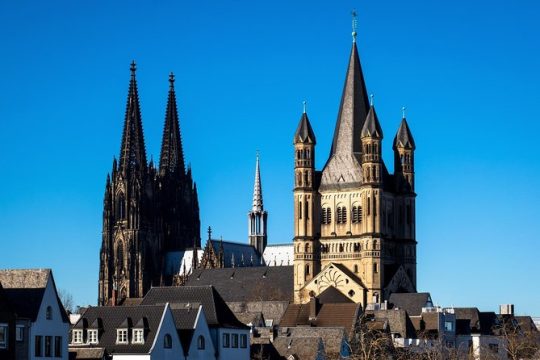
Nytårsaften i Tyskland
Torsdag 31. december 2026
juleaften i Tyskland
Torsdag 24. december 2026
Nytårsdag lang weekend i Tyskland
1.–3. januar 2027
Valentinsdag i Tyskland
Søn, 14. februar 2027
Påske i Tyskland
Sol, 28. mar. 2027
Langfredag i Tyskland
Fre, 26. marts 2027